Dermatitis / Eczema
Written 4th March 2020 - Last Update 27th August 2026
Dermatitis / Eczema
Dermatitis = eczema. Caused by exogenous factors (allergic contact, irritant, photo-allergic, photo-toxic) or endogenous factors (atopic, nummular/discoid, vesicular/pompholyx, pityriasis alba, lichen simplex, seborrhoeic). The skin’s barrier function is impaired (inherited defects in the outer skin layers), making it more susceptible to irritation and infection.
Topical corticosteroid potency reference
| Potency | Examples | Typical use |
|---|---|---|
| Mild | Hydrocortisone (0.5–1%), hydrocortisone acetate (0.5–1%) | Facial/flexural dermatitis and psoriasis; nappy dermatitis |
| Moderate | Betamethasone valerate (0.02%, 0.05%), clobetasone (0.05%), desonide (0.05%), triamcinolone (0.02%) | Mild-to-moderate atopic dermatitis; adjunct in extensive psoriasis |
| Potent | Betamethasone dipropionate (0.05%), betamethasone valerate (0.1%), mometasone (0.1%), methylprednisolone (0.1%) | Short-term use in severe inflammatory dermatoses |
| Very potent | Betamethasone dipropionate in an optimised vehicle (0.05%), clobetasol (0.05%) | Severe eczema/psoriasis (e.g. refractory lichen simplex chronicus), eczema of hands/feet, moderate-to-severe scalp psoriasis |
(Source: Australian Medicines Handbook.) Use the lowest-potency, smallest-quantity steroid that controls the disease, applied until the skin is clear — most steroids are applied twice daily, except clobetasol, mometasone, and methylprednisolone (once daily); there’s no benefit to more frequent application.
Atopic dermatitis
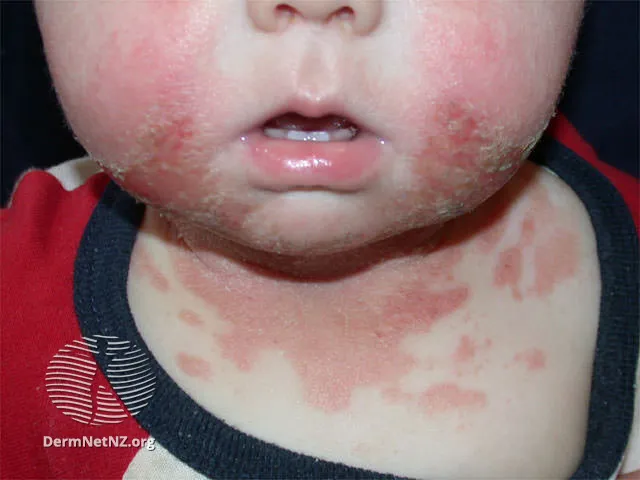
Most commonly affected areas: face, neck, skin flexures, nipples, hands. Presents from infancy through adulthood, distribution changing with age — infants: face and groin; children: hands, flexor surfaces, neck; adults: hands, feet, groin, peri-anal. During flares the skin becomes red, weepy, shiny, and may blister; in more heavily pigmented skin, affected areas may show temporary hypo- or hyperpigmentation after settling. History: itch, personal/family history of atopy, dry scaling skin, chronic relapsing course.
General measures
Emollients regularly (twice daily; liquid paraffin for severe dry skin); avoid soaps (soap-free wash); short warm showers (≤5 min); cotton bedding/underclothes.
Topical steroids by site
- Face/axillae/groin — mild steroid unless severe (hydrocortisone 1%; methylprednisolone aceponate 0.1% if severe).
- Trunk/limbs — moderate strength (methylprednisolone aceponate 0.1%, or triamcinolone 0.02% if widespread).
- Hands/feet/lichenified wrists/ankles — betamethasone dipropionate 0.05%.
For thin-skinned areas (face, genitals, flexures), topical calcineurin inhibitors (pimecrolimus 1%, tacrolimus) are a steroid-sparing option for mild-moderate disease and maintenance — anti-inflammatory without causing atrophy, though not curative.
Flare intensification techniques
- Wet dressings — once daily at night: apply steroid, then wet pyjamas (wrung out) or tubular bandages, dry clothes on top, remove after 15–60 minutes.
- Soak and smear — warm bath 20 minutes, get out without drying, smear on a large amount of steroid cream, loose clothes/pyjamas on top, emollients in the morning.
- Occlusion — cover the steroid-treated area with an impermeable film (plastic film, hypoallergenic adhesive tape, non-permeable dressing).
Secondary infection
Common (bacterial and fungal). Treat localised infection with mupirocin 2% ointment; widespread infection with oral antibiotics — first-line dicloxacillin or flucloxacillin 12.5 mg/kg (max 500 mg) four times daily for 5 to 10 days, or cefalexin if tolerability is an issue. For recurrent staphylococcal infection, consider dilute bleach baths: fill the bath with tap water using a standard 10 L bucket to gauge volume, add 12 mL unscented household bleach (4.2% sodium hypochlorite) per 10 L of water, soak 10 minutes, do not rinse afterwards — repeat daily for at least 5 days for recurrent infection, or per the eczema-specific schedule (daily for a month, 3x/week for a month, then weekly).
Eczema herpeticum (secondary HSV) is a red flag: vesicles, punched-out erosions, or pustules, with the patient constitutionally unwell — fever and lymphadenopathy. Needs acute dermatology referral.
If the skin doesn’t clear within 1–2 weeks, consider incomplete treatment or secondary infection; if not back to normal within a month, reconsider the diagnosis (e.g. BCC, actinic keratosis, Bowen’s disease as mimics in localised treatment-resistant areas).
Do not prescribe systemic/oral corticosteroids except in rare, severe, or emergency situations, after seeking dermatology advice — eczema typically rebounds after oral steroids and multiple short courses are undesirable.
Acute dermatology referral if: the patient is constitutionally unwell/ febrile; >50% of body surface area is affected; there are large areas of secondary bacterial infection; eczema herpeticum is suspected; or there is significant psychological/quality-of-life impact.
Refractory/frequently-recurring/severe disease — refer to dermatology; specialist options include narrowband UVB phototherapy, oral immunosuppressants (ciclosporin, azathioprine, methotrexate), and — for disease not controlled by the above — biologic therapy (dupilumab) and JAK inhibitors (e.g. upadacitinib), alongside crisaborole (a topical PDE4-inhibitor) as a newer non-steroid topical option. Confirm current PBS listing for dupilumab/upadacitinib before prescribing for this indication. Hospital admission is occasionally needed for intensive wet-dressing therapy in severe cases. Sedating antihistamines can help sleep disturbance from itch in adults/ older children; non-sedating antihistamines aren’t useful for the itch of dermatitis itself (only if there’s comorbid allergic rhinitis/urticaria).
Genital dermatitis
Itch, dysuria, burning/soreness from scratching; a poorly-defined nonspecific scaly erythematous rash, most common in atopic patients. Lichenification (often more pigmented here than elsewhere) is common in chronic disease. Aggravated by maceration (pads, night nappies, sweat, urine, faeces) or occlusion (obesity, immobility); oestrogen deficiency (peri-/post-menopausal, lactating) can also precipitate it. Consider contact allergy (topical medications, preservatives, perfumes, condom latex, or — in females — seminal fluid). In males it affects the scrotum and inguinal folds; penile involvement suggests a contact allergen (direct or finger-transferred) rather than atopic/seborrhoeic dermatitis.
Before treating, exclude: infection (swab if signs of infection present — Candida albicans or S. aureus most common; low vaginal swab in adult females unless recent antifungal use may cause a false negative; not needed in prepubertal girls), UTI (if dysuria), STIs, threadworm (perianal itch), genital psoriasis (a common cause of persistent perianal/genital rash, especially in children), and genital lichen sclerosus. Refer to dermatology if the diagnosis isn’t clear.
Management: general measures (frequent bland emollient e.g. aqueous cream; weight reduction if obese; manage incontinence) plus avoidance of irritants (misapplied imidazole creams, wet wipes, feminine hygiene products, pads/panty liners, soap/bubble bath, tight occlusive clothing, wet swimwear). Topical corticosteroid: methylprednisolone aceponate 0.1% ointment once daily for 2–4 weeks, followed by hydrocortisone 1% ointment once daily for 2–4 weeks to prevent recurrence, then a bland barrier preparation for maintenance. Relapse is common — repeat the steroid course at the first sign of relapse.
Contact dermatitis
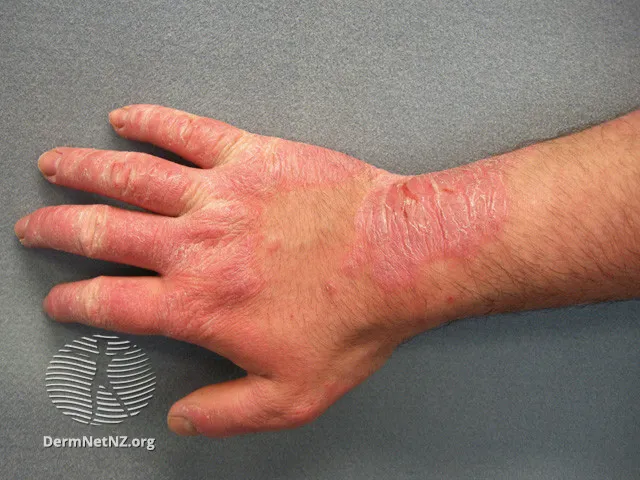
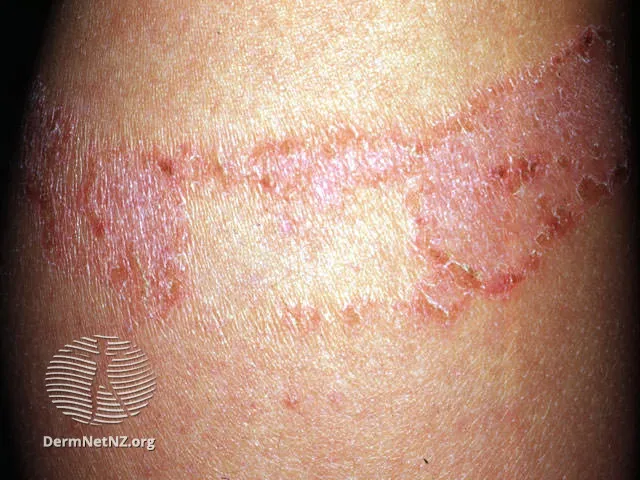
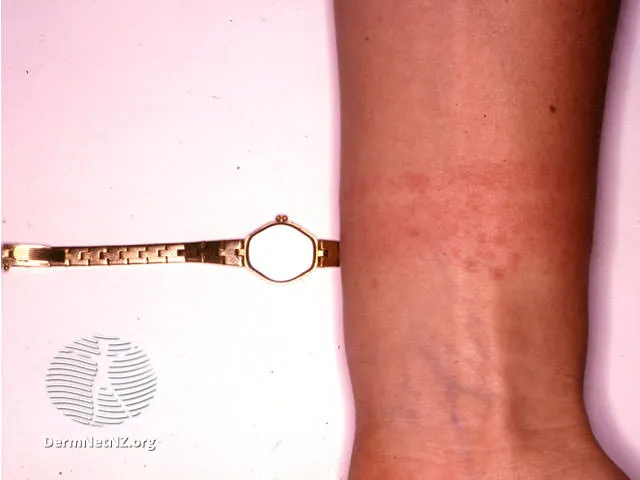
May be irritant (~70% of cases) or allergic (~20%) — cannot be reliably distinguished clinically. Prolonged irritant exposure increases the likelihood of developing allergic contact dermatitis on top of it. Common allergens: nickel (~8%), cosmetics (1–3%), adhesive/sticking plaster. Commonly affects the hands. May follow a single high-concentration exposure (e.g. cement) or repeated lower-level exposure (soaps, cleaning agents). Patients often have an underlying atopic dermatitis. Occupational dermatitis (especially hand dermatitis) is common in health/veterinary work, hairdressing/beauty therapy, building, motor vehicle work, agriculture, and hospitality/cleaning — can threaten employment and needs early dermatology referral for patch testing if suspected.
Usage test if a topical agent is suspected: apply daily to the cubital fossa for 7 days, review for dermatitis.
Treatment: avoid the irritant/allergen; use topical steroids as for atopic dermatitis. Refer for dermatology patch testing if there is a significant change to longstanding dermatitis, significant impact on work, or no response to treatment.
If dermatitis doesn’t respond to treatment: re-check adherence and technique, exclude infection and contact allergy/drug reaction (patch testing if needed), then reconsider the diagnosis — conditions that mimic dermatitis include perioral dermatitis, rosacea, psoriasis, lichen planus, lichen sclerosus, and extramammary Paget disease.
Individual conditions split to their own pages
Nummular (Discoid) Eczema · Seborrhoeic Dermatitis · Asteatotic Eczema · Venous Dermatitis · Lichen Simplex · Pityriasis Alba · Pompholyx (Dyshidrotic Eczema) · Perioral Dermatitis · Chondrodermatitis Nodularis Helicis · Dermatitis Herpetiformis · Lichen Planus