Lichen Planus
Written 3rd March 2020 - Last Update 16th August 2026
Lichen Planus
Condition
A T-cell-mediated inflammatory condition of unknown cause. Affects adults over 40; eTG describes it as “rare” (older estimates cite ~1 in 100 people). 50% of patients have oral lichen planus, 10% have nail involvement.
History and examination
The classic mnemonic is the 4 Ps” — papule, purple, polygonal, pruritic. “Small, shiny, lichenified plaques crossed by fine white lines (Wickham striae); symmetrical, violaceous, typically on the wrists, lower back, and ankles.
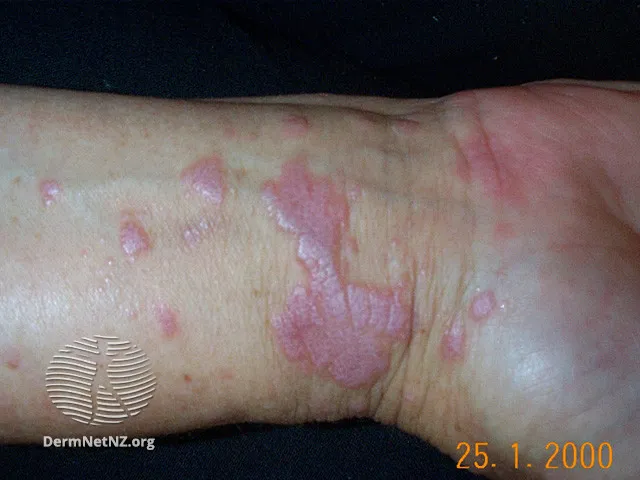
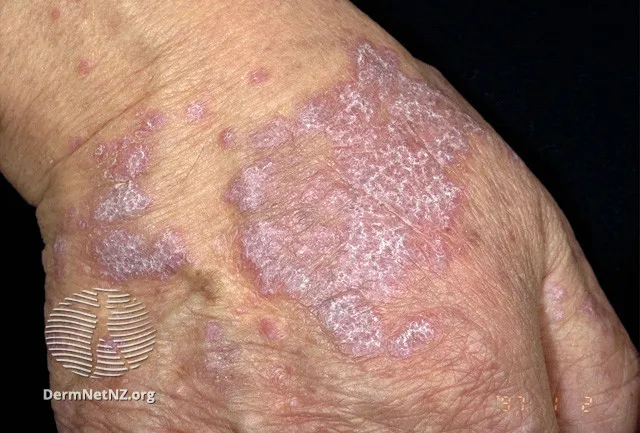
Nail involvement
Presents as atrophy of one or more nails; the nail plate is predisposed to breaking and splitting as it thins. If advanced, a pterygium arising from the proximal nail fold grows as the nail matrix is destroyed, and total nail loss may eventually occur. Biopsy of the nail matrix is recommended before treatment. Intralesional steroids into the proximal nail fold are first-line if seen before nail-unit destruction; otherwise a trial of prednisolone 25mg daily for 4 weeks, tapering gradually over 1–2 weeks, may induce temporary remission.
Management
Often resolves spontaneously over 1–2 years without treatment. Refer for expert advice, particularly where hair or nail involvement threatens permanent damage — the aim of treatment in that setting is prevention of permanent damage, using potent topical steroids.