Pompholyx (Dyshidrotic Eczema)
Written 3rd March 2020 - Last Update 11th July 2026
Pompholyx (Dyshidrotic Eczema)
Condition
Also known as vesicular dermatitis, dyshidrotic eczema, or autoeczematisation. Affects young adults; typically involves the hands and feet (palms, finger sides, soles). Commonly associated with hyperhidrosis of the hands/feet and a personal/family history of atopy (~50%). Presents with intense itch or a burning sensation and vesicles, or bullae if severe. Cause is unclear; can be precipitated by acute inflammatory tinea (e.g. of the feet) or molluscum contagiosum, and aggravated by overheating, irritants, and stress — consider and exclude these, and exclude scabies. Recurrence is common; early treatment improves outcomes.
Differentials on the hand/foot: tinea, scabies, psoriasis, dry (cracked) heels, and juvenile plantar dermatosis (an atopic-associated condition of the forefoot in children, erythematous/glazed/fissured, worse in summer, resolving by puberty).
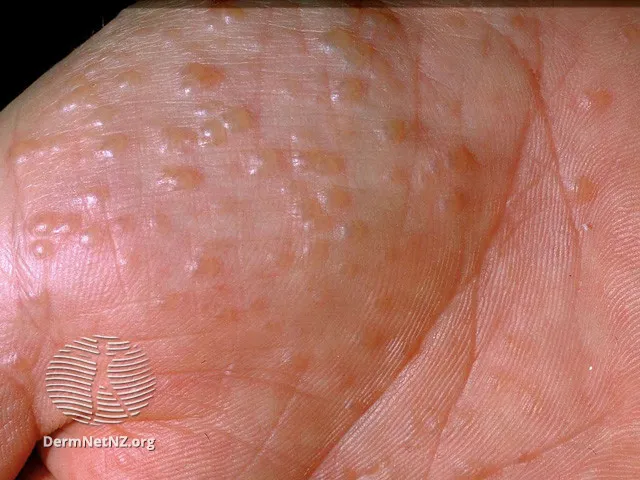
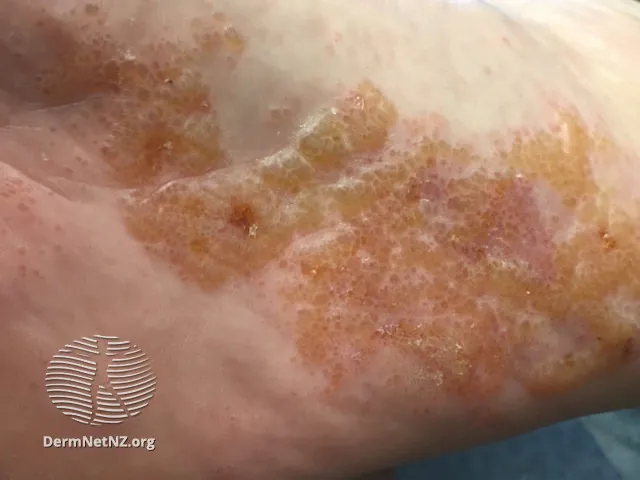
Management
If there are signs of infection, swab for culture (empirical antibiotics can be started while awaiting results, dosed as for infected atopic dermatitis). To dry acutely exudative skin, soak in salt water (½ teaspoon/ 2.5g salt in 1 cup/250mL water), pat dry, then apply a topical steroid (cream while wet/exudative, switching to ointment once dried).
- Initial acute episode — potent topical steroid (betamethasone dipropionate 0.05%, betamethasone valerate 0.1%, or mometasone furoate 0.1%, cream or ointment) once–twice daily until clear, with or without a modified dressing.
- Recurrent episodes — step up to a more potent optimised-vehicle steroid (e.g. betamethasone dipropionate 0.05% in optimised vehicle) once–twice daily until clear or for up to 2 weeks.
- Severe episodes (significant blistering, extreme itch) — short oral corticosteroid course: prednisolone 15–25mg (child 0.25–0.5mg/kg, max 25mg) once daily for 3–4 days, then taper over 1–2 weeks to minimise rebound flare.
Refer for specialist advice if not responding to therapy. Once clear, use general hand-protection measures (gloves for wet work/irritants, emollients) to reduce recurrence.