Scarlet Fever / SSSS
Written 2nd March 2020 - Last Update 28th August 2026
Scarlet Fever / SSSS
Two toxin-mediated bacterial skin/systemic syndromes of childhood, covered together here.
Scarlet Fever
(See also the condensed scarlet fever entry in viral rashes and acute rheumatic fever, a non-suppurative complication of the same organism.) More common in children 5–15 years. Results from group A Streptococcus pyogenes producing an erythrogenic toxin.
Prodrome
Malaise, sore throat, fever (± rigors), vomiting — before the exanthem appears. Take a throat swab.
Rash
- Appears 12–48 hours after fever onset.
- Starts below the ears, on the neck, chest, armpits and groin, spreading over the body within 24 hours.
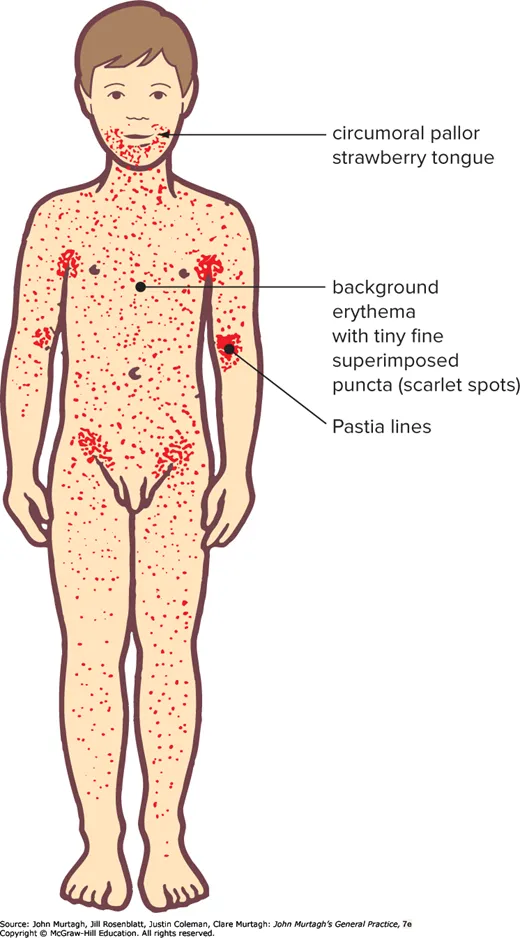
- Punctate, red — a “boiled lobster”/sunburnt appearance; blanches on pressure.
- Prominent on the neck, axillae, cubital fossa (Pastia lines), groin and skin folds; absent/sparse on the face, palms and soles.
- Circumoral pallor.
- Tongue: white coating initially, becoming red and bumpy (strawberry tongue).
- Feels like fine sandpaper; lasts ~5 days, with desquamation as it resolves.
Diagnosis
Throat swab; anti-DNase B and antistreptolysin-O (ASOT) titres.
Treatment
Phenoxymethylpenicillin 500 mg BD for 10 days, or cephalexin 1 g BD for 10 days, or azithromycin 500 mg daily for 5 days. Return to school 24 hours after starting antibiotics, once feeling well.
Staphylococcal Scalded Skin Syndrome (SSSS)
Children <5 years are at risk, neonates most of all. Starts as a localised staphylococcal infection releasing exotoxins that break down keratinocyte cell-to-cell adhesion.
Presentation
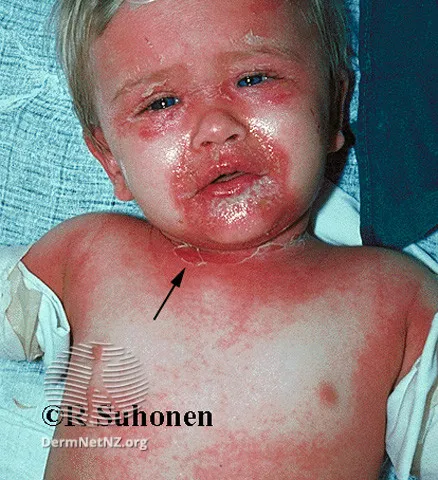
Fever, irritability, widespread skin redness, then large, easily-ruptured blisters. Nikolsky sign positive. Rash typically starts in the axillae, groin and around the nose, then spreads.
Investigations
Skin biopsy to differentiate from toxic epidermal necrolysis.
Management
Hospital admission — high risk of dehydration, sepsis. IV antibiotics for S. aureus (seek expert advice) and IV fluid rehydration.