Zoonotic & Environmental Bacterial Infections
Written 9th August 2020 - Last Update 28th August 2026
Zoonotic & Environmental Bacterial Infections
Four zoonotic/environmental bacterial infections with no dedicated existing page. See also lyme disease, tick bite and rabies/other lyssaviruses for other tick-borne/zoonotic topics.
Leptospirosis
A zoonosis (Leptospira spp.; reservoirs include rats, pigs, cattle, horses, dogs) transmitted when infected animal urine contacts skin abrasions or mucous membranes — an occupational infection of farmers (especially dairy), abattoir/meat workers, and those in wet environments.
Murtagh triad — abrupt fever + headache + conjunctival suffusion.
Severe disease (Weil’s disease) causes jaundice, renal failure and bleeding.
- Diagnosis: serology (MAT) or culture/PCR.
- Treatment: doxycycline (7 days) for mild disease; IV benzylpenicillin/ ceftriaxone for severe.
Brucellosis
A zoonosis — in Australia mainly from feral pigs (hunters); overseas from unpasteurised dairy/livestock. Rare in Australia (Queensland into parts of NSW/NT); endemic in the Middle East and southern Europe. Occasional person-to-person transmission.
- Presentation: a prolonged febrile illness (weeks) — undulant fever, sweats, malaise, arthralgia.
- Complications: endocarditis (the main cause of death), neurobrucellosis, and osteoarticular disease (e.g. sacroiliitis, spondylitis).
- Treatment: doxycycline for 6 weeks + gentamicin (IV) for ~1 week (rifampicin is an alternative companion drug).
Plague
Caused by Yersinia pestis (“the Black Death”). Rare (~1000–3000 cases/year worldwide, e.g. Madagascar, DRC, western USA). Transmitted by fleas that have bitten infected rodents; person-to-person spread occurs (notably pneumonic).
Forms:
- Bubonic — painful, suppurative inguinal/axillary lymphadenitis (buboes).
- Pneumonic — flu-like illness with haemoptysis; highly transmissible and rapidly fatal.
- Septicaemic — sudden high fever, myalgia, abdominal pain, diarrhoea, then black patches of skin from subcutaneous haemorrhage.
High mortality untreated; treat with aminoglycosides (gentamicin/streptomycin) or doxycycline/fluoroquinolone, with isolation for pneumonic plague. A notifiable disease of international significance.
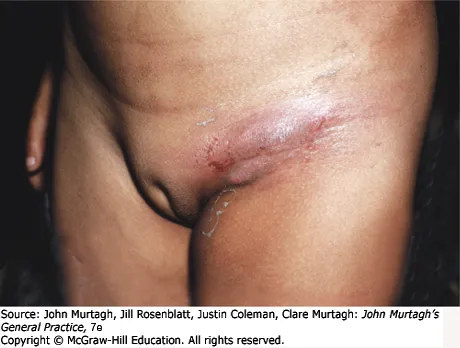
Melioidosis
Infection with Burkholderia pseudomallei, from soil and surface water in northern Australia and the Asia-Pacific, classically acquired through an open wound (e.g. wading in rice paddies) or by inhalation, especially in the wet season. May present years after exposure. Risk factors: diabetes, hazardous alcohol use, chronic lung/kidney disease.
- Presentation: most commonly pneumonia, but can form an abscess in any organ (skin, liver, spleen, prostate) and cause sepsis.
- Diagnosis: culture of blood and infected sites (notify the lab — it’s a hazardous organism).
- Treatment: an intensive IV phase (ceftazidime or meropenem) followed by prolonged oral eradication (co-trimoxazole).