Rabies & Other Lyssaviruses
Written 10th August 2020 - Last Update 16th August 2026
Rabies & Other Lyssaviruses
Transmitted via the saliva or nerve tissue of infected animals — through bites, broken skin, or mucosal contact. Almost invariably fatal once symptomatic, so exposure management is everything. In Australia, any bat contact is a potential Australian bat lyssavirus (ABLV) exposure.
Prophylaxis
Pre-exposure — for people with bat contact, lyssavirus lab workers, and travellers per risk assessment.
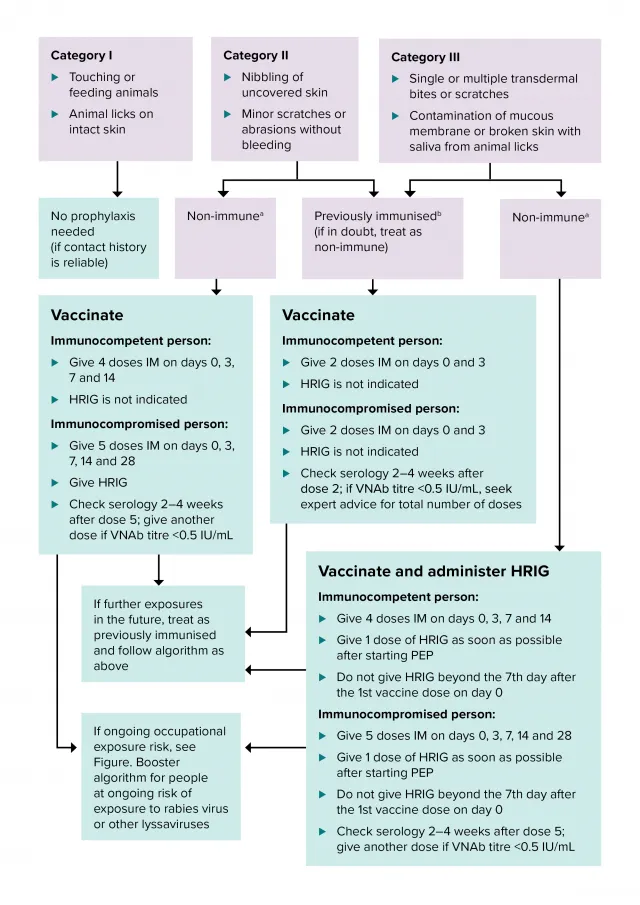
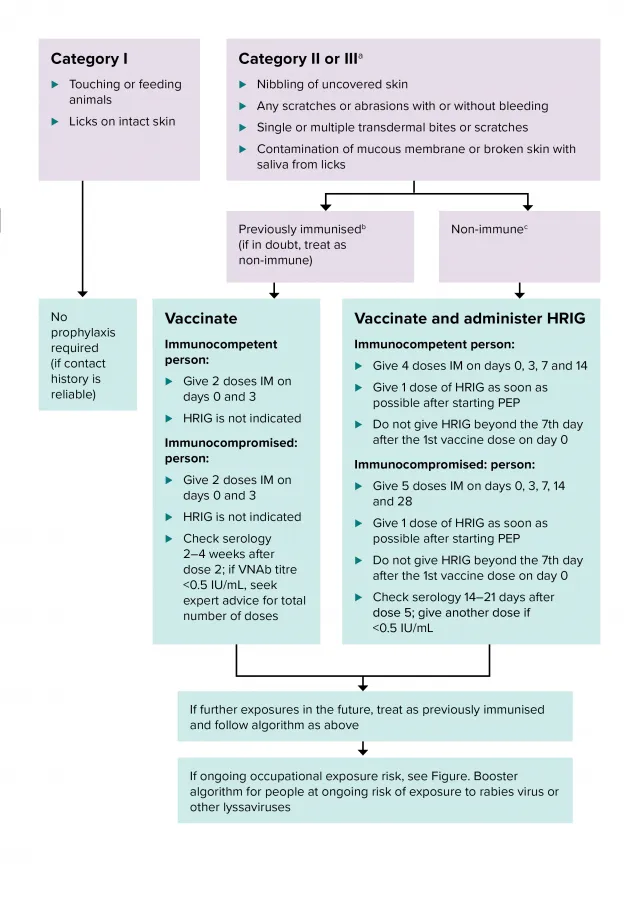
Post-exposure prophylaxis (PEP) — prompt wound care + rabies vaccine ± immunoglobulin, depending on exposure grade, animal source, immune status and prior vaccination. Give PEP even after considerable delay. Exception: a domestic pet (dog/cat/ferret) exposure in a rabies-enzootic country where the animal remains known to be healthy 15 days later. Always discuss suspected exposures with an expert.
Grades of exposure (WHO)
| Grade | Exposure | Action |
|---|---|---|
| I | Touching/feeding animals; licks on intact skin | No prophylaxis |
| II | Nibbling of uncovered skin; minor scratches/abrasions without bleeding | Vaccine (no immunoglobulin if immunocompetent) |
| III | Transdermal bites/scratches; mucosal or broken-skin contamination with saliva; direct bat contact | Vaccine + immunoglobulin (unless already vaccinated) |
Any Grade II or III contact with a bat is managed as Grade III.
Wound management
Wash the wound thoroughly with soap and water and apply povidone-iodine. Do not suture the wound after a potential rabies exposure — leave it open.