Pharyngitis: Viral, EBV & Streptococcal
Written 1st July 2020 - Last Update 28th August 2026
Pharyngitis: Viral, EBV & Streptococcal
See Presentation: Sore Throat for the fuller differential diagnosis and hospitalisation/antibiotic decision-making framework.
Viral pharyngitis
The most common cause of acute sore throat at all ages.
History: may have cough, hoarse voice, conjunctivitis, nasal congestion, anterior stomatitis, viral exanthema, diarrhoea, and absence of fever.
Management: Symptomatic therapy: paracetamol ± NSAID; medicated lozenges (antiseptic, anti-inflammatory, or anaesthetic).
Avoid irritants: cigarette smoke/other smoke; air pollution — smoking cessation can help prevent recurrent sore throat.
Severe symptoms (severe throat pain, dysphagia, drooling): dexamethasone 10mg (0.6mg/kg in children) as a single dose, or prednisolone 60mg (1mg/kg in children) for 1–2 days.
Review in 3–7 days if symptoms are worsening or new symptoms develop, to reassess the need for treatment and/or hospitalisation.
EBV pharyngitis (infectious mononucleosis)
EBV is the most common cause of infectious mononucleosis. Other possible causes: CMV; toxoplasmosis; parvovirus; primary HIV; HHV-6, rubella, adenovirus, HSV.
Demographics: peak incidence in adolescents and early adult life; symptoms are often mild and may pass unnoticed.
History: severe sore throat; fever; malaise; fatigue. Acute symptoms resolve in 1–3 weeks, but fatigue can persist for months. May develop a morbilliform rash after taking amoxicillin.
Examination: lymphadenopathy; splenomegaly; hepatomegaly; rash.
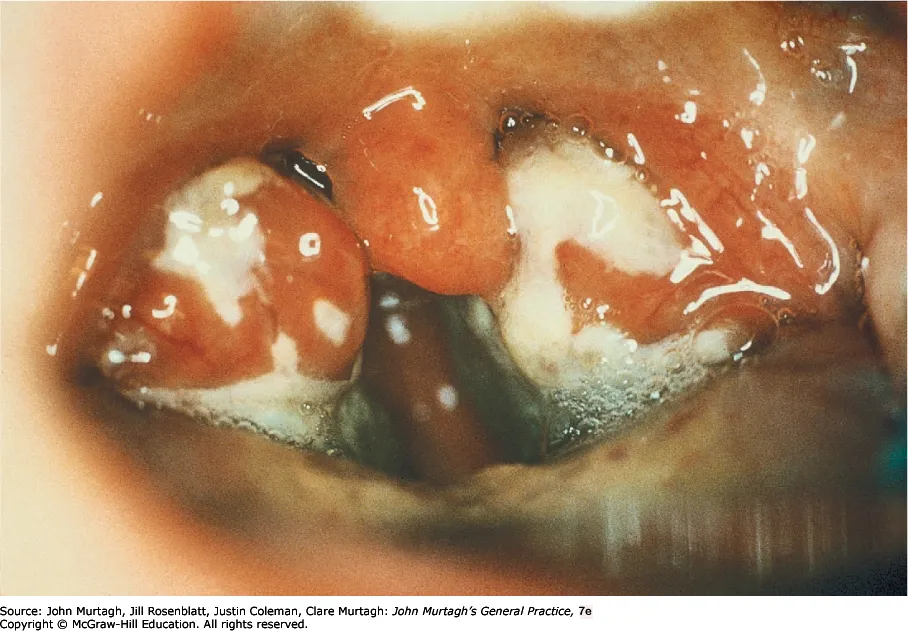
Investigations: monospot (heterophile antibody). FBC → monocytosis/lymphocytosis with atypical lymphocytes. LFTs for viral hepatitis.
EBV serology:
- VCA IgG and IgM — appear at the same time early in illness; IgM disappears after 2–4 months.
- EBV nuclear antigen — appears after 6–12 weeks; presence early in the illness excludes current infection being from EBV.
Management: symptomatic therapy for sore throat. Assess the need for hospitalisation. Corticosteroids may be used for complicated infection, but seek specialist input first.
Streptococcal tonsillopharyngitis (strep throat)
May involve only the pharynx, or one or both tonsils.
Classic features: fever >38°C; tender cervical lymphadenopathy; tonsillar swelling and exudate; absence of cough. Other features: difficulty swallowing; significant pain on talking; foul-smelling breath.
Examination: inflamed/erythematous pharynx; tonsils swollen with pockets of yellow exudate; tender, enlarged tonsillar lymph nodes.
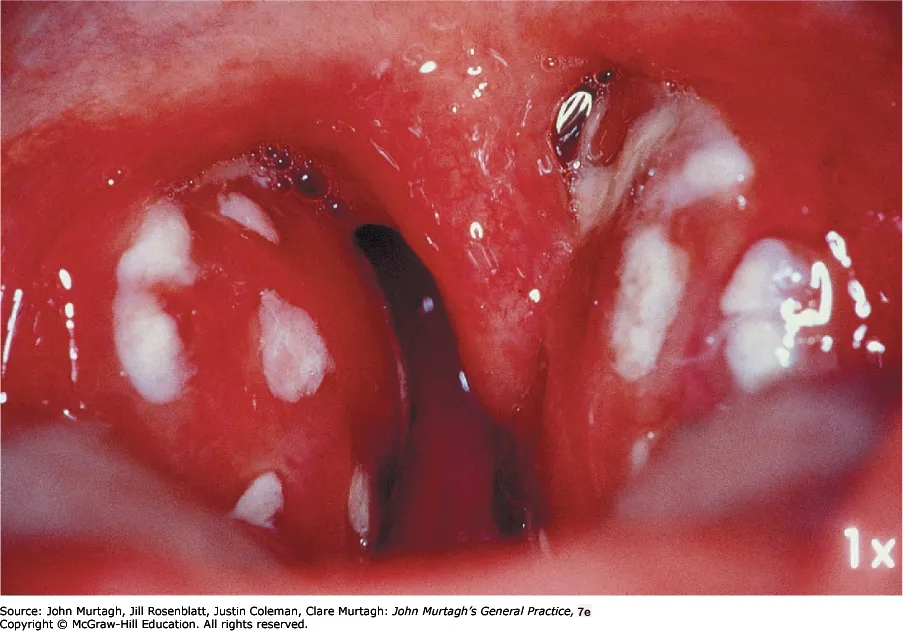
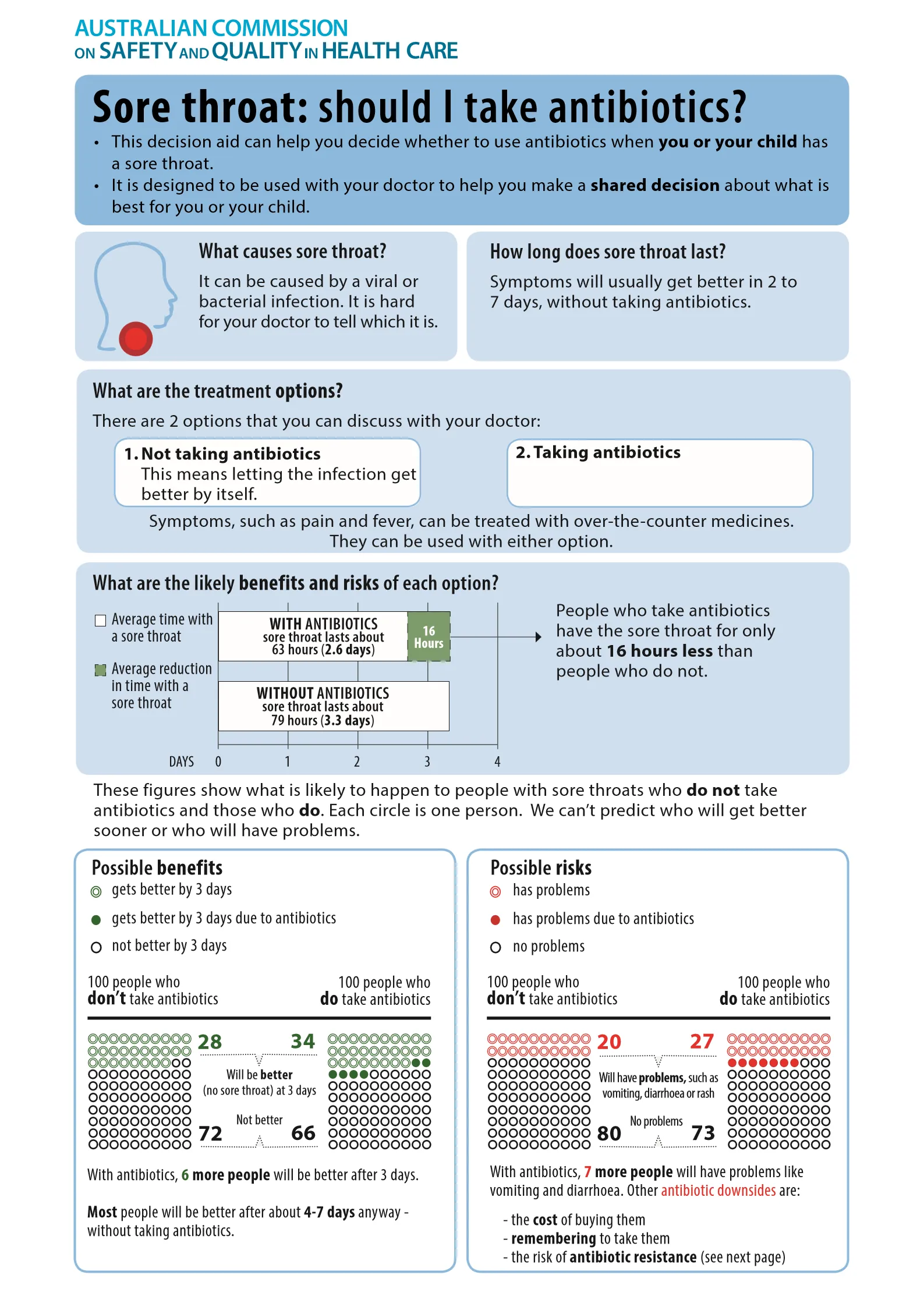
Investigations: consider a swab for GABHS, though slow processing and false positives limit its usefulness. Collect the swab before starting treatment, and stop antibiotics if the result is negative.
Modified Centor Criteria (MCC) use is associated with significantly lower antibiotic prescribing in Australian general practice (77.7% vs 85.5% without documented use) — a useful antibiotic-stewardship tool alongside the high-risk-population carve-outs below, not just a diagnostic aid.
Management: Symptomatic therapy, as for viral pharyngitis (above): paracetamol ± NSAID; medicated lozenges (antiseptic, anti-inflammatory, or anaesthetic). Avoid irritants (cigarette/other smoke, air pollution) — smoking cessation can help prevent recurrent sore throat. For severe symptoms (severe throat pain, dysphagia, drooling): dexamethasone 10mg (0.6mg/kg in children) as a single dose, or prednisolone 60mg (1mg/kg) for 1–2 days.
Antibiotics are not needed immediately for classic bacterial sore-throat features unless the patient is from a high-risk population:
- Aboriginal and Torres Strait Islander people from rural/remote areas, Māori, or Pacific Islander people (consider also for urban Aboriginal patients) — elevated acute rheumatic fever risk.
- Existing rheumatic heart disease.
- Scarlet fever.
- Very severe symptoms requiring hospitalisation, or very severe sore throat and dysphagia.
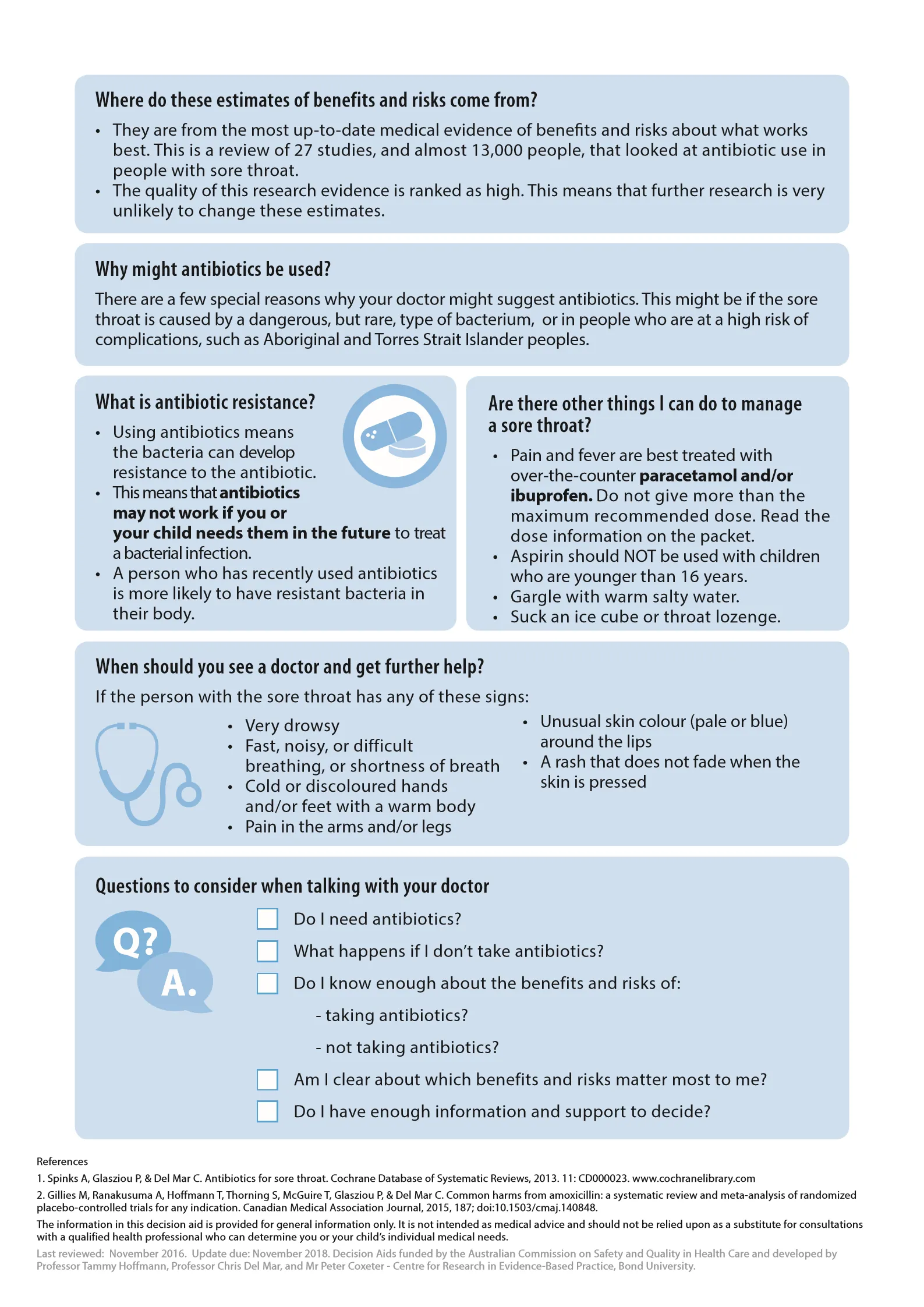
If the patient doesn’t meet these criteria, engage in shared decision-making about antibiotic therapy.
Shared decision-making points: complications are rare outside high-risk groups; symptoms usually last 7 days whether or not antibiotics are used; antibiotics shorten symptom duration by only about 1 day; antibiotic adverse effects include diarrhoea, rash, hypersensitivity reactions, microbiome disruption, and development of resistant strains (both individually and community-wide).
Antibiotic therapy (when indicated): phenoxymethylpenicillin 500mg twice daily for 10 days, or benzathine penicillin IM 1.2 million units (adult and child >20kg) as a single dose, or cefalexin 1g twice daily for 10 days (penicillin allergy), or azithromycin 500mg daily for 5 days.