Sore Throat
Written 1st July 2020 - Last Update 25th August 2026
Presentation: Sore Throat
See Pharyngitis: Viral, EBV & Streptococcal for condition-specific management detail — this page covers the overall differential and triage framework.
Terminology: pharyngitis = inflammation of the pharynx ± tonsils; tonsillitis = tonsils only; quinsy = peritonsillar abscess.
Causes (acute)
Bacterial: beta-haemolytic streptococci (GABHS); diphtheria (rare); gonococcal pharyngitis; Haemophilus influenzae; Moraxella catarrhalis; quinsy; Staphylococcus aureus (rare); syphilis (rare); acute ulcerative gingivitis (Vincent angina).
Viral (moderate-severe soreness): EBV mononucleosis; herpangina (Coxsackie A/B); herpes simplex pharyngitis. Viral (mild-moderate soreness): adenovirus, CMV, coronavirus, enterovirus, influenza, picornavirus, rhinovirus, HIV, varicella.
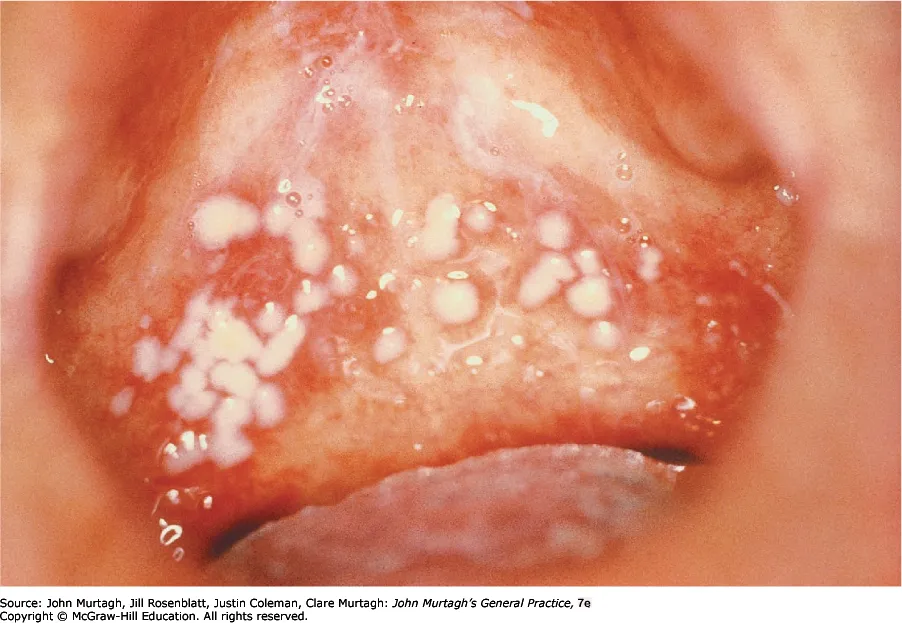
Other infections: Candida albicans (especially infants); Mycoplasma pneumoniae; Chlamydia pneumoniae.
Blood dyscrasias: agranulocytosis; leukaemia. Irritants: tobacco smoke; antiseptic lozenges.
Red flags
Persistent high fever; failed antibiotic therapy; agranulocytosis (medication-induced); drooling (consider epiglottitis); sharp pain on swallowing (consider foreign body); marked swelling (consider quinsy); oral candidiasis (consider immunosuppression, diabetes, or inhaled corticosteroid use).
Peritonsillar abscess (quinsy) — recognising the complication
Historically called quinsy, peritonsillar abscess is the most common deep neck space infection in adults and children, typically developing 3–5 days after untreated pharyngitis/tonsillitis as infection spreads into the peritonsillar space. Peak incidence is 15–35 years; overall incidence is 14–30 per 100,000 per year, rising to as high as 167 per 100,000 in adolescents. It is uncommon under 5 years, where children are more prone to retropharyngeal abscess instead.
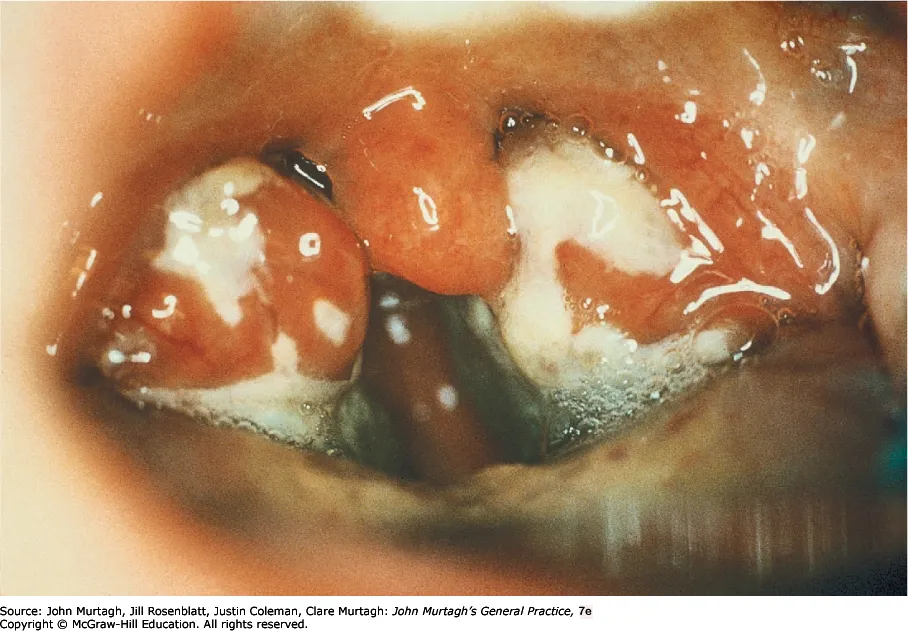
Look for unilateral throat pain, odynophagia/dysphagia, ipsilateral otalgia and fever, with trismus (in nearly all cases, from inflammation of the adjacent pterygoid muscles), a muffled “hot potato” voice as the swelling distorts the soft palate, and — on examination — indurated peritonsillar swelling with medial displacement of the tonsil and uvula deviation away from the affected side (present in only about half of cases, so its absence doesn’t exclude the diagnosis). “Peritonsillar abscesses are typically polymicrobial” — Group A streptococcus, S. anginosus, S. aureus (including MRSA) and respiratory anaerobes are all frequently isolated, with Fusobacterium necrophorum particularly common in patients aged 15–24. Point-of-care ultrasound is the recommended first-line imaging where available (it can also guide drainage); contrast CT is the diagnostic gold standard and the better choice when a specialist isn’t available or the diagnosis is equivocal. Airway assessment always comes first — drooling, tripoding or respiratory distress in a child needs emergency stabilisation before any further work-up.
Clinical approach (per eTG)
Assess the need for hospitalisation. Patients with airway obstruction or a deep neck space infection need urgent hospital referral and airway management. Patients with dysphagia, dehydration, or severe throat pain also need hospital assessment or admission. Red flags for urgent transfer: muffled voice; stridor; trismus; drooling; neck swelling; torticollis; severe neck pain; unilateral throat pain; respiratory distress; signs of airway compromise; signs of sepsis or shock.
Viral tonsillitis/pharyngitis is the most common cause of sore throat at all ages. Viral infection is strongly suggested by any of: cough, hoarse voice, conjunctivitis, congestion, anterior stomatitis, viral exanthema, diarrhoea, or absence of fever. Reassure that it’s self-limiting (resolves within 7 days) — offer symptomatic management. Antibiotic benefit is genuinely marginal rather than zero: a Cochrane review of 15 trials (3,621 participants) found symptoms persisted at day 3 in 77% of controls versus 66% of those given antibiotics (mostly penicillin) — a number-needed-to-treat of 3.7 in patients with a positive throat swab for streptococci, 6.5 if swab-negative, and 14.4 in those not swabbed at all, against the backdrop of harms (diarrhoea, rash, thrush) and antibiotic resistance that make routine use a poor trade for most patients.
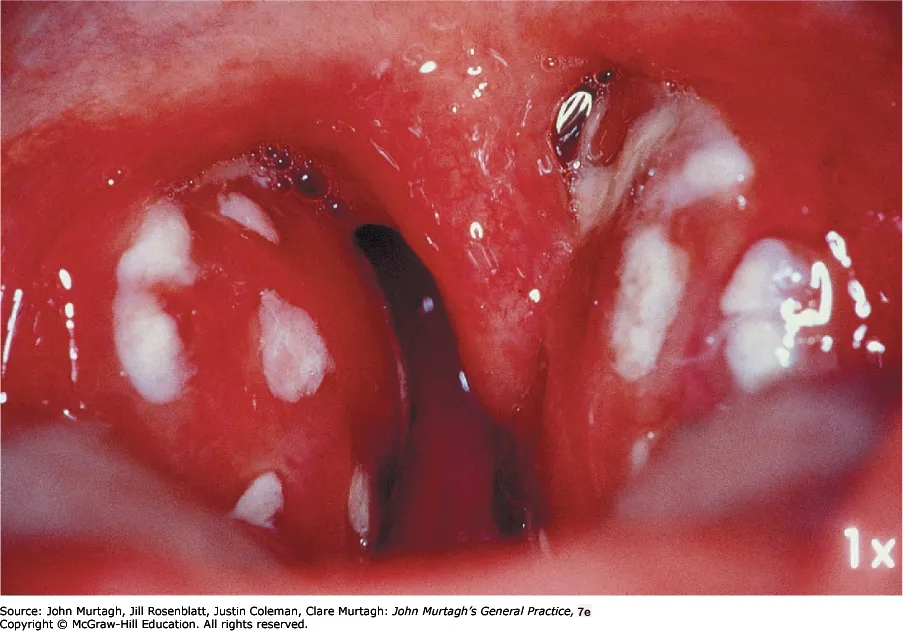
Streptococcal tonsillitis — S. pyogenes causes only 10–20% of sore throats and is usually self-limiting too. It’s hard to diagnose on clinical features alone — the traditionally-associated features (fever >38°C, tender cervical lymphadenopathy, tonsillar exudate, absence of cough/nasal congestion) have poor predictive value (see Centor score below). Throat swab culture confirms the diagnosis, but S. pyogenes is part of normal throat flora, so a positive result doesn’t necessarily indicate current infection.
Antibiotic therapy is indicated for:
- Risk of non-suppurative complications of S. pyogenes infection (e.g. acute rheumatic fever) — patients aged 2–25 years with a high incidence of ARF (Aboriginal and Torres Strait Islander Australians living rurally/remotely, Māori and Pacific Islander people); patients of any age with existing rheumatic heart disease; patients with scarlet fever.
- Very severe symptoms (e.g. needing hospitalisation, severe throat pain and dysphagia).
Outside these groups the case for antibiotics is weak: acute rheumatic fever has been declining steadily across the general population since the early 1900s (a trend antibiotics didn’t visibly accelerate when they arrived), so for most Australians the absolute risk is now roughly one case in every ten GP-practising lifetimes — which is why the exception above is specifically about population groups where that risk remains high, not a blanket recommendation.
Centor score helps assess the likelihood of strep pharyngitis, but in a patient with classic bacterial sore-throat features who doesn’t meet the criteria above, immediate antibiotics aren’t needed — engage in shared decision-making instead. The Modified Centor Criteria (MCC) score one point each for tonsillar exudate, tender anterior cervical adenopathy, absence of cough, and fever — plus an age adjustment (+1 for 3–14 years, 0 for 15–44, −1 for ≥45). An Australian general-practice audit of 1,554 consultations found that documenting the MCC components in the notes was itself associated with significantly lower antibiotic prescribing than when they weren’t documented (77.7% vs 85.5%, OR 2.4, 95% CI 1.8–3.3) — a case for building the criteria explicitly into the consultation rather than relying on gestalt.
To swab or not to swab?
Throat swabs are ~90% effective at isolating strep bacteria, but S. pyogenes is part of normal mouth flora, so false positives occur. Usually only necessary to verify outbreaks in closed institutions (e.g. boarding schools), or when engaging in shared decision-making with a patient about antibiotic treatment. Swabbing will also pick up rarer bacterial causes such as diphtheria in unimmunised patients or those with relevant overseas travel.
Clinical appearance