Deep Neck Space Infections
Written 2nd July 2020 - Last Update 28th August 2026
Deep Neck Space Infections
Suppurative complications needing urgent drainage/referral — a different clinical picture from simple tonsillitis or pharyngitis (see Tonsillar Conditions and Pharyngitis).
Quinsy (peritonsillar abscess)
A suppurative infection with a collection of pus between the palatine tonsil and the pharyngeal muscles — usually polymicrobial. Peritonsillar cellulitis looks similar but without abscess formation.
History: severe unilateral throat pain; trismus; high fever; ± change in voice.
Examination: visibly abscess-like swelling of the peritonsillar region.
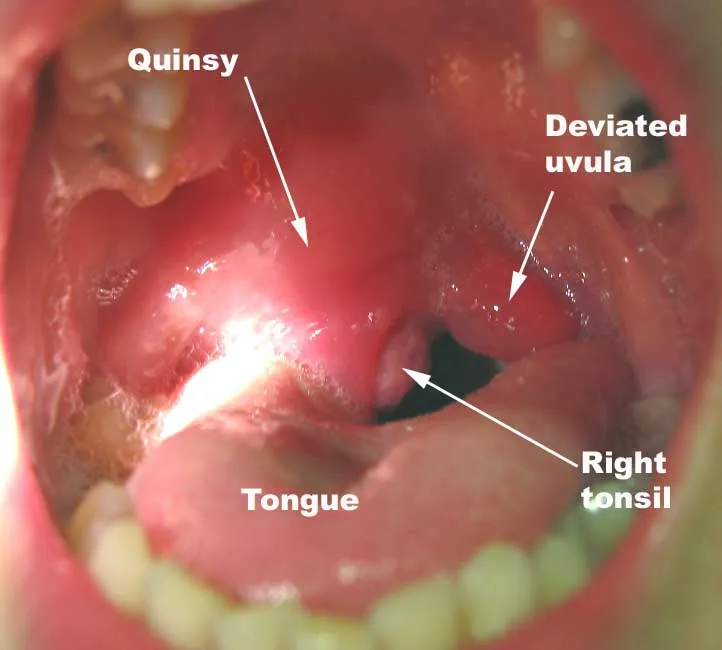
Management: incision and drainage plus antibiotics. Best done in ED, given the risk of airway compromise if severe bleeding occurs (the carotid artery is immediately adjacent). Cellulitis (without an abscess) can be treated with antibiotics alone.
Antibiotics: IV benzylpenicillin 1.2g 6-hourly, switching to oral phenoxymethylpenicillin 1–2 days after abscess drainage.
Retropharyngeal abscess
Usually occurs in adults as a complication of: intra-oral procedures; otitis media; spreading infection from pharyngitis or the nasal cavity; spreading odontogenic infection (usually mandibular teeth); trauma; foreign body (e.g. fish bone); immunocompromise. In children, spontaneous infection can occur. Usually a polymicrobial infection.
History: sore throat; dysphagia; neck pain; poor oral intake; trismus.
Examination: cervical lymphadenopathy; poor oral intake; muffled voice; respiratory distress; stridor (less common). Visible neck swelling is uncommon.
Investigations: lateral C-spine X-ray shows protrusion of the retropharyngeal wall — classically >5mm at C2 (“5 at 2”).
Management: refer to hospital for consideration of surgical drainage. Risks of untreated infection: mediastinitis; upper airway obstruction; aspiration after sudden abscess rupture.