Kerion
Written 2nd March 2020 - Last Update 11th July 2026
Kerion
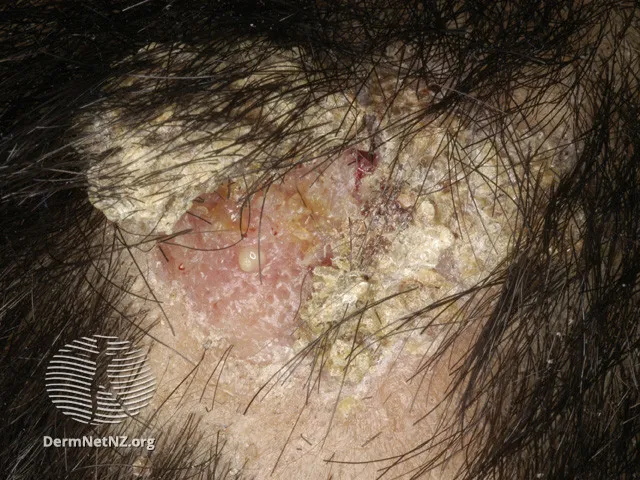
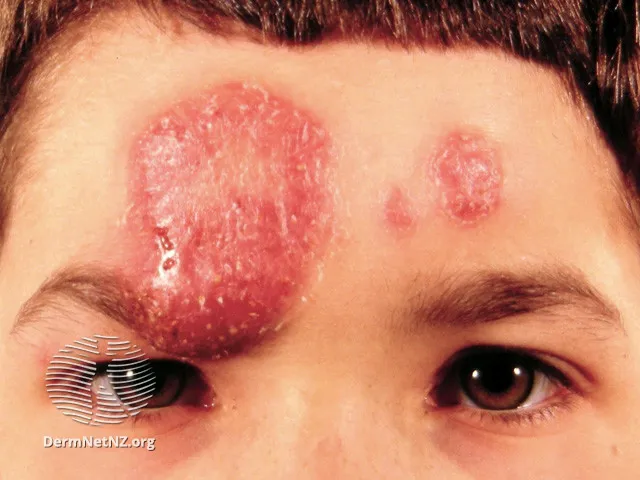
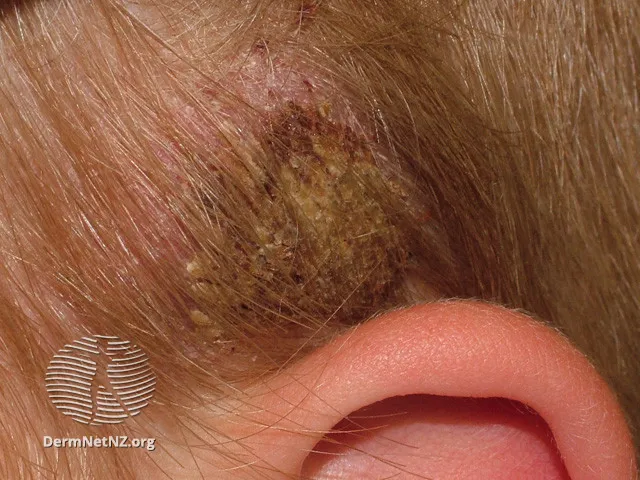
Abscess caused by fungal infection
Most often occurs on the scalp (tinea capitis)
May also arise on any site exposed to the fungus such as face (tinea faciei) and upper limbs (tinea corporis)
-presents as a boggy pus-filled lump
Has marked inflammation
Hairs within the kerion are loose and fall out, often resulting in a bald area
- The most common fungi found in kerion are:
Microsporum canis
Trichophyton tonsurans
Trichophyton verrucosum
Trichophyton mentagrophytes
Trichophyton rubrum is not a common cause of kerion. Trichophyton rubrum is, however, by far the most common dermatophyte causing tinea elsewhere on the body.
Diagnosis
Suspicion based on appearance, area of baldness and fungal culture/scrapings/hair samples.
Woods lamp will sometimes show yellow-green florescence, however this is very unreliable (Only Microsporum canis, often obscured by inflammation), and a woods lamp is not readily available.
Management
Should be treated with oral antifungal agents. A course of at least 6–8 weeks of treatment is normally prescribed as a minimum — longer than the 2-week duration used for most other tinea:
Terbinafine 250mg daily for 6–8 weeks
or
Griseofulvin 500mg daily for 6-8 weeks (for tinea capitis caused by M. canis)
If treatment fails despite good adherence, consider terbinafine-resistant dermatophyte species (Trichophyton indotineae/Trichophyton interdigitale, now reported in Australia — see Tinea) alongside the more common explanations (poor adherence, wrong diagnosis, bacterial superinfection).
Topical antifungal agents are not effective due to deep invasion of fungus into the hair follicle
Ketoconazole and selenium sulfide shampoos reduce spore shedding and are an adjunct to therapy, but are ineffective when used alone.
Bacterial superinfection is common, and lesions should be swabbed and treated for this if clinical suspicion
May be transmitted to other members of the household if they are in close contact, especially if sharing bedding and towels. Combs and hairbrushes should be disinfected or discarded to prevent transmission of infection or re-infection
Hair usually regrows after infection, unless very longstanding infection.