Acne
Written 12th March 2020 - Last Update 11th July 2026
Acne
See Rosacea for that condition specifically.
Condition
Acne is a common, chronic disorder of the hair follicle and sebaceous gland, involving expansion and blockage of the follicle plus inflammation. Caused by increased sensitivity of the pilosebaceous gland to androgens, and rarely by frankly elevated androgens. Affects adolescents (males more than females), but also children and adults — females are more likely to have acne persisting into their 30s–40s.
History and examination
Often confined to the face, but may involve the neck, chest, and back. Diagnosis requires comedones plus pustules and/or papules:
- Comedonal acne — uninflamed open (blackheads) and closed comedones.
- Inflammatory acne (acne vulgaris) — papules and pustules.
- Nodulocystic acne — nodules and pseudocysts; the most severe form, with scarring.
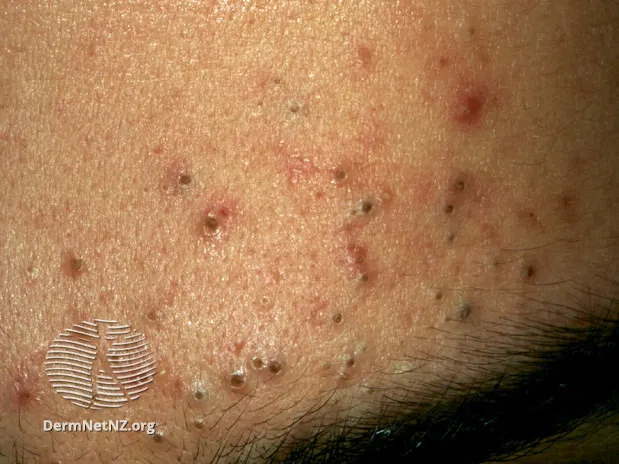
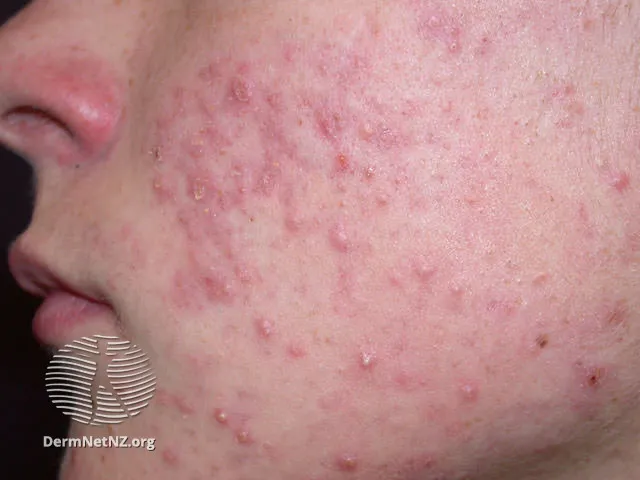
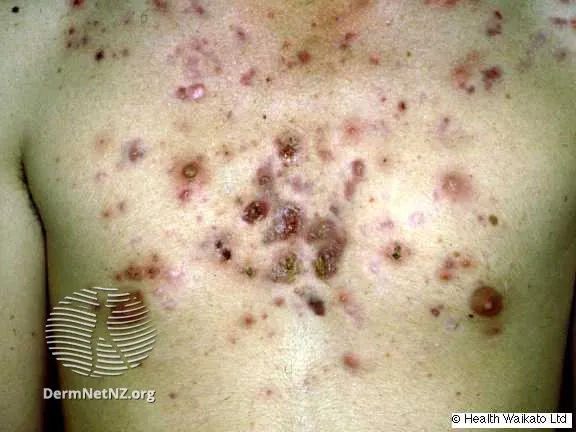
Severity classification:
- Mild — a few comedones/papules/pustules, typically on the nose, chin, and forehead (T-zone); no scarring.
- Moderate — numerous comedones/papules/pustules, some nodules, face and sometimes trunk; no scarring.
- Severe — nodules and cysts with scarring, usually affecting the face and trunk.
Investigations
Clinical diagnosis.
Management
Minimise aggravating factors
- Stop drugs that worsen acne where possible: oral corticosteroids; high-levonorgestrel progestogen-only contraceptives (e.g. Microlut, Mirena, Implanon) or high-levonorgestrel combined pills (e.g. Levlen); phenytoin, lithium, fluconazole.
- Stop topical products that worsen acne — oily creams/sunscreens; prefer oil-free products.
- Consider PCOS as an underlying driver.
- Reduce exposure to hot, steamy environments (kitchens, saunas).
General measures (all severities)
Soap-free cleanser, no more than twice daily (excessive washing worsens acne); oil-free, non-comedogenic products; remove make-up before sleeping; non-comedogenic sunscreen (many acne treatments are photosensitising); limited evidence a low-glycaemic-index diet may help. Oral antibiotics alone may lead to antibiotic resistance and should always be combined with topical non-antibiotic therapy (e.g. benzoyl peroxide).
Mild acne
First-line OTC topical therapy: benzoyl peroxide (2.5% or 5% — start at 2.5% if a history of atopic dermatitis/sensitive skin; note it bleaches fabric), salicylic acid, azelaic acid, or niacinamide.
If further treatment is needed:
- Predominantly comedonal — topical retinoid, or a retinoid + benzoyl peroxide combination.
- Predominantly inflammatory (papules/pustules) — topical antibiotic + benzoyl peroxide combination.
- Mixed — topical antibiotic + retinoid combination.
Apply to the whole affected area, not just as spot treatment; start second-daily for 2 weeks to minimise irritation; apply at night, wash off in the morning (the drying effect may be delayed by 2 weeks).
Moderate acne
- Predominantly comedonal — trial a topical retinoid/retinoid combination, anti-androgen treatment if female (COCP or spironolactone), or early dermatology referral for isotretinoin (oral antibiotics don’t work on comedones alone).
- Predominantly inflammatory — benzoyl peroxide + retinoid combination plus an oral antibiotic. Doxycycline is preferable to minocycline initially, due to a better side-effect profile; minocycline is not recommended first-line. Erythromycin if tetracyclines are contraindicated (e.g. pregnancy) or not tolerated. Prescribe for 6 weeks initially then reassess — expect ~60% improvement at 3 months, ~80% at 6 months. Continue topical treatment once antibiotics stop. Female patients can use anti-androgen treatment (COCP or spironolactone) instead of, or alongside, antibiotics (spironolactone 25–50mg daily, titrated to 50–100mg daily, reviewed at 6 months). Stop antibiotic therapy (topical or oral) once inflammation is controlled and continue non-antibiotic maintenance (retinoid/benzoyl peroxide), resuming only if it recurs.
If these measures fail, or scarring is a concern, refer to dermatology for isotretinoin or physical treatments.
Severe acne
Trial moderate-acne options first, but consider early referral to a dermatologist for oral isotretinoin if: severe acne, early scarring, significant psychological impact, or 3-month trials of other treatments have failed or are contraindicated.
Oral isotretinoin is a vitamin A derivative that reduces sebum production, follicular occlusion, and inflammation. Recommended dose (prescribed by specialists, patients >12 years): initially 0.5 mg/kg daily, adjusted after 4 weeks up to a maximum of 1 mg/kg daily; typically a 4–7 month course. 80% effective in achieving long-term remission of acne; ~50% of patients eventually relapse and need a repeat course.
Contraindications: pregnancy/breastfeeding, severe hepatic impairment, hyperlipidaemia (especially high triglycerides). Not to be combined with tetracyclines (raised intracranial pressure risk). Caution in pilots/ commercial drivers (night vision effects) and within 6 months of laser eye surgery.
Monitoring: conduct a mental health assessment for all patients before starting isotretinoin, and ask about mood changes, depression/ anxiety symptoms, and anger issues throughout treatment — refer for mental health support if these arise. Baseline bloods: fasting lipids, LFTs, EUC, FBC (neutropenia risk); female patients need serum bHCG before the specialist appointment. Isotretinoin is a potent teratogen: the TGA-approved Australian product information for isotretinoin is explicit that two reliable forms of contraception should be used simultaneously, without interruption, from 1 month before starting therapy through to 1 month after stopping — additional methods are advised in the first cycle of a newly started hormonal contraceptive — and patients should wait ≥2 months after stopping before conceiving. Oral progestogen-only contraceptives are considered an unsuitable sole method during isotretinoin therapy. Monitor fasting lipids and LFTs at 6 weeks (and end of course); repeat bHCG at 6 weeks. TGA safety alert: potential mood-related changes and sexual dysfunction (erectile dysfunction, decreased libido, vulvovaginal dryness).
Infantile acne
Starts around 3 months, resolves by 12 months. Comedones, papules, and pustules on the cheeks and chin; can progress to nodulocystic disease.
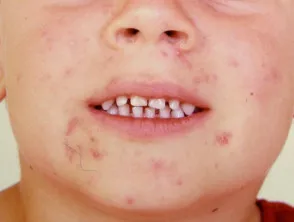
Management:
- Mild — benzoyl peroxide 5% spot treatment daily.
- Numerous comedones plus inflammatory lesions — benzoyl peroxide 2.5% + adapalene 0.1% daily.
- If not resolving, refer for consideration of erythromycin or, sometimes, isotretinoin.