Rosacea
Written 12th March 2020 - Last Update 11th July 2026
Rosacea
Condition
A chronic skin condition causing facial erythema, visible blood vessels, papules, and pustules — but not comedones (the key feature distinguishing it from acne). About half of patients develop ocular rosacea. Cause is unknown, but it is not related to excessive alcohol intake. Most common in fair-skinned people aged 30–50.
History and examination
Often starts as an exaggerated, prolonged tendency to facial flushing; the face feels hot, burns, stings, or itches.
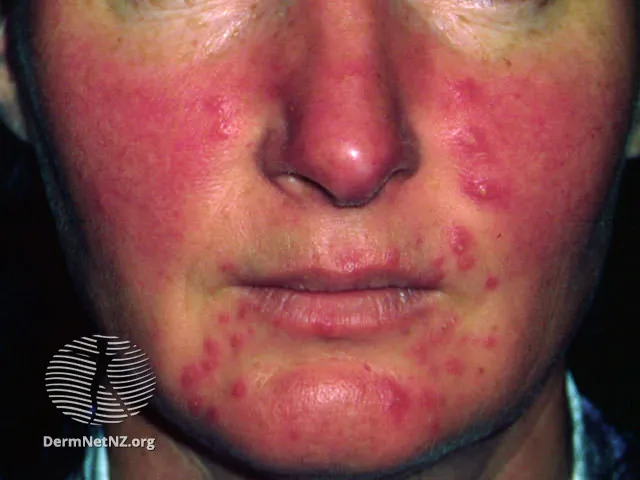
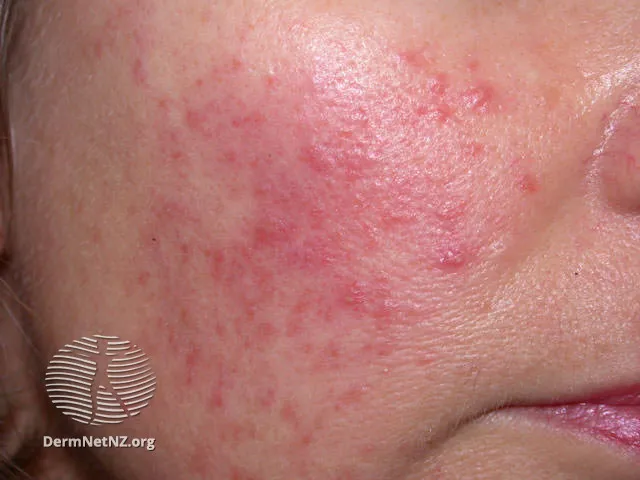
Rosacea can present with one or more of four clinical subtypes, which may overlap and each need their own treatment approach:
- Erythematotelangiectatic — flushing, background erythema, visible vessels.
- Papulopustular — inflammatory papules and pustules (no comedones).
- Phymatous — sebaceous gland/connective tissue hyperplasia causing skin thickening, most often the nose (rhinophyma); more common in men >45.
- Ocular — blepharoconjunctivitis (itch, burning, dryness, foreign-body sensation); affects at least half of patients with rosacea, and can precede skin signs.
Flushing differential: flushing/blushing in a non-menopausal patient is most commonly rosacea, but consider other causes — menopause, emotional stress, rapid temperature change, hot/spicy food, alcohol, exercise, vasoactive drugs (calcium channel blockers, sildenafil, nicotinic acid, tamoxifen, cyproterone, systemic steroids, ciclosporin, vancomycin, opioids), and, less commonly, food additives, neurological disorders, carcinoid syndrome, phaeochromocytoma, or systemic mastocytosis — the latter especially if accompanied by systemic symptoms (diarrhoea, sweating), which warrants referral for investigation rather than assuming rosacea. If flushing itself (not the papulopustular/phymatous components) needs treatment beyond trigger avoidance, oral therapies are often poorly tolerated/ineffective, but propranolol 10mg twice daily (or as required) can be trialled, then clonidine 25–50 micrograms twice daily if ineffective; allow 4–6 weeks to assess response.
Management
General measures for all subtypes: minimise triggers (heat, sun, exercise, alcohol, irritating topical products); soap-free emollient cleanser plus regular emollient; low-irritant sunscreen. Avoid topical steroids — not effective, and can cause a severe rebound flare on stopping even after a mild/short course.
- Flushing/erythema/telangiectasia — general measures; a topical vasoconstrictor (brimonidine gel, once daily each morning) gives temporary cosmetic improvement (~12 hours) but is for short-term/episodic use only (e.g. before an event) — long-term use risks rebound vascular flare, sometimes worse than baseline. Permanent erythema/telangiectasia → refer for vascular laser therapy (does not help flushing or papules/ pustules).
- Papules/pustules (mild) — often doesn’t need treatment. If wanted for cosmetic reasons or sensitive skin: topical ivermectin 1% cream once daily (now generally preferred), or metronidazole 0.75% gel/cream once– twice daily, or azelaic acid 15% gel/20% lotion once–twice daily (azelaic acid and metronidazole are preferred in pregnancy/breastfeeding). Apply for 6–12 weeks for maximal effect; most patients need only 2–3 months at a time, but some need long-term intermittent therapy.
- Papules/pustules (more severe, or topical therapy failed) — oral antibiotic: doxycycline 50–100mg daily (response usually 3–4 weeks, up to 8 weeks) or erythromycin if doxycycline unsuitable; switch to minocycline 50–100mg daily if inadequate response/not tolerated after 4 weeks. Stop oral (and topical) treatment once controlled; if it recurs within a month, use a lower dose (doxycycline or minocycline 50mg daily or alternate days) for a longer course, up to 12 months. Refer for dermatology advice (may respond to low-dose oral isotretinoin) if not effective.
- Phymatous change (incl. rhinophyma) — general measures; refer to dermatology/plastic surgery for surgical options (laser ablation, shave excision) or isotretinoin if treatment is wanted for cosmetic reasons.
- Ocular rosacea — ocular lubricants, daily eyelid hygiene, firm eyelid margin massage (as for blepharitis) first-line; oral antibiotics as above if inadequate; refer to ophthalmology if antibiotics don’t help.