Pelvic Pain
Written 20th April 2020 - Last Update 25th August 2026
Pelvic Pain
Chronic pelvic pain
-
Defined as intermittent or constant abdominal and/or pelvic pain for at least 6 months, not exclusively with menstruation or intercourse, and not associated with pregnancy.
-
Endometriosis is the most common cause.
-
Chronic constipation and recurrent UTI are also common causes.
-
Gastrointestinal
-
Chronic constipation
-
Coeliac disease
-
Diverticular disease
-
Inflammatory bowel disease
-
Irritable bowel syndrome
-
Proctalgia fugax
-
-
Gynaecological
-
Adenomyosis
-
Chronic pelvic inflammatory disease (PID)
-
Endometriosis
-
Ovarian cysts pathology
-
Pelvic adhesions or infection
-
Pelvic congestion syndrome
-
Recurrent dysmenorrhoea
-
Vulvodynia
-
-
Musculoskeletal
-
Chronic abdomen wall pain
-
Coccydynia
-
Fibromyalgia
-
Pelvic floor myalgia
-
Vaginismus
-
-
Neurological
-
Neuropathic pain
-
Post-surgical neuralgia
-
Pudendal neuralgia
-
-
Psychological
-
Depression / anxiety
-
Sexual abuse
-
Somatisation
-
-
Urological
-
Interstitial cystitis
-
Painful bladder syndrome
-
Recurrent UTI
-
Urethral syndrome
-
-
Other – e.g., opioid dependency
Examination
-
Check abdomen, pelvis (including speculum and bimanual examination), and rectum.
-
Check lower back, hips, and pelvis.
-
If uterine, adnexal, or cervical motion tenderness, consider pelvic inflammatory disease (PID).
-
If inserting the speculum is difficult, there may be a vulvovaginal dermatologic problem or vulvodynia.
-
In endometriosis, clinical examination is usually normal, however, pelvic tenderness, a fixed retroverted uterus, or enlarged ovaries are suggestive. Occasionally, nodules may be felt on the utero-sacral ligaments or in the pouch of Douglas, or endometriotic lesions may be seen in the vagina or on the cervix.
Investigations
-
Consider FBC, CRP, urinalysis, MSU, STI swabs, and a pregnancy test. Negative swabs do not rule out pelvic inflammatory disease (PID).
-
Cervical screening if due.
-
Diagnostic co-test (HPV and LBC) if abnormal vaginal bleeding, dyspareunia, or abnormal vaginal discharge.
-
If urinary urgency, ask the patient to complete a bladder diary.
-
Pelvic ultrasound
Management
- Ovarian suppression with hormonal birth control is a good diagnostic and therapeutic tool in women of reproductive age with chronic pelvic pain — a 3-6 month therapeutic trial of hormonal treatment for cyclical pain is reasonable before diagnostic laparoscopy, not instead of eventual referral if it fails.
- CA-125: check if bloating, early satiety, pelvic pain, or urinary urgency/frequency occur persistently or frequently (>12 times/month) — particularly relevant for new IBS-type symptoms in women >50yrs (ovarian cancer red flag per NICE).
- Red flags needing more urgent work-up: PR bleeding, new bowel symptoms >50yrs, new pain after menopause, pelvic mass, suicidal ideation, excessive weight loss, irregular vaginal bleeding >40yrs, postcoital bleeding.
- Laparoscopic uterosacral nerve ablation (LUNA) is not effective for chronic pelvic pain and should not be offered.
- Manage according to identified cause as per above.
Clinical approach & PID vs endometriosis
Typical Patterns of Pelvic Pain:
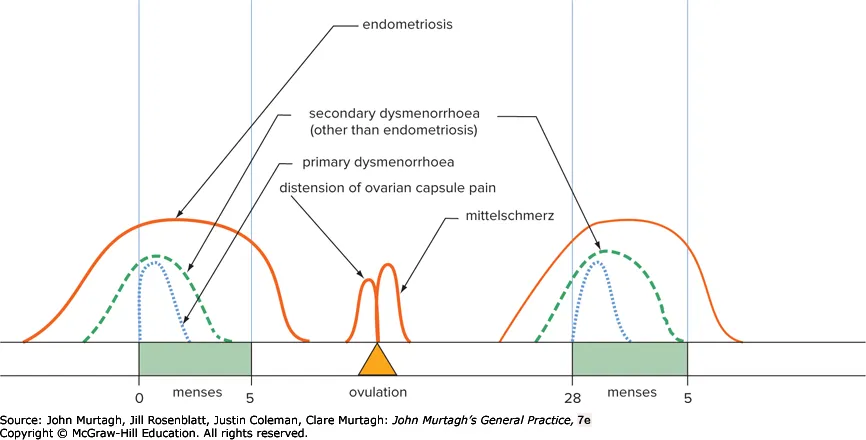
Clinical Approach:
History:
Timing of pain with peroids
Onset of pain within first 2 years of Menarche (Primary dysmenorrhoea)
Severity of pain - ie impact on activity’s - can still go to work, is stuck at home in bed
Associated symptoms
- Bleeding, pain, pv discharge, fevers
Examination:
Abdominal and Speculum and bimanual examination looking for tenderness, rebound, guarding, cervical tenderness, adnexal masses or tenderness
Can be difficult in the presence of pain
Do not do pelvic examination in suspected ectopic pregnancy without facilities for resus as it may induce rupture.
Investigations are guided my suspected diagnoses and chronicity of the pain.
Chronic Pain:
Pelvic pain of >6 months duration, may be cyclical or continuous
Common - 15% of 18-50yo women
Endometriosis is the most common cause (33%)
Pelvic adhesions second most common 24%
An important cause of chronic pelvic pain is pelvic inflammatory disease
It may be differentiated from endometriosis based on clinical features, but there is significant overlap
| Feature | Chronic PID | Endometriosis |
|---|---|---|
| History | Acute pelvic infection (e.g. ruptured appendix) | Dysmenorrhoea |
| Subfertility | ||
| IUCD usage | Dyspareunia | |
| Pelvic pain | ||
| Pelvic pain | + to ++ (mild to moderate) | ++ to +++ (moderate to severe) |
| Premenstrual | Premenstrual and menstrual | |
| Lower abdominal location | Acute pain if rupture of endometrioma | |
| Backache | + mild | ++ moderate |
| Low sacral pain with menstruation | ||
| Secondary dysmenorrhoea | Moderate to severe | Moderate to severe |
| From onset of acute PID | Gradual onset increases in severity throughout menstruation | |
| Decreases with menstruation | ||
| Menstruation | Irregular and heavy | Heavy |
| Dyspareunia | Moderate | Often severe |
| Infertility | +++ | ++ |
| Urinary symptoms | — | Frequency, dysuria and haematuria if bladder wall involved |
| Bowel symptoms | — | Painful defecation if rectal wall involved |
| Vaginal symptoms | May be chronic purulent discharge or leucorrhoea | — |
Chronic pelvic pain with a normal laparoscopy
A normal laparoscopy is the best possible outcome and does not invalidate the pain — it means there is no endometriosis to excise, not that the pain is imagined. Reframe it that way for the patient; anxiety and embarrassment at a “normal” result are common and counterproductive. Rather than seeing pain as needing a visible lesion, work through the contributors, which usually coexist:
- Pelvic organs — bladder (interstitial cystitis/painful bladder syndrome), bowel (IBS, constipation), residual/adenomyotic or ovarian causes.
- Pelvic muscles — pelvic floor myalgia / high-tone dysfunction is very common and treatable; assess for tenderness on examination and refer to a pelvic-floor physiotherapist.
- Central nervous system — central sensitisation (pain out of proportion to findings, allodynia, widespread pain, fatigue, poor sleep); manage with a pain-science explanation, neuromodulators, and multidisciplinary pain input.
- Psychosocial — anxiety, depression, past trauma/abuse, and the meaning of the pain all modulate it; address them as part of care, not as an afterthought.
Set the expectation that pain management is ongoing and that removing lesions is not always the answer — a patient who understands this, and feels believed, does better.