Anticholinergic Toxidrome
Written 7th August 2020 - Last Update 31st August 2026
Anticholinergic Toxidrome
Drugs with anticholinergic effects block acetylcholine receptors in central or peripheral tissues. The toxidrome is the extreme end of that blockade.
Causative agents
Pure anticholinergics — atropine, benztropine, benzhexol, belladonna/deadly nightshade, angel’s trumpet (Brugmansia), jimson weed.
Drugs with anticholinergic effects — antidepressants, antihistamines, antiparkinson drugs, antipsychotics, antispasmodics, mydriatics, carbamazepine. Antihistamines are the commonest source of anticholinergic overdose. Plants containing belladonna alkaloids are often abused for their hallucinogenic properties.
Clinical picture
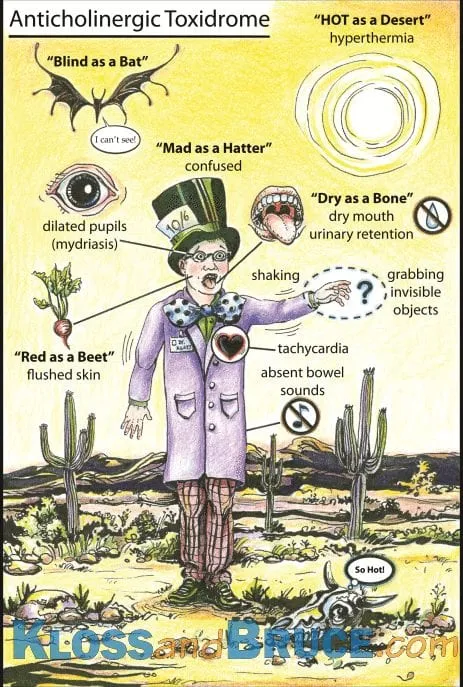
The mnemonic “red as a beet, dry as a bone, blind as a bat, mad as a hatter, hot as a hare, full as a flask” maps onto flushing, anhidrosis and dry mucous membranes, mydriasis, altered mental status, fever, and urinary retention. Decreased bowel sounds are a common finding, and tachycardia is usual.
Central effects include delirium, hallucinations, agitation, restlessness, confusion, staccato speech, and picking at clothing and bedding. Seizures and jerking movements are possible.
The history is often unhelpful — a reliable account is not always obtainable, so recognise the toxidrome on examination.
Differential diagnosis
Agitated delirium has many causes, especially in older people: meningitis, sepsis, uraemia, sympathomimetic toxicity, salicylate toxicity and serotonin syndrome all mimic it. The absence of sweating is what separates anticholinergic from sympathomimetic toxicity. Consider whether this is pure anticholinergic toxicity or mixed, as seen with tricyclic antidepressants and phenothiazines.
Treatment
Supportive care is usually all that is required. Start with the standard poisoned-patient approach — airway, breathing, circulation, vital signs including temperature.
- Sedation with intravenous benzodiazepines is the mainstay; agitation is the hardest part to manage
- IV fluids for hypotension or suspected rhabdomyolysis
- Active cooling if significantly hyperthermic
- Activated charcoal is worth considering, and the usual time window can be extended because anticholinergics slow gastrointestinal motility
- IV sodium bicarbonate if wide-complex dysrhythmias develop
- Physostigmine is reserved for severe cases refractory to benzodiazepines, generally only in pure anticholinergic poisoning with both central and peripheral features, and only where resuscitation equipment including atropine is immediately available — a specialist decision, not a GP one
Ring the Poisons Information Centre (13 11 26) for case-specific advice. See Toxicology — general approach for decontamination and risk assessment principles.
With early identification and adequate supportive care the prognosis is good. Complications include respiratory failure, cardiovascular collapse, rhabdomyolysis, seizures and coma.
Chronic anticholinergic burden
The everyday general practice version of this problem is cumulative, not acute. Multiple drugs blocking acetylcholine receptors have additive effects — the patient’s anticholinergic burden.
Around 20-50% of older adults are prescribed drugs with anticholinergic effects. Common adverse effects are dry mouth, urinary retention, constipation, cognitive decline and loss of functional capacity to perform activities of daily living, and in older adults the burden is linked with falls, functional decline, delirium and death. A Cochrane review suggests older adults without cognitive impairment exposed to these drugs may be at increased risk of cognitive decline and dementia.
Several tools exist (Anticholinergic Drug Scale, Drug Burden Index and others), but agreement between them is poor. Deprescribing has potential benefits beyond reversing the adverse effects themselves, including preventing falls.
Reference: LITFL Toxicology Flashcard Library.