Syphilis
Written 25th April 2020 - Last Update 31st August 2026
Syphilis
Caused by Treponema pallidum. Continuing high prevalence in men who have sex with men and remote Aboriginal and Torres Strait Islander communities, with multiple ongoing outbreaks across Australia — check current public health alerts for the regions currently affected.
Recent concerning increase in prevalence in the general population, especially in women of reproductive age, so a low threshold for testing is required. Seek specialist advice in pregnancy.
Syphilis is the great pretender. Clinically the disease has 3 stages, but about 50% of people have no symptoms and are only diagnosed by serological testing. Consider it in anyone with an unusual oral, anorectal or genital lesion, a psoriasiform or warty eruption, or a non-itchy rash.
Clinical stages
Primary: a genital ulcer/chancre, usually painless, non-tender, with a well-defined margin and indurated base — may go unnoticed, especially if on anal skin, the cervix, or in the mouth. Incubation 10–90 days (average 3 weeks). In about 30% of cases there may be multiple chancres. Inguinal lymph nodes are usually enlarged, rubbery, and non-tender. Even untreated, the chancre usually heals spontaneously within a few weeks.
Secondary: 2–24 weeks after initial infection (average 6 weeks). Skin involvement in over 90% of cases — usually a generalised rash on the trunk, sometimes involving only the palms and soles, which can be confused with drug eruptions, pityriasis rosea, or guttate psoriasis. May include alopecia and condylomata lata (warty growths in the anogenital area), and rarely neurological signs (cranial nerve palsies, ophthalmic signs, meningitis). May be accompanied by constitutional symptoms (fever, malaise, headache, lymphadenopathy). If untreated, symptoms slowly resolve over weeks but may recur.
Latent: early latent (< 2 years) implies recent infection — positive serology with no clinical symptoms/signs — and is treated as infectious syphilis; if untreated, people become asymptomatic (non-infectious) over 12–24 months. Late latent (> 2 years) is no longer sexually infectious after 24 months, though a pregnant woman can still transmit to the fetus — if duration is unknown or in doubt, treat as late latent.
Tertiary: develops months to years after primary infection in about a third of untreated patients — gummas (skin lesions), cardiovascular disease, neurological complications.
The secondary rash in detail
Patients are highly infectious at this stage. The rash usually appears 6–8 weeks after the primary chancre, and around a quarter of untreated primary infections progress to secondary syphilis within 3 months.
The generalised skin eruption of secondary syphilis varies and may resemble any type of eruption from psoriasiform to rubelliform to roseoliform. It starts as non-itchy, faint pink macules, then becomes maculopapular — might be subtle or might appear as rough, red or reddish-brown papules or plaques. It can involve the whole body including palms and soles, and is more prolific on flexor surfaces.
Rarely, the rash presents as a cluster of erythematous papules around a central scaly plaque, resembling a flower; this floral morphology is described as ‘corymbose’ syphilis.
Look also for:
- Patchy alopecia and lymphadenopathy.
- Mucosal surfaces — inside the mouth, throat, genital area, vagina, and anus — can become raw and red (mucous patches).
- Greyish-white, moist plaques in the groin, inner thighs, armpits, umbilicus, or under the breasts; these are called condyloma lata.
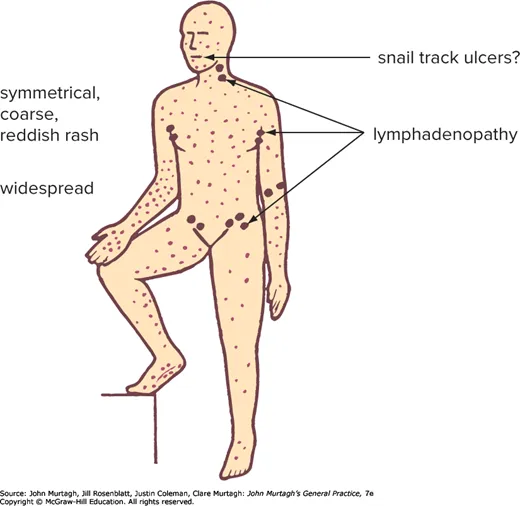
Clinical photos (original note)
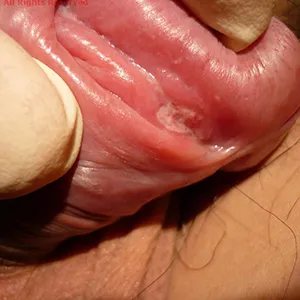
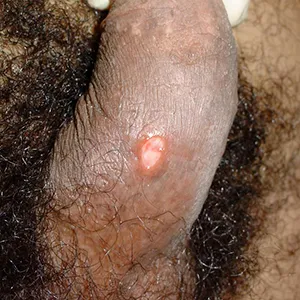
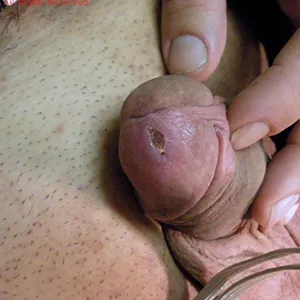
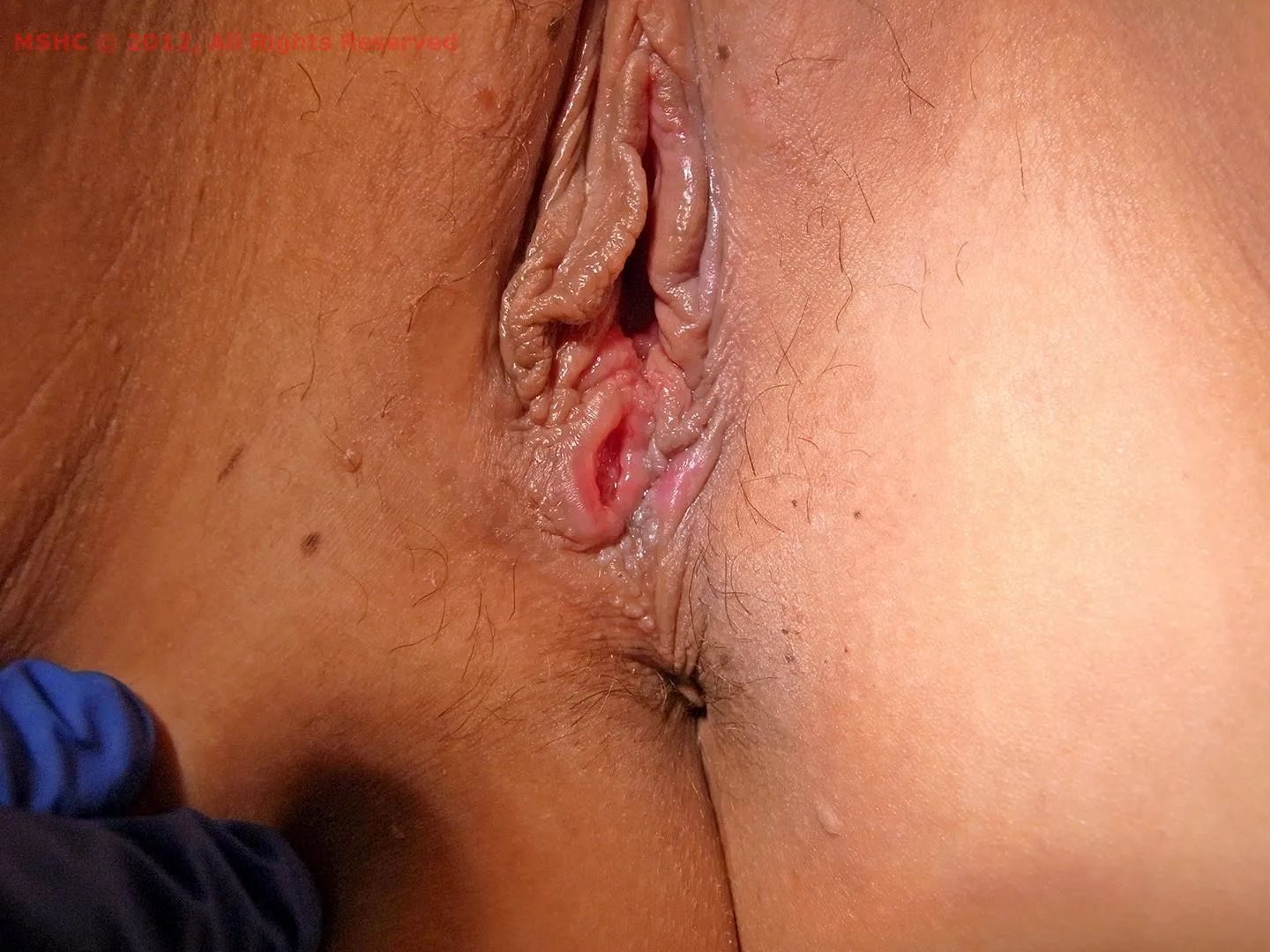
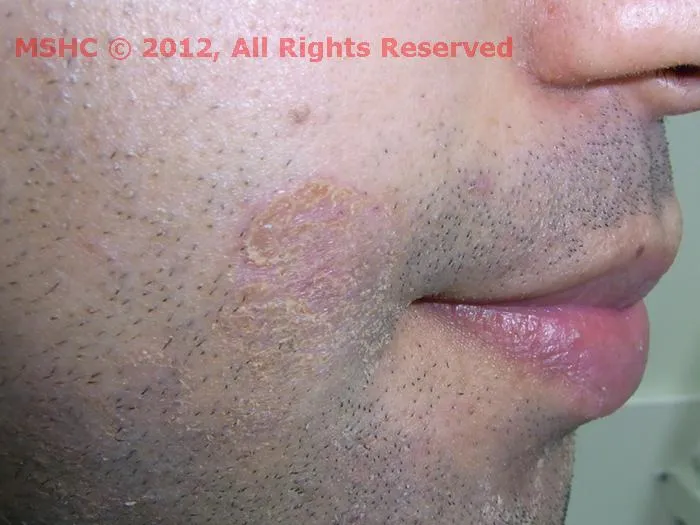
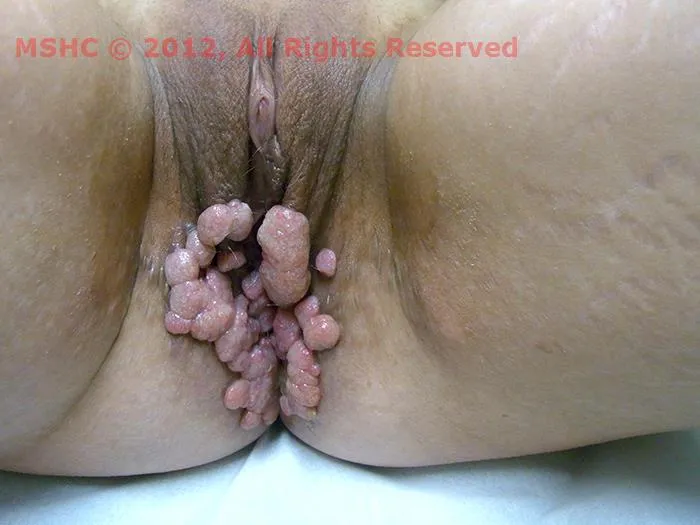
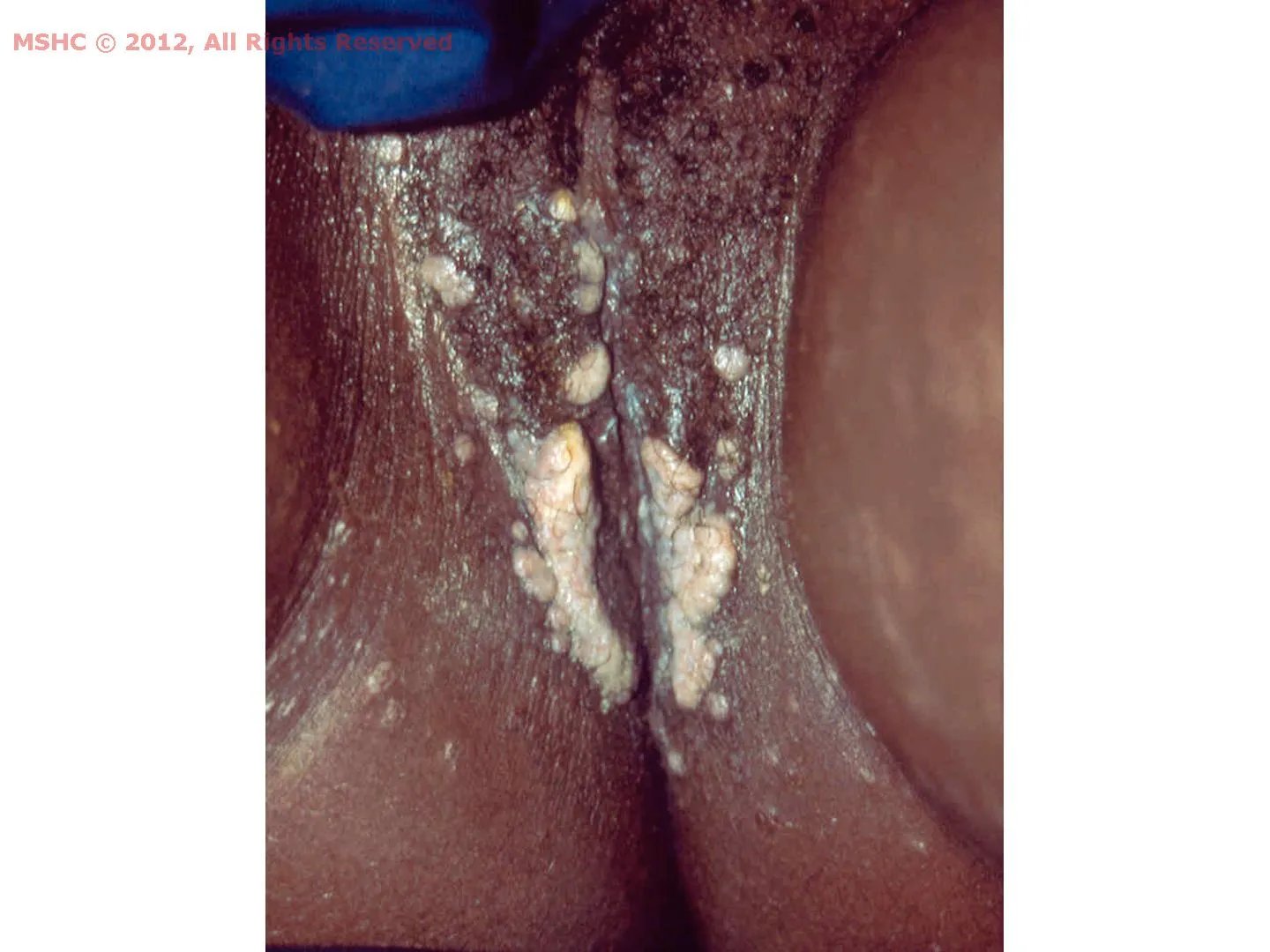
Clinical indicators for testing
Genital ulcers; MSM with any genital symptoms or rash; any rash affecting the palms or soles, or that is persistent/unexplained; pyrexia of unknown origin; unexplained persistent lymphadenopathy; unexplained liver disturbance; alopecia.
Diagnosis
A combination of serology, history, and clinical assessment.
- Serology (blood): usually screened with an EIA (some labs still screen with TPPA or TPHA); if reactive, RPR and TPHA (or TPPA) are performed as confirmatory testing. NAAT testing may be positive before seroconversion occurs in very early cases.
- NAAT (swab of an ulcer): can confirm diagnosis by direct identification of T. pallidum from an ulcer.
- Repeat negative serology at 2 weeks if clinical suspicion remains.
Management
Early referral to, or discussion with, a sexual health specialist is strongly recommended.
| Situation | Recommended | Alternative |
|---|---|---|
| Infectious syphilis (primary, secondary, early latent) | Benzathine penicillin 1.8g (2.4 million units) IM, stat | Discuss with specialist — procaine benzylpenicillin 1.5g IM daily for 10 days, or doxycycline 100mg BD for 14 days if delayed penicillin hypersensitivity |
| Non-infectious syphilis (late latent) | Benzathine penicillin 1.8g IM, weekly for 3 weeks | Discuss with specialist — procaine benzylpenicillin daily for 15 days |
Benzathine benzylpenicillin is long acting and the drug of choice for treatment of syphilis. Supply has been intermittent in Australia, so confirm availability early and discuss with a sexual health service if it can’t be sourced.
- Repeat RPR on the day treatment starts to establish an accurate baseline.
- Advise no sexual contact for 7 days after treatment.
- Advise no sex with partners from the last 3 months (primary), 6 months (secondary) or 12 months (early latent) until they’ve been tested and treated if necessary.
- Presumptively treat all sexual contacts from the last 3 months of patients with primary or secondary syphilis, regardless of their serology result, with benzathine benzylpenicillin 2.4 million units IM as a single dose.
Contact tracing
- Primary syphilis: 3 months plus duration of symptoms.
- Secondary syphilis: 6 months plus duration of symptoms.
- Late latent syphilis: long-term partners only.
Test of cure
Review all patients clinically and with repeat RPR testing at 3 months, then at 6 months and if necessary at 12 months after completing treatment.