HIV
Written 10th August 2020 - Last Update 31st August 2026
HIV
Untreated HIV causes progressive immune deficiency, reaching AIDS on average ~10 years after infection. All patients should start lifelong combination antiretroviral therapy (ART) as soon as possible after diagnosis.
In NSW ~80% of diagnoses are in men who have sex with men. Aboriginal and Torres Strait Islander people have a similar incidence to the general population, but a higher proportion of heterosexual transmission. For prevention, see HIV Prevention: PrEP & PEP.
Transmission
Via blood, semen, vaginal/cervical secretions and breast milk. Routes: unprotected vaginal or anal intercourse (rarely oral sex); sharing injecting equipment; needle- stick injury; infected blood products; and vertical (mother-to-child) transmission.
Natural history
- Seroconversion illness — within ~6 weeks of exposure, usually ~2 weeks. See below. Consider HIV in any EBV-like illness in an at-risk person.
- Asymptomatic phase — for several years.
- Immune deficiency — as CD4 declines (<500): oral thrush, diarrhoea, weight loss, skin infections, recurrent herpes zoster.
- AIDS (~10 years; CD4 <200) — opportunistic infections and cancers: Pneumocystis jirovecii pneumonia, oesophageal candidiasis, cerebral toxoplasmosis, tuberculosis, Kaposi’s sarcoma.
Primary HIV (seroconversion illness)
Acute HIV (seroconversion) syndrome occurs in 40–90% of people during the first few weeks after infection — generally from sexual or IV drug-use exposure. Highly infectious at this stage due to high viral load.
General: fever (most common symptom), sore throat, lymphadenopathy, headache/retro-orbital pain, myalgia/arthralgia, malaise, appetite/weight loss, nausea/vomiting/diarrhoea. Thrombocytopenia may be present.
Neurological: meningitis, encephalitis, peripheral neuropathy, myelopathy.
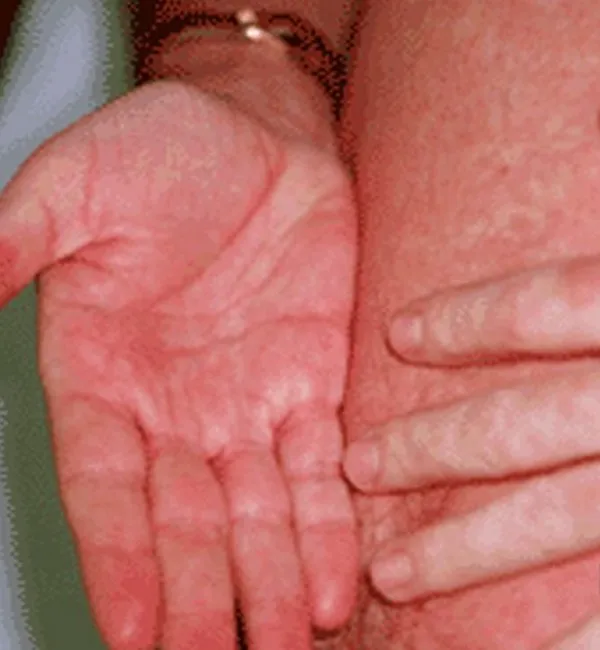
Dermatological: erythematous maculopapular rash — symmetrical, involving the face, palms, soles, trunk and limbs — and mucocutaneous ulceration (mouth, oesophagus, penis, anus; painful; only a small proportion of patients develop this).
Diagnosis and baseline work-up
- HIV Ag/Ab (4th-generation) serology — usually reactive within ~6 weeks (occasionally longer); a reactive screen is confirmed (historically Western blot / now supplemental confirmatory assays).
- In suspected primary infection, test earlier and pair the tests: HIV Ag/Ab combined test (antigen component reactive 15–20 days post-exposure) plus HIV RNA test (may be reactive as early as 10–15 days).
- p24 antigen is high during primary illness; HIV RNA (viral load) quantifies serum virus (should be undetectable on treatment); CD4 count marks immune function (usually >500 when well).
- Point-of-care tests give a result in 10–20 minutes but are less sensitive than standard lab testing.
Once confirmed: HIV viral load, resistance genotyping, CD4 count. On diagnosis, also check: CD4 count, viral load, hepatitis A/B/C serology, consider TB screening, plus UEC, lipids, glucose and urinalysis. Add FBC, phosphate, LFT, urine protein, fasting glucose/lipids, and serum cryptococcal antigen if CD4 <100 cells/microlitre.
Management
Refer newly diagnosed patients urgently to a sexual health or HIV clinic to start ART (three-drug combinations; lifelong; adherence is critical to avoid resistance). GP S100 HIV prescribers can also manage ART.
Confirm the diagnosis and exclude opportunistic/co-infections. Initial antiretroviral therapy is typically two NRTIs plus an integrase strand transfer inhibitor (INSTI) — seek expert advice. Three-drug regimens were classically considered necessary, but a two-drug regimen (dolutegravir plus lamivudine) is now considered first-line in select patients (no high viral load, no genotypic resistance, no hepatitis B co-infection).
HIV is a notifiable condition. Undertake contact tracing of recent sexual and needle-sharing partners, back to the onset of risk behaviour or the last known negative test. Provide support around the long-term nature of therapy (e.g. the NSW Health HIV support program for GPs diagnosing a new case).
For HIV-negative but high-risk patients, discuss PrEP and behavioural prevention: condoms with water/silicone lubricant, safe injecting, fewer partners, 3-monthly HIV/STI testing, knowing partners’ status. STIs increase HIV transmission risk. PEP can be offered within 72 hours of a potential exposure.