Polyarteritis Nodosa
Written 29th July 2020 - Last Update 23rd July 2026
Polyarteritis Nodosa
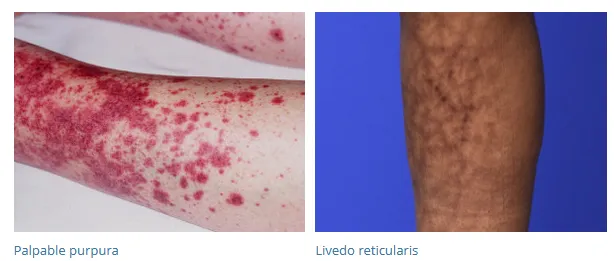
A systemic vasculitis affecting small-to-medium arteries, causing palpable purpura, livedo reticularis and non-healing ulcers; diagnosed by biopsy of affected tissue (often skin). Affects middle-aged/older adults; males more commonly.
Classic triad: arthralgia + weight loss + fever (± skin lesions).
Clinical features
Systemic: fever, anorexia, weight loss, myalgia, migratory or polyarticular arthralgia.
Skin: cutaneous/subcutaneous nodules, palpable purpura, livedo reticularis, skin infarction.
Neurological: typically peripheral nerves — sudden-onset pain and tingling progressing to a motor deficit (mononeuritis multiplex pattern).
Intestinal/hepatic: mesenteric ischaemia causing abdominal pain, haemorrhage, liver function abnormalities.
Renal: vascular ischaemic nephropathy; malignant hypertension can occur if the renal artery is involved.
Investigations
- ~30% of affected patients are hepatitis B surface antigen-positive.
- Classical PAN is ANCA-negative — a key differentiator from the ANCA-associated vasculitides (GPA/microscopic polyangiitis/EGPA).
- Raised inflammatory markers; check U&E and LFT.
Management
- Urgent specialist involvement.
- Diagnosis is confirmed by biopsy of affected tissue; if no tissue is accessible, angiography (looking for microaneurysms) is a useful alternative.
- Induction to achieve remission: high-dose corticosteroids, adding rituximab or cyclophosphamide if there is major organ involvement.
- Where PAN is hepatitis B-associated, antiviral therapy alongside a short course of immunosuppression (rather than long-term immunosuppression alone) is the specialist-directed approach, to avoid promoting viral replication.