Uterovaginal Prolapse
Written 7th May 2020 - Last Update 23rd July 2026
Uterovaginal Prolapse
Types
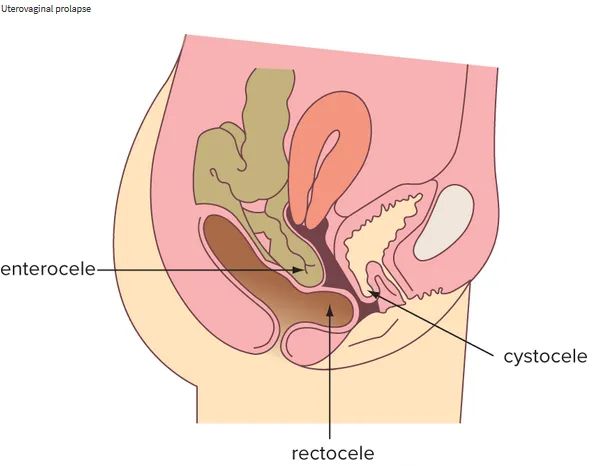
- Cystocele — bladder descends into the vagina
- Urethrocele — urethra bulges into the vagina
- Rectocele — rectum protrudes into the vagina
- Enterocele — a loop of small intestine bulges into the vagina
- Uterine prolapse — uterus/cervix descend toward the vaginal introitus:
- 1st degree — cervix remains in the vagina
- 2nd degree — cervix protrudes on coughing/straining
- 3rd degree (procidentia) — uterus lies outside the vagina
Common in women over 50.
Risk factors
Increased parity, higher birth weight, increasing age, chronic cough, obesity.
Presentation
Pelvic/vaginal discomfort, a dragging or bearing-down sensation, a noticed vaginal bulge,
low back pain. Ulceration of prolapsed epithelium can cause bleeding or discharge. Bladder/
bowel dysfunction (difficulty emptying, or incontinence — see
incontinence-male-and-female.md/urinary-retention.md) and sexual dysfunction may occur.
Examination
Sims speculum, or the posterior blade of a Graves speculum, in a lateral or lithotomy position. Ask the patient to cough/bear down repeatedly; observe the anterior, posterior and lateral vaginal walls and cervical descent.
Investigations
None routinely required.
Management
Correct modifiable risk factors: obesity, constipation, oestrogen deficiency, chronic cough, smoking, asthma.
Pelvic floor exercises — referral to a specialist pelvic floor physiotherapist improves outcomes; needs lifelong continuation; won’t help higher-grade prolapse.
Topical oestrogen cream can help in postmenopausal women. Daily vaginal packing with gauze plus oestrogen cream helps women with ulceration/chafing from severe prolapse.
Vaginal pessaries — appropriately selected and fitted; ring pessaries need changing/ washing at least every 3–6 months.
Surgery — useful for associated sexual, urinary and bowel dysfunction.
See also womens-health’s female-sexual-dysfunction.md for the associated sexual
dysfunction angle.