Infantile Haemangioma
Written 8th April 2020 - Last Update 19th August 2026
Infantile Haemangioma
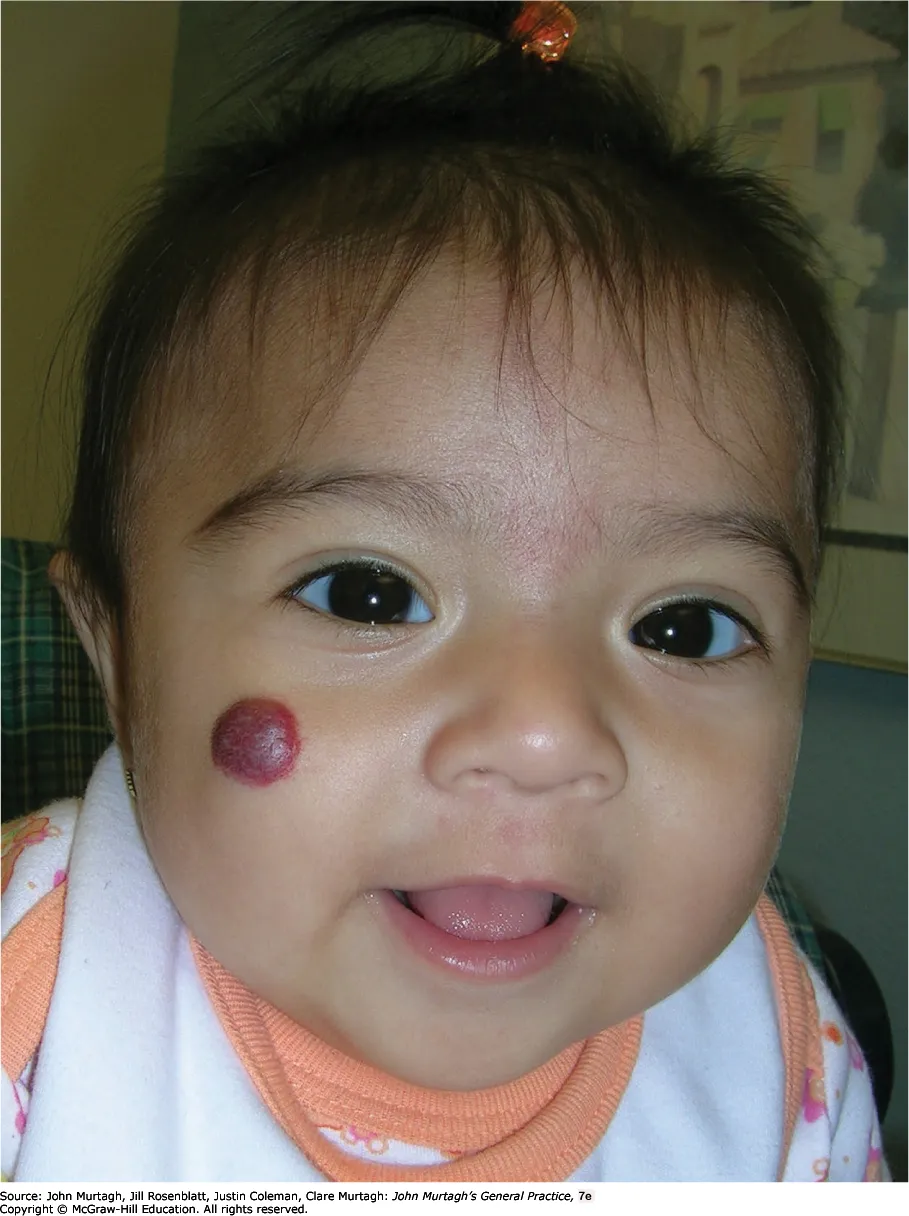
Can be superficial (“strawberry haemangioma” — flat or lumpy, like strawberry jam splashed on the skin) or deep (“cavernous haemangioma” — a bluish swelling). Usually appear shortly after birth; occur in ~10% of infants, 60% on the head and neck.
Natural history
80% of growth occurs in the first 3 months (most stop growing by 5 months, some continue to 18 months). They then involute: 50% resolved by age 5, 70% by 7, 90% by 9 — though regression of bulky lesions is often incomplete, leaving an atrophic “dented” scar or anetoderma.
When to refer
Large, deep or multiple haemangiomas can be associated with organ malformations. Refer:
- prominent facial lesions (cosmetic concern)
- ulcerating haemangiomas
- lesions impairing vision, hearing, breathing or feeding
- lesions in other important locations (e.g. perineum, sacrum).
Management
Active non-treatment is the rule for most lesions. Beta blockers (propranolol, or topical timolol drops/gel) are proven effective for those needing treatment.