Trachoma / Chlamydial Conjunctivitis
Written 16th July 2020 - Last Update 19th August 2026
Trachoma / Chlamydial Conjunctivitis
Acute or subacute unilateral conjunctivitis with mucopurulent discharge.
Chlamydial conjunctivitis
Occurs in three common patient groups:
- Neonates, at 1–2 weeks of age (vertical transmission from mother)
- Young patients with an associated chlamydial STI
- Aboriginal patients in rural/remote settings, as part of trachoma (below)
Diagnosis: lack of response to usual conjunctivitis treatment + positive PCR on swab.
Treatment:
- Azithromycin 1 g stat PO (20 mg/kg in children)
- Neonates: 20 mg/kg daily for 3 days — 5–30% of affected neonates also develop chlamydial pneumonia; treat the mother as well
- If pain, photophobia or reduced vision → refer to ophthalmology (corneal complications can occur)
Trachoma
A chronic form of Chlamydia trachomatis infection from repeated reinfection — the leading infectious cause of blindness worldwide, still endemic in remote Aboriginal communities in Australia.
Untreated, it causes progressive scarring of the eyelids and cornea, leading to vision loss. Suspect trachoma in any conjunctivitis presenting in an endemic area.
Community-level prevention (SAFE strategy elements): regular face washing and treatment of household contacts in endemic areas.
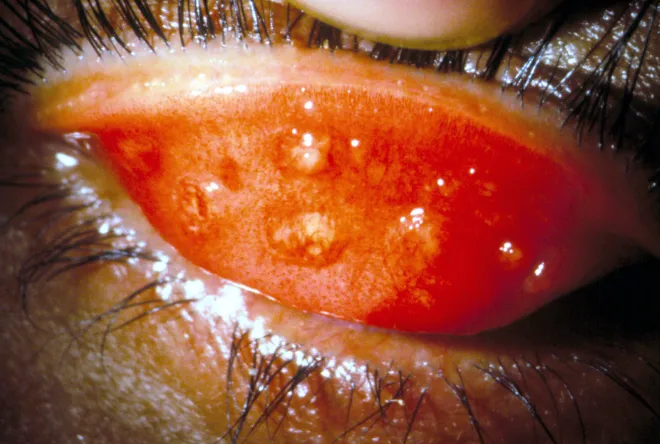
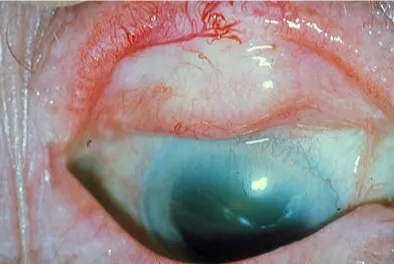
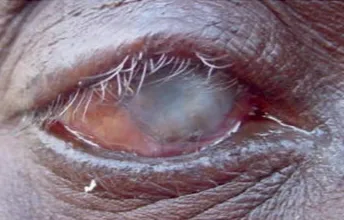
Source: https://www.msdmanuals.com/professional/eye-disorders/conjunctival-and-scleral-disorders/trachoma