Strabismus
Written 9th July 2020 - Last Update 23rd July 2026
Strabismus
A squint is rarely obvious in the first weeks of life; it tends to show up once the baby starts using its eyes, from about 2 weeks to 3–4 months of age — though it may appear later, even in adulthood. Vision continues developing until age 7–8 years.
Types
- Constant (true) squint — always present
- Latent squint — only appears under stress (e.g. fatigue)
- Transient squint — noticeable for short periods, otherwise normal
- Alternating squint — switches between eyes, so the child can use either eye to fixate
- Pseudosquint — not a true squint; appearance caused by eyelid shape (broad epicanthic folds)
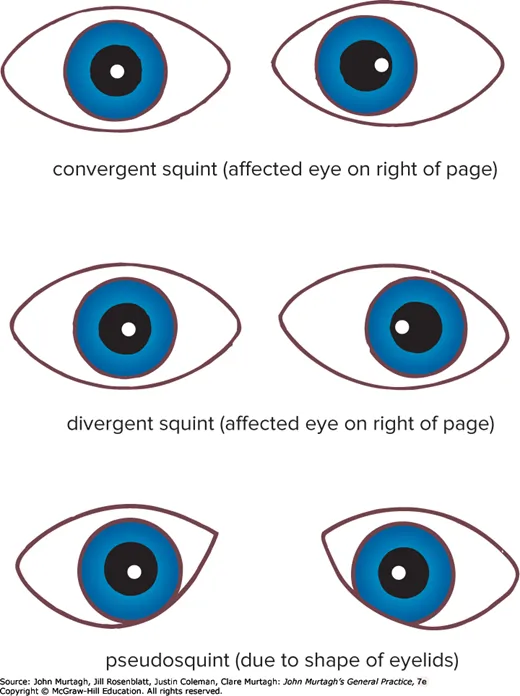
Differentiating true squint from pseudosquint: shine a torch from ~40 cm and observe the corneal light reflex — in pseudosquint the reflection sits in the same position in both eyes; in true squint the reflections differ.
Which squints matter
Constant and alternating squints are the two serious types and need early referral. Transient and latent squints usually aren’t a problem.
Always refer a child with strabismus when first seen to exclude serious ocular pathology — retinoblastoma, congenital cataract, glaucoma — any of which would need emergency surgery.
Amblyopia risk
Even with a normal ocular exam, a child with strabismus needs specialist management: the deviating eye can become amblyopic (a lazy eye” with reduced/absent function) if not used normally by age 7. The younger the child, the more treatable amblyopia is — it may be irreversible if first detected after school age. “Surgical correction of a true squint is preferred at age 1–2 years.
Age-specific notes
- Infants up to 3 months can have an intermittent, small misalignment that resolves and isn’t seen again — normal
- Children do not “grow out of” a significant misalignment beyond this stage — early intervention is more effective the sooner it happens
- Any misalignment on corneal reflex testing in a child under 1 year → refer promptly
Source: HealthPathways.