Blepharitis
Written 11th July 2020 - Last Update 28th August 2026
Blepharitis
Chronic inflammation of the eyelid margins. Pathophysiology isn’t fully understood but
involves staphylococcal enzymes/toxins and immune-mediated damage. Often associated with
seborrhoeic dermatitis, acne, rosacea and dry eye (see dry-eye.md).
Classified into anterior and posterior blepharitis, though there is considerable symptom overlap and the two often coexist.
Anterior blepharitis
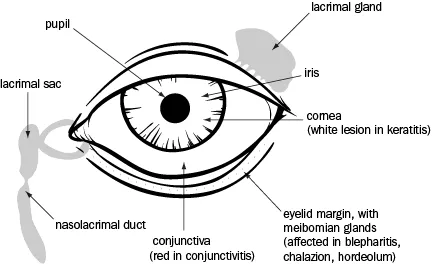
Inflammation of the anterior eyelid margin (eyelid skin and lashes). Presents with burning and grittiness in both eyes. Examination shows crusting, scaling and redness of the eyelid margin.
Posterior blepharitis
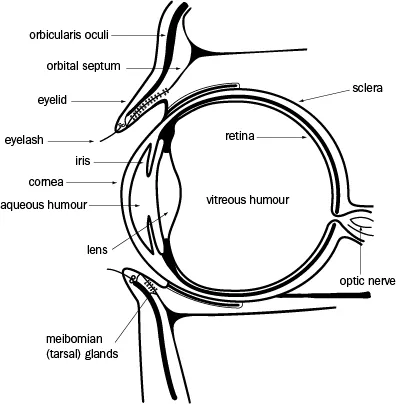
From meibomian gland dysfunction (the sebaceous glands at the eyelid rim); commonly associated with rosacea. Signs: eyelid margin redness with blocked meibomian glands and a frothy discharge along the margin (often subtle macroscopically); chalazia may coexist — see chalazion/hordeolum below.
Chalazion (meibomian cyst) & hordeolum (stye)
Chalazion (meibomian cyst): a focal inflammatory lesion on the eyelid from obstruction of the meibomian glands (the sebaceous glands at the eyelid margin). Usually associated with the posterior blepharitis above.
- Generally not tender unless acutely inflamed
- Managed conservatively with repeated warm compresses
- Usually resolves within 1 month
Hordeolum: a tender, inflamed mass at the eyelid margin.
- External hordeolum (stye) — obstruction and secondary infection of the glands of Zeiss or Moll
- Internal hordeolum — acute infection of a meibomian gland
- Usually caused by staphylococci
- Usually discharges spontaneously with warm compress management
Warm compresses are the mainstay of treatment for both chalazion and hordeolum.
Topical antibiotics are not indicated. Oral anti-staphylococcal antibiotics only if
accompanying cellulitis (as for preseptal cellulitis — see peri-orbital-cellulitis.md).
Incision and drainage for persistent lesions.
Management
Eye hygiene is the mainstay of therapy and controls symptoms/signs if done daily:
- Warm compress for 2–5 minutes (softens crust)
- Gentle lash scrub — sodium bicarbonate solution (1 tsp in 500 mL cooled boiled water), baby shampoo (5 drops in 100 mL sterile water), or a proprietary eye hygiene solution/wipe
Topical antibiotics — effectiveness unclear. In anterior blepharitis, if symptoms are improving with hygiene alone, consider chloramphenicol 1% ointment BD for 1–2 weeks.
Systemic antibiotics (for their anti-inflammatory effect) if posterior blepharitis isn’t controlled despite adequate hygiene:
| Population | Regimen |
|---|---|
| Adults | Doxycycline 100 mg daily, reduced to 50 mg daily once improving (usually 2–4 weeks), continued for 8 weeks minimum |
| Children ≥8 years, ≤26 kg | 50 mg daily → 25 mg |
| Children ≥8 years, 26–35 kg | 75 mg daily → 50 mg |
| Children ≥8 years, >35 kg | As adult dose |
| Children <8 years | Avoid tetracyclines — erythromycin ethylsuccinate 20 mg/kg (up to 800 mg) daily, single or divided dose, for 8 weeks |
| Pregnancy | Erythromycin 500 mg daily for 8 weeks (250 mg daily if 500 mg not tolerated) |