Greater Trochanteric Pain Syndrome
Written 21st February 2020 - Last Update 19th July 2026
Greater Trochanteric Pain Syndrome
The current name for what was called “trochanteric bursitis” — the primary pathology is usually insertional tendinopathy of gluteus medius/minimus at the greater trochanter, ± inflammation of the trochanteric bursa, thought to relate to friction from the iliotibial band.
- Demographics: incidence rises with age; classically women >45–50, often after walking programs, tennis or similar “wear and tear” loading.
- History:
- lateral hip pain, may refer down the leg as far as the foot
- worse lying on that side at night
- worse climbing stairs and getting in/out of cars
- often follows a change in exercise or a strain.
- Examination: localised tenderness over the greater trochanter/outer thigh; hip abductor weakness; ± limp, Trendelenburg gait (“gluteus medius lurch”) or positive Trendelenburg test on the affected side.
- Investigations: clinical diagnosis; ultrasound can confirm bursitis/tendinopathy if needed.
- Management:
- NSAIDs (if not contraindicated) + physiotherapy (stretching and progressive gluteal strengthening) — first-line
- corticosteroid injection into the bursa if failing
- surgery is generally not helpful (causes scarring/shortening of the ITB).
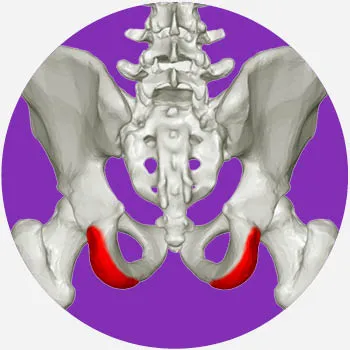
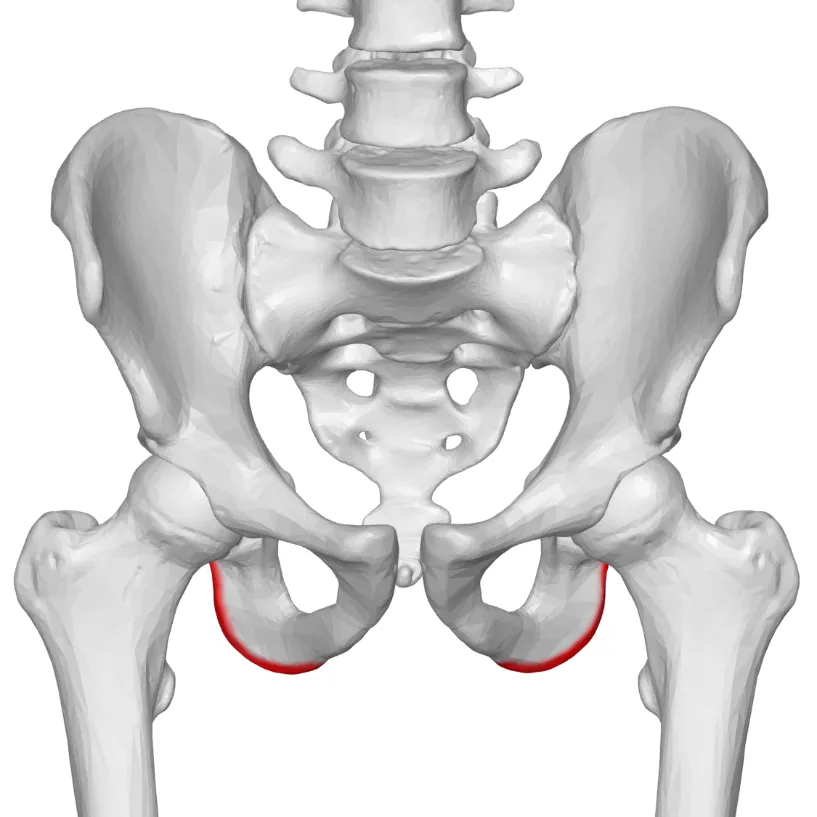
Ischial bursitis
Inflammation of the bursa over the ischial tuberosity: severe buttock pain, especially sitting on a hard chair, with tenderness on/just above the ischial tuberosity. Treat with NSAIDs ± corticosteroid injection.