Schistosomiasis
Written 15th August 2020 - Last Update 19th July 2026
Schistosomiasis
Infection with parasitic flatworms (blood flukes) acquired by contact with fresh water (never salt water) in endemic areas — a major cause of chronic illness worldwide, with growth delay and cognitive impairment in children. Screen all immigrants/refugees from endemic areas.
Species and geography
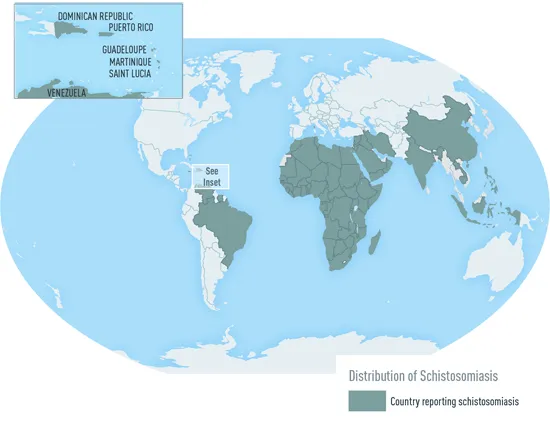
- S. haematobium — Africa, Middle East (urinary tract).
- S. mansoni — sub-Saharan Africa, South America, Caribbean (bowel/liver).
- S. japonicum — East/South-East Asia (bowel/liver).
- S. mekongi (Laos/Cambodia); S. intercalatum/guineensis (central/West African rainforest).
Clinical features
- Early — itchy papular dermatitis (“swimmer’s itch”) at the penetration site (12–24 h).
- Katayama fever — a serum-sickness-like hypersensitivity a few weeks after infection: fever, cough, abdominal pain, diarrhoea, fatigue, hepatosplenomegaly, lymphadenopathy.
- Chronic (from egg deposition, in residents of endemic areas):
- Urinary (haematobium) — cystitis, haematuria, ureteric obstruction/ hydronephrosis; associated with bladder cancer.
- Bowel/liver (mansoni/japonicum) — abdominal pain, bloody diarrhoea, colonic polyposis, portal hypertension and oesophageal varices.
- CNS — transverse myelitis or focal lesions (seizures, deficits).
Investigations and management
- Serology, FBC (eosinophilia), and ova in mid-day urine or stool (timed to presentation). If positive, assess end-organ damage (renal/bladder and liver ultrasound; MRI for CNS symptoms).
- Praziquantel 20 mg/kg in two divided doses 4 h apart (adults and children; seek advice under 12 months). Most effective 4–6 weeks after exposure (less effective if given too early); ~85% curative.
- Katayama fever — supportive care with glucocorticoids and fluids, then praziquantel 2–3 months later to clear maturing worms.
- Follow-up — repeat urine/stool at 2–3 months (repeat praziquantel if still positive after 8 weeks); FBC at 12 weeks (persistent eosinophilia suggests ongoing infection).