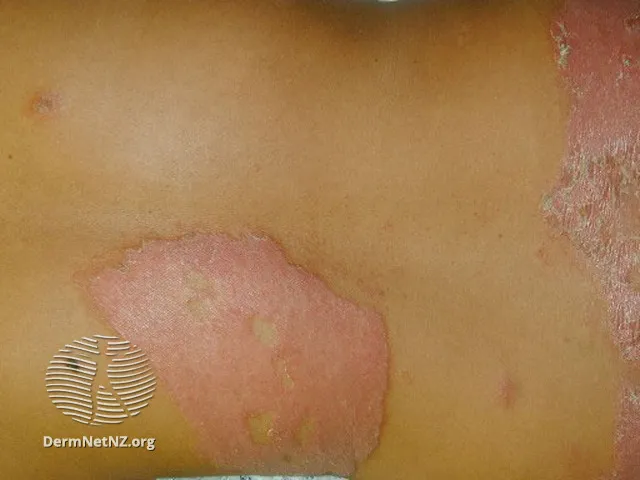
Leprosy
Written 9th August 2020 - Last Update 30th August 2026
Leprosy
Hansen disease — chronic granulomatous infection with Mycobacterium leprae (or the related M. lepromatosis), primarily affecting skin and peripheral nerves. A nationally notifiable disease in Australia; rare here (occurs in northern Australia and in migrants from endemic areas — South-East Asia, the Indian subcontinent, Pacific). Not highly contagious — most people exposed never develop disease; risk depends on immune response and genetic predisposition. Transmitted (not fully understood, believed respiratory) by prolonged close contact with an untreated lepromatous (multibacillary) case; very long incubation — commonly years.
Who to suspect it in: a migrant from, or long-term resident of, an endemic region presenting with a chronic hypopigmented/reddish skin patch with reduced sensation, or peripheral nerve thickening/sensory loss — especially with a history of close household contact with a known case.
Clinical features
- Hypopigmented (or reddish) skin patches, particularly with diminished or altered sensation within them.
- Peripheral neuropathy from thickened peripheral nerves — glove-and-stocking sensory loss, weakness, and secondary injuries/deformity (claw fingers, facial paralysis, lagophthalmos, perforated nasal septum in advanced disease).
- Spans a spectrum from tuberculoid (paucibacillary — few, well-defined lesions, strong cell-mediated immune response) to lepromatous (multibacillary — numerous, widespread lesions, minimal immune response). WHO’s simplified field classification: ≤5 lesions with a negative skin smear = paucibacillary; ≥6 lesions or a positive smear = multibacillary.
- Leprosy reactions can occur before, during, or after treatment — type 1 (reversal) reactions in borderline disease, type 2 (erythema nodosum leprosum) in lepromatous disease. Both threaten nerve function and need urgent specialist review; they are an immune phenomenon, not a reason to stop antimicrobial treatment.
Diagnosis and treatment
- Skin (or nerve) biopsy showing acid-fast bacilli, plus slit-skin smears. PCR on tissue is highly sensitive (>90%) and specific for lepromatous disease, though less sensitive in paucibacillary disease.
- WHO multidrug therapy (specialist-managed, via an infectious diseases/dermatology service) — rifampicin + dapsone, with clofazimine now added for all disease types under WHO’s 2018 uniform-MDT recommendation (previously clofazimine was reserved for multibacillary disease only). Duration and exact regimen are set by the treating service.
- Household contacts should have annual review for at least 5 years and be told to seek prompt review for any suspicious skin/neurological change.
- Refer any suspected or confirmed case to infectious diseases/dermatology — this is a notifiable, specialist-managed disease, not a GP-initiated-treatment condition.