Common clinical conditions in aged care
Written 2nd September 2020 - Last Update 31st August 2026
Common clinical conditions in aged care
Multi-morbidity
Multi-morbidity increases with age. Treatment should be aimed at improving quality of life. Quality of life with multi-morbidity may be improved by reducing treatment burden and optimising care by identifying:
- Ways of maximising benefit of existing treatment (e.g. identifying those at high risk when using osteoporosis medication to manage fracture risk).
- Treatments with limited benefit that may be stopped (e.g. herbal therapies).
- Treatment and follow-up plans with high burden (e.g. routine specialist follow-up).
- Medicines with higher risk of adverse events (e.g. warfarin/NOACs in a person at high falls risk).
- Alternative follow-up arrangements to coordinate or optimise care (e.g. home visits, community nursing support, remote pacemaker assessments, telehealth).
Establish the burden of illness and treatment — at minimum consider healthcare tasks imposed on the patient/carers/family, factors (personal, social, financial) that could exacerbate this burden, and the consequences of the healthcare tasks imposed. Establish patient goals, values and priorities.
Deprescribing
See Deprescribing & Polypharmacy for the fuller general approach — this section covers the aged-care-specific considerations.
A patient centred intervention under medical supervision, to reassess the role of all medicines with a view to stopping those that:
- Have no clear benefit.
- May cause harm.
- Are being used for an indication that is no longer an issue.
- No longer fit with the current goals of care.
Potential benefits: reducing potential for drug interactions and adverse effects; improving function and quality of life (e.g. may improve cognition and behaviour, and may reduce rate of falls); simplifying drug regimens; reducing costs for patient and nursing staff (in care); reducing medication errors.
Potential harms: signs and symptoms of the original condition may reappear when a drug is withdrawn (if this occurs consider a reduced dose or frequency); potential changes in pharmacokinetic and pharmacodynamic drug interactions should be considered (e.g. effect on INR in patients on warfarin); risk of withdrawal.
In practice, a written tapering plan is desirable.
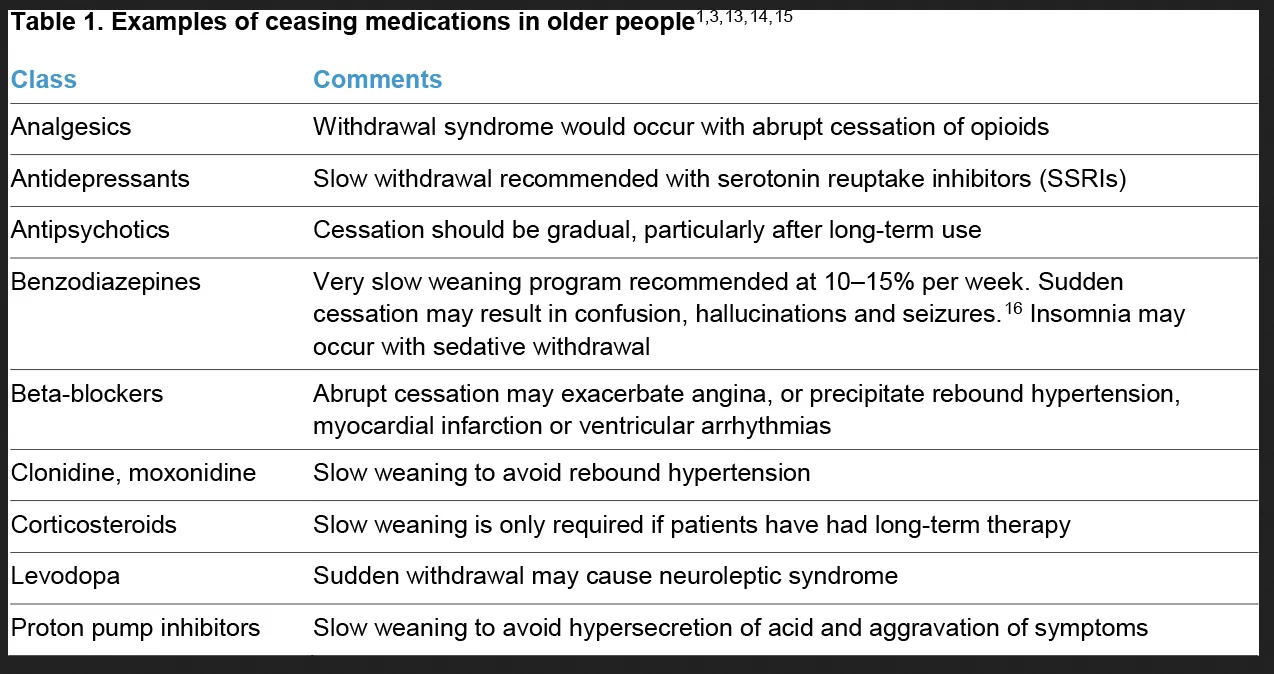
Resources: https://www.primaryhealthtas.com.au/resources/deprescribing-resources/ · http://medstopper.com/
Potential barriers to deprescribing: patients may have anxiety or fear over stopping medicines that have been prescribed for a long time or they believe may prolong life or improve function; previous negative experience with drug withdrawal; a perception that they are “no longer worth treating”; and clinician-side barriers — wanting to adhere to disease-specific guidelines that often don’t account for multi-morbidity, time constraints, fear of disease relapse, and the difficulty of life-expectancy/quality-of-life discussions.
Polypharmacy
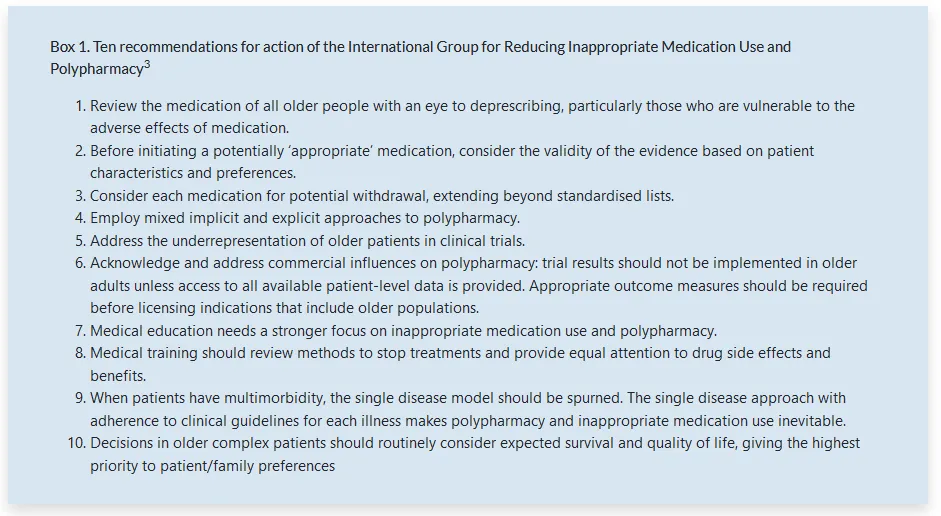
Polypharmacy is usually defined as the use of five or more drugs, including prescription, over-the-counter, and complementary and alternative medicines.
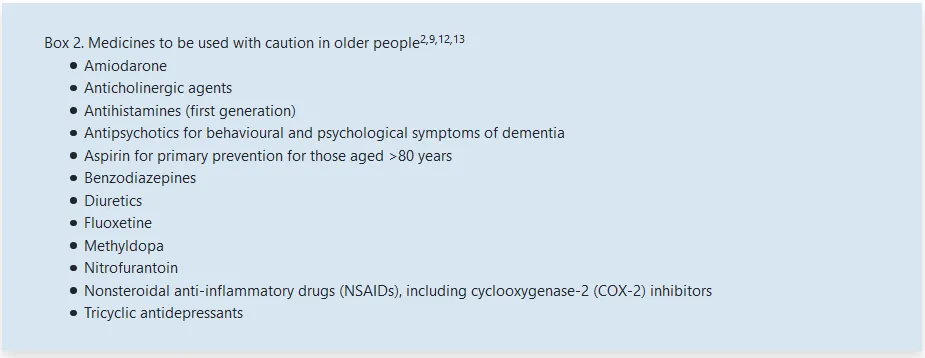
For medication review, think about under-diagnosis using the ERASE mnemonic: Evaluate diagnoses to consider, Resolved conditions, Ageing normally, Selecting an appropriate target, Eliminate unnecessary diagnoses and their corresponding medicines.
Pain
Always enquire about pain in elderly patients — they may not volunteer it. Paracetamol is first-line; use NSAIDs with caution; with opioids, start low and go slow. See Chronic Non-Cancer Pain & Opioid Stewardship for dose ceilings, monitoring and tapering if an opioid trial is needed.
Mental health
Ageing is a significant time of adjustment and change, where depression and anxiety can be common. Restoration of social connectedness is highly beneficial to long-term care and independence. Suicidal ideation and attempts have increased frequency in older populations, and psychological support (e.g. counselling, CBT) can be beneficial. Psychoactive medications need to be used with care in older patients and reviewed regularly. Use the geriatric depression scale; rates of depression are as high as 50% in RACF residents.
For most older people, consider non-pharmacological strategies first: physical exercise, social support, counselling, CBT, IPT.
Older people aged 65 or more, especially men, have one of the highest rates of suicide of all age groups in Australia — the suicide rate of men over 85 is more than double that of men under 35 and around seven times higher than that in women of all ages.
Infection and sepsis
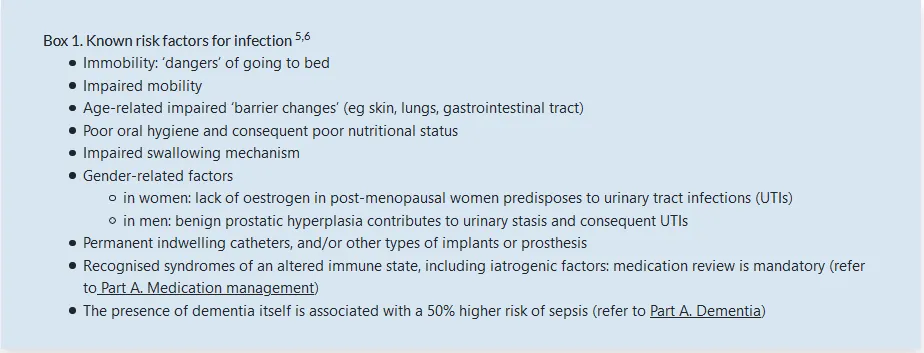
Fever is absent in 30–50% of frail older adults. The most common sites of infection are respiratory, urinary, skin/soft tissue, and gastrointestinal.
UTIs: asymptomatic bacteriuria is very common (about 50%) — do not routinely screen for it. Antimicrobial resistance is high; a mid-stream urine is recommended before treatment. Evidence is lacking to support prophylactic antibiotics, cranberry products, or topical oestrogen to prevent recurrent infections in RACF residents.
Falls
Assessment, risk factors, examination and prevention now have their own dedicated page: see Falls in Older People. Hip protectors have only marginal evidence in RACF residents, and only help if the resident is frail enough to fall onto the hip and compliant enough to wear them consistently.
Pharmacological: deprescribe; cease psychotropics; review medications with a dehydrating effect or an effect on postural hypotension; ensure the patient is replete in vitamin D (reduces the rate of falling, not the risk of falling) and B12.
Reduction of injury generally: manage osteoporosis; encourage vitamin D and calcium supplements.
Frailty
Factors associated with frailty: older age, current smoking, lower educational level, current use of post-menopausal therapy, not being married, depression, intellectual disability, First Nations descent, sedentary lifestyle, undernutrition, chronic disease, multimorbidity, obesity.
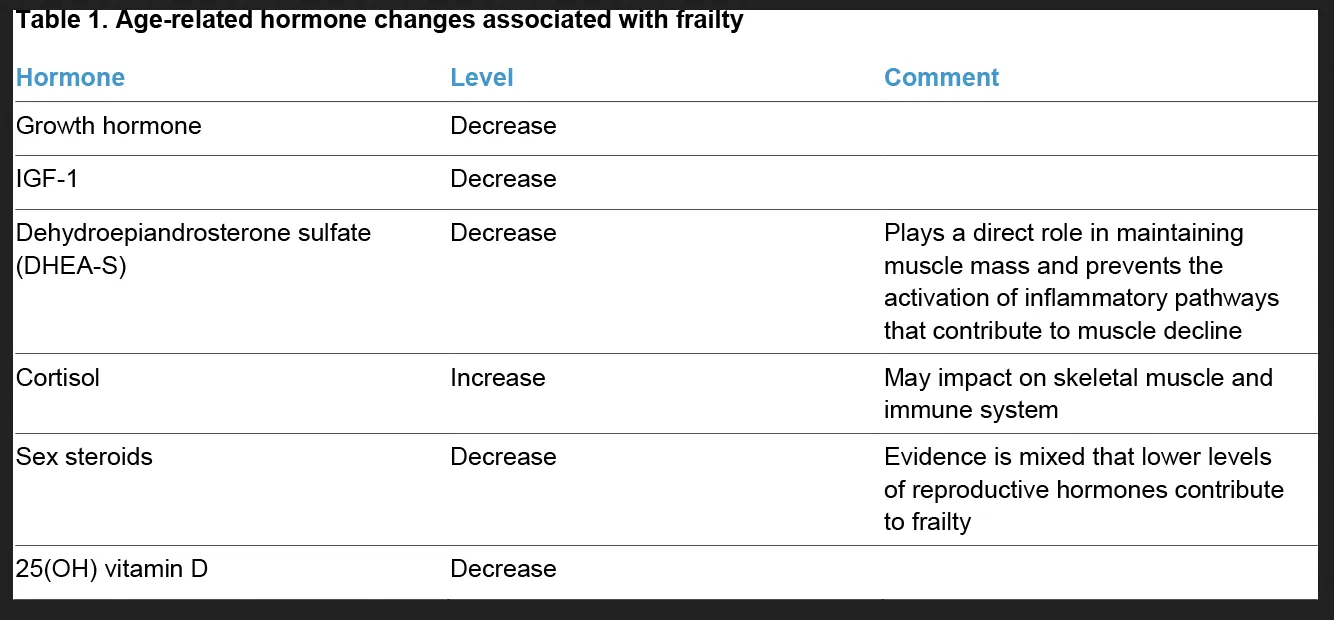
Assess for frailty using an index score (e.g. the Frailty Index) and screen for malnutrition with a malnutrition screening tool.
Interventions — non-pharmacological: exercise (resistance and aerobic); caloric and protein support; vitamin D supplements in those found to be deficient; reduction in polypharmacy.
Interventions — pharmacological: appetite stimulants are not recommended; manage osteoporosis. Lower testosterone in men over 65 is a normal ageing process associated with poorer outcomes, but randomised controlled trials have failed to show any evidence that testosterone therapy improves cardiovascular or mortality outcomes.