Perforation of Ear Drum
Written 2nd July 2020 - Last Update 22nd July 2026
Perforation of Ear Drum
Penetrating injury to the tympanic membrane
Can occur in children and adults from various causes — pencils, slivers of wood or glass. Bleeding invariably follows; infection is the danger.
Management: remove blood clot by suction toilet or gentle dry mopping; ensure no foreign body is present; check hearing; prescribe a course of broad-spectrum antibiotics (e.g. co-trimoxazole) and analgesics; instruct the patient not to let water enter the ear; review in 2 days then regularly. At review at 1 month, the drum should be virtually healed; check hearing 2 months after injury. Complete healing is expected within 8 weeks in 90–95% of cases.
Recognising the unsafe ear
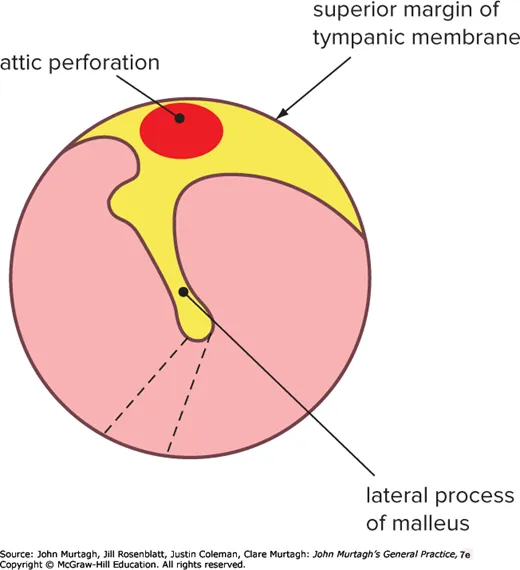
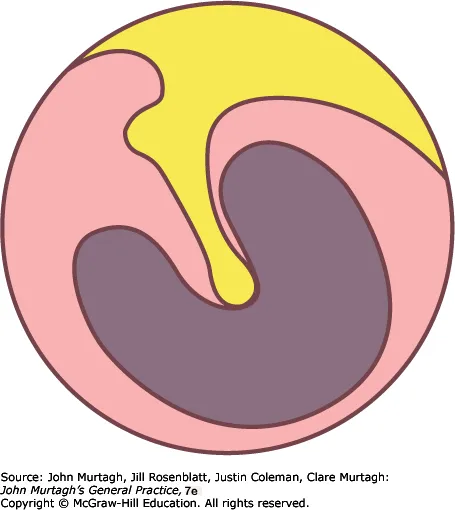
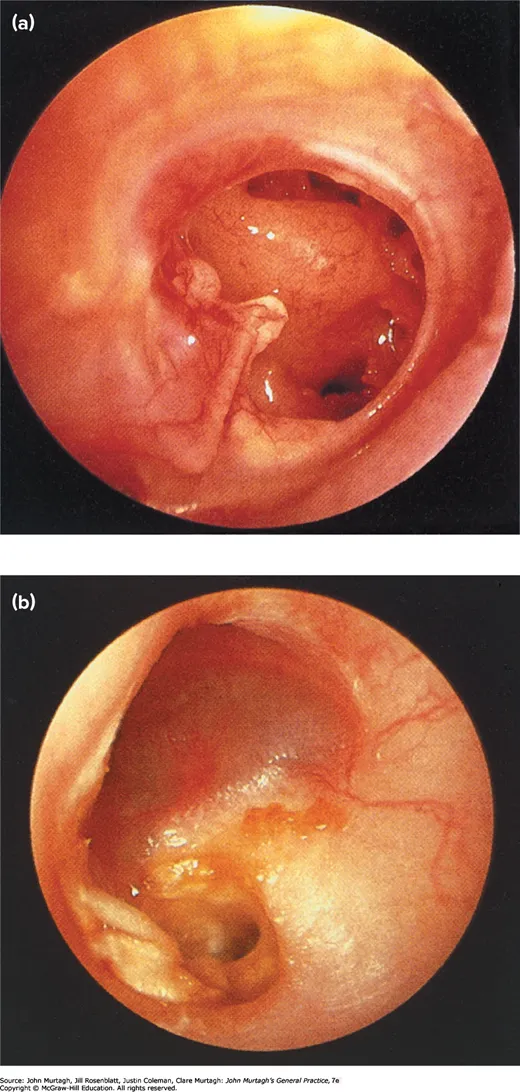
Examination of an infected ear should include the attic region — the small area of drum between the lateral process of the malleus and the roof of the external auditory canal immediately above it.
A perforation here renders the ear “unsafe” (→ cholesteatoma → ENT referral). Other perforations, not involving the drum margin, are regarded as “safe”.