Otosclerosis
Written 2nd July 2020 - Last Update 22nd July 2026
Otosclerosis
Condition
A disease of the otic capsule characterised by pathologic, cyclic remodelling of the endochondral bone — abnormal osteoclast and osteoblast activity. Categorised into fenestral (stapes) and retrofenestral (cochlear) otosclerosis — some clinicians consider these a continuum rather than separate entities.
Demographics: generally presents in young adulthood. Suspect in young adults with gradual, progressive hearing loss, especially with a family history.
Associations: genetic; relation to measles infection; relation to endocrine factors such as abnormal parathyroid function.
Diagnosis
Generally a clinical diagnosis requiring all of:
- Conductive hearing loss (~40–60dB in lower frequencies, less in higher frequencies) on audiology, without tympanic membrane abnormality.
- Absent stapedial reflexes (contraction of the stapedius and tensor muscles of the ossicles in response to loud noise).
- No history of middle ear inflammation.
Examination
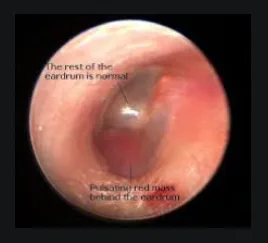
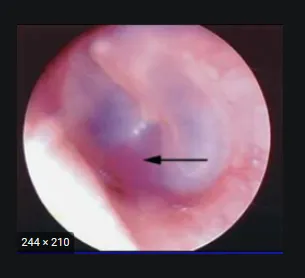
Otoscopy: generally normal; may show Schwartz sign (a reddish hue on the posteroinferior tympanic membrane).
Weber and Rinne: Weber (tuning fork to forehead) lateralises to the affected ear in conductive hearing loss, and to the unaffected ear in sensorineural loss (no lateralisation is normal). Rinne compares bone and air conduction (normal: air conduction > bone conduction).
Investigations
Audiometry (conductive vs sensorineural loss). Impedance tympanometry — conductive immittance (stapedial reflex absent in advanced disease); a type A curve (normal middle ear pressure, decreased compliance) is the most common finding. CT to determine the extent of disease and for pre-operative planning.
Management
Refer to ENT. Mild hearing loss — conservative management with observation ± hearing aids. Surgical treatment — stapedotomy.