Hoarseness (Dysphonia)
Written 9th July 2020 - Last Update 28th August 2026
Hoarseness (Dysphonia)
Red flags
Smoking; dysphagia; odynophagia or otalgia; stridor; haemoptysis; recent fevers; night sweats; unexplained weight loss.
Key facts
- In acute hoarseness, the diagnosis is usually obvious from history alone (e.g. URTI, vocal overuse).
- Think hypothyroidism if unusual hoarseness develops.
- Laryngeal cancer must be excluded if hoarseness persists >3 weeks in an adult.
- Intermittent hoarseness is almost always secondary to a benign disorder; constant or progressive hoarseness suggests malignancy.
- Non-malignant vocal cord lesions include polyps, vocal nodules, contact ulcers, and granulomas.
- In chronic hoarseness, the larynx must be visualised for diagnosis — common findings are screamer’s nodules in children and non-specific irritant laryngitis in adults.
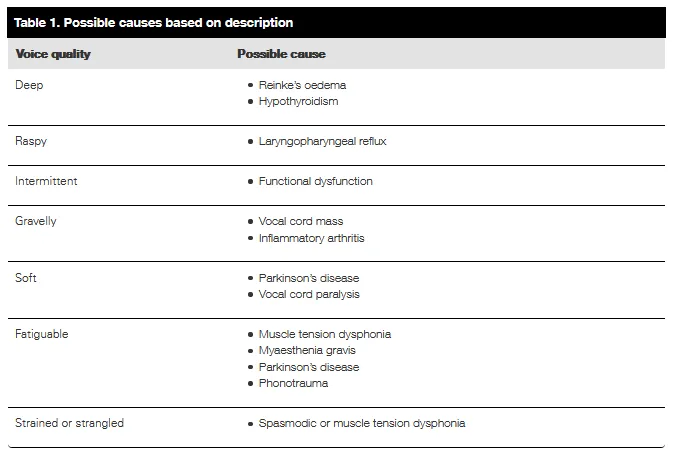
Examination
Listen for stridor — if present, arrange urgent referral for direct visualisation. Decreased lung expansion/auscultation findings may indicate a restrictive lung pathology affecting air volume through the larynx (and hence voice). Examine the oral cavity and oropharynx for lesions affecting the resonance chamber; examine the tongue and tonsils. Cranial nerve exam — abnormality may indicate a central cause. Palpate the neck and thyroid.
Vocal cord nodules & benign tumours
Includes nodules (most common), polyps (second most common), cysts, and papules. Suspect in singers and children who scream, presenting with voice change.
Management: may respond well to conservative measures — voice rest and vocal therapy. Refractory cases can be removed by microlaryngeal surgery or laser therapy.