Rhinitis, Sinusitis & Rhinosinusitis
Written 1st July 2020 - Last Update 28th August 2026
Rhinitis, Sinusitis & Rhinosinusitis
Rhinitis
Inflammation of the nose causing sneezing, nasal discharge, or blockage for more than an hour a day.
By time span: seasonal (limited period, usually spring) or perennial (present year-round).
By pathophysiology: allergic rhinitis (an IgE-mediated atopic disorder — see its own page) or vasomotor rhinitis (due to parasympathetic overactivity). Both are strongly associated with asthma.
Factors aggravating vasomotor rhinitis: emotional upset; fatigue; alcohol; chilly, damp weather; air-conditioning; sudden changes in temperature/humidity.
Other causes of rhinitis: chronic infection; rhinitis of pregnancy; rhinitis medicamentosa (drug-induced, from various antihypertensives, aspirin, phenothiazines, oral contraceptives, cocaine, marijuana); chemical/environmental irritants (smoke and other fumes, paints and sprays, cosmetics).
Rhinosinusitis
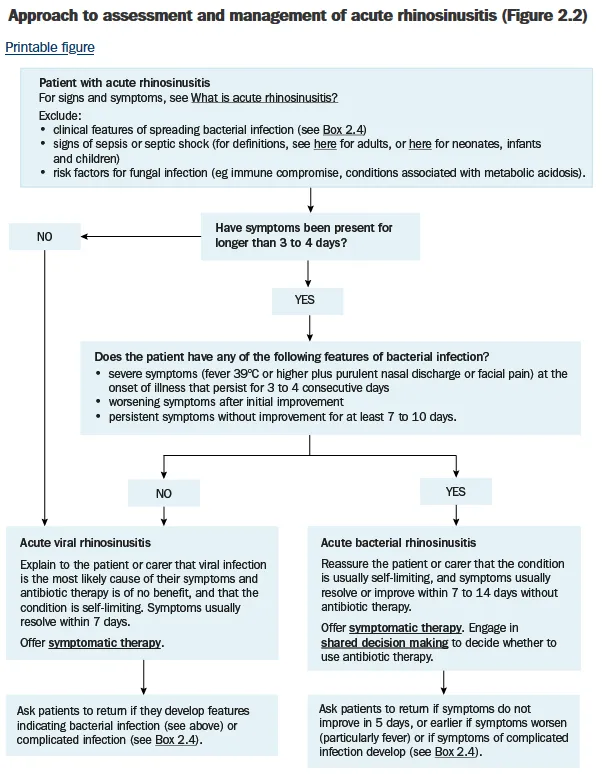
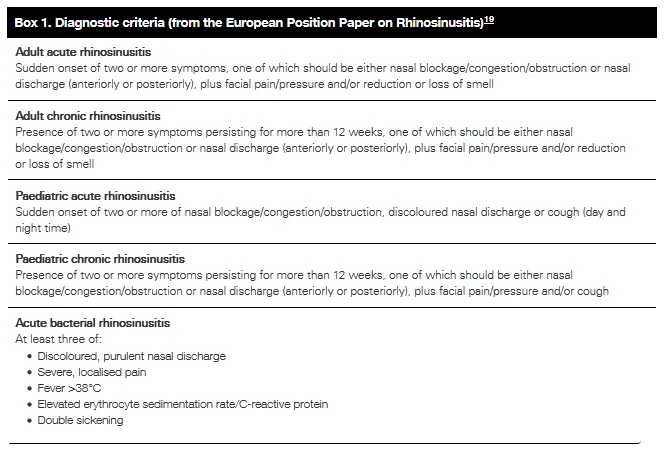
Acute viral rhinosinusitis, post-viral acute rhinosinusitis, and (rarely) acute bacterial rhinosinusitis — less than 2% of viral URTIs transform into bacterial infection. History: nasal obstruction, discharge, changes in smell, facial pain/pressure (worsens on bending forward, can radiate to the teeth), and cough (in children).
Acute bacterial rhinosinusitis generally follows a viral or post-viral ARS. Suggestive features: discoloured discharge and severe localised pain, often unilateral — the classic “double-sickening” pattern (initial improvement, then worsening).
Chronic rhinosinusitis exists with and without nasal polyposis — persistence for more than 12 weeks of nasal congestion, discharge, facial pain/pressure, and reduced sense of smell (see Anosmia / Smell Loss if this is the dominant complaint).
Red flag symptoms
Unilateral symptoms; bleeding; cacosmia (perceived malodorous smell); signs of meningitis (neck stiffness, photophobia); altered neurology; frontal swelling; any orbital involvement (diplopia, decreased visual acuity, painful ophthalmoplegia, periorbital oedema/erythema, globe displacement). These indicate spreading bacterial infection — immediate transfer to hospital for IV antibiotics and surgical management is required.
Examination
Abnormal nasal mucous membrane (pale, boggy, mucoid discharge); look for nasal polyps; postnasal discharge.
Investigations
None required for acute disease. Consider CT in chronic/complicated cases not responding to medical therapy — note the significant local radiation dose, including to the lens of the eye, with an increased cataract risk.
Management
Acute viral rhinosinusitis: supportive care, analgesia, nasal saline irrigation (boiled and cooled water, directed at a 45° angle towards the outer eye), short-term nasal decongestants. Antibiotics have a number needed to treat of 18 to reduce symptom duration — don’t use them.
Symptomatic treatment: regular oral analgesia; saline nasal preparations/flushes; intranasal steroids (moderate symptom improvement); intranasal/systemic decongestants (no more than 5 days, children >6 years only); intranasal ipratropium bromide for rhinorrhoea.
Acute bacterial rhinosinusitis: if strong suspicion, prolonged duration, or complications develop, treat with antibiotics — amoxicillin 500mg three times daily for 5 days, or doxycycline 100mg twice daily for 5 days (penicillin anaphylaxis). Symptoms >7 days with purulent nasal discharge, sinus tenderness (particularly unilateral), or maxillary toothache — or severe symptoms/high fever >39°C at onset lasting >3 days — are indications for antibiotics; so is worsening after initial improvement (bacterial superinfection). If inadequate response within 48–72 hours, change amoxicillin to amoxicillin/clavulanate 875+125mg and extend duration to 7–14 days. An older alternative is cefuroxime 500mg twice daily or doxycycline. Ask patients to return if symptoms don’t improve within 5 days, or worsen despite antibiotics.
Chronic rhinosinusitis:
- Topical steroids via nasal spray, or in conjunction with nasal irrigation (add betamethasone to the irrigation solution) — e.g. fluticasone 2 sprays once daily for a month, then 1 spray daily. Saline nasal irrigation twice daily. Continue for a total of 8 weeks.
- If nasal polyposis is evident on examination, oral steroid therapy can be used — e.g. prednisolone 25mg daily for 5 days then 12.5mg daily for 5 days — shown to reduce polyp size and improve symptoms.
- If allergic symptoms are present: consider RAST if no clear precipitant; avoidance strategies; oral antihistamines; consider immunologist referral for desensitisation if severe/uncontrolled.
- If medical therapy fails, refer to an otorhinolaryngologist for consideration of functional endoscopic sinus surgery (FESS) — ongoing medical therapy (steroids, irrigation) is required post-surgery.
- Biologic therapy for CRS with nasal polyposis (severe/refractory disease, especially with comorbid asthma, when standard medical/ surgical management has failed): mepolizumab (anti-IL-5) — PBS-listed April 2023, the first biologic option for this indication — PBS eligibility requires blood eosinophils ≥300 cells/µL, failed or unsuitable for surgery, and an endoscopic polyp score >5. Dupilumab (IL-4/IL-13 inhibitor) and omalizumab are also used for CRSwNP overseas (dupilumab per EPOS/EUFOREA 2023 criteria) but were not PBS-listed for this specific indication as of this review — check current TGA/PBS status before counselling patients. See a specialist for biologic selection.
Nasal congestion / coryza
Red flag pointers for nasal disorders
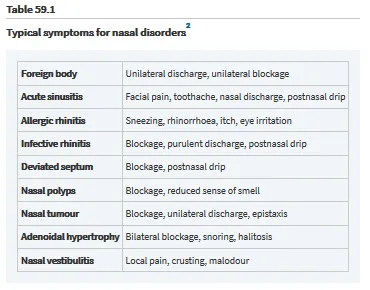
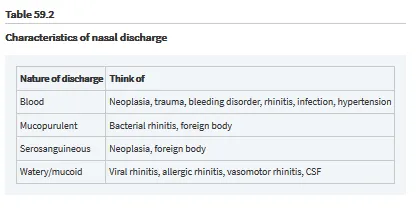
Unilateral nasal polyp; unilateral blood-stained discharge; a toddler with offensive nasal discharge, especially if unilateral (consider a foreign body); post-traumatic periseptal swelling; rhinitis medicamentosa (rebound congestion after extended decongestant use); chronic sinusitis + LRTI (consider granulomatosis with polyangiitis).
Paediatric nasal obstruction
Children have paradoxically higher nasal airflow resistance than adults relative to their airway size, due to developmental sinonasal anatomy — so congestion that would be mild in an adult can cause more noticeable obstruction/feeding difficulty in a young child. Adenoid enlargement peaks at ages 5–7 and regresses by around age 12, contributing to obstruction in that age range.
Don’t miss: nasal foreign body (see red flags above); neoplasia; intracranial complications of rhinosinusitis (see red flags above). See Nasal Foreign Body for removal technique and referral thresholds. Imaging and blood tests are rarely needed for straightforward paediatric nasal obstruction.