Male hypogonadism
Written 21st June 2020 - Last Update 6th September 2026
Male hypogonadism
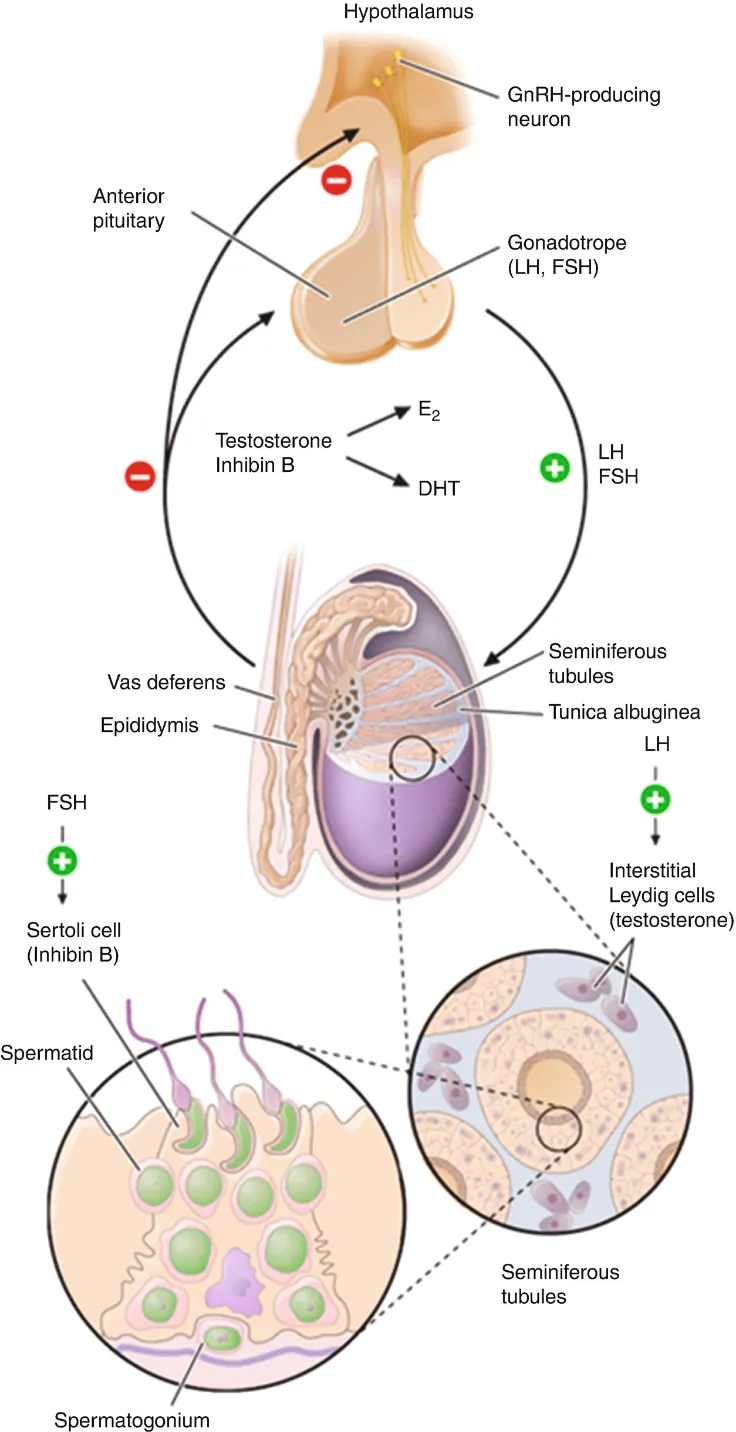
Classification and causes
- Primary (hypergonadotrophic) — testicular disease: high LH, low testosterone. Causes: Klinefelter syndrome, cryptorchidism, orchidectomy, orchitis, post-cytotoxic/radiation damage, trauma, testicular torsion.
- Secondary (hypogonadotrophic) — hypothalamic/pituitary disease: low LH, low testosterone. Causes: hypothalamic lesions, pituitary tumours (non-functioning macroadenomas causing hypopituitarism, prolactinomas), haemochromatosis, idiopathic hypogonadotrophic hypogonadism (including Kallmann syndrome).
- Other causes of low testosterone — systemic non-gonadal disease (e.g. type 2 diabetes), obesity, depression, medications (opioids, high-dose glucocorticoids), and recreational drugs (marijuana, amphetamines, opioids).
Clinical features
More specific: reduced libido, decreased spontaneous erections, hot flushes/sweats, reduced facial hair, breast discomfort/gynaecomastia, loss of axillary/pubic hair, small testes (especially <5 mL), osteoporosis. Less specific: low energy/motivation/concentration, low mood, reduced work performance, disturbed sleep, reduced muscle bulk/strength, increased body fat, mild anaemia.
Diagnosis
Requires both: consistent symptoms/signs and an unequivocally low early-morning (7–9 am) testosterone, confirmed on repeat. Many factors alter testosterone — recent alcohol, afternoon collection, vigorous exercise, illness/ stress, obesity (low SHBG, LH/FSH suppression), malnutrition, hyperprolactinaemia, exogenous androgens, corticosteroids, GnRH agonists.
Measure early-morning total testosterone, SHBG and LH. Total testosterone can be low with low SHBG without reduced bioavailable testosterone. FSH is only needed if spermatogenesis is a concern. Serum androgen falls ~1–2%/year from the third decade, so reference ranges must account for assay and age.
Androgen replacement therapy
Low testosterone can recover after treating a reversible cause (correcting hyperprolactinaemia, weight loss). If the cause is irreversible, replacement is lifelong. In the absence of pathological hypogonadism, only consider therapy in older men who meet both diagnostic criteria.
PBS criteria (males >18): androgen deficiency with established pituitary/ testicular disorders; or males ≥40 without such disorders (other than ageing), confirmed on two morning samples — testosterone <8 nmol/L, or 8–15 nmol/L with high LH (>1.5× the upper eugonadal limit for young men). Start with injectable, transdermal, or oral testosterone.
Adverse effects: truncal seborrhoea/acne (manage topically, don’t stop therapy), modest weight gain (<3 kg), increased truncal/temporal hair change, gynaecomastia, uncommon polycythaemia (~1%; treat by interrupting therapy or venesection).
Monitoring: BMD every ≥12 months; prostate exam and age-appropriate PSA; haemoglobin/haematocrit; cardiovascular risk factors/lipids; sleep apnoea.
Contraindications/precautions: prostate or breast cancer (contraindicated); men desiring fertility (contraindicated). Caution in older men (gradual dose, libido tolerance), bleeding disorders/anticoagulation (parenteral risks bruising — use oral/transdermal), elite athletes, androgen-sensitive epilepsy/migraine/ sleep apnoea, heart/kidney failure or severe hypertension (fluid overload), and polycythaemia (Hb >170 g/L or haematocrit >50%).
Delayed puberty in boys
Causes: constitutional delay; a chronic medical condition (puberty progresses slowly until corrected); hypogonadotrophic hypogonadism (idiopathic/Kallmann, or hypopituitarism). Boys with permanent hypogonadotrophic hypogonadism need lifelong androgen replacement to induce/maintain virilisation. Consider therapy if there is no testicular growth (volume <4 mL) by age 14.
See also Performance & Image Enhancing Drugs (PIEDs) — exogenous AAS use suppresses the HPT axis and is a reversible cause of hypogonadism (recovery after cessation can take months).