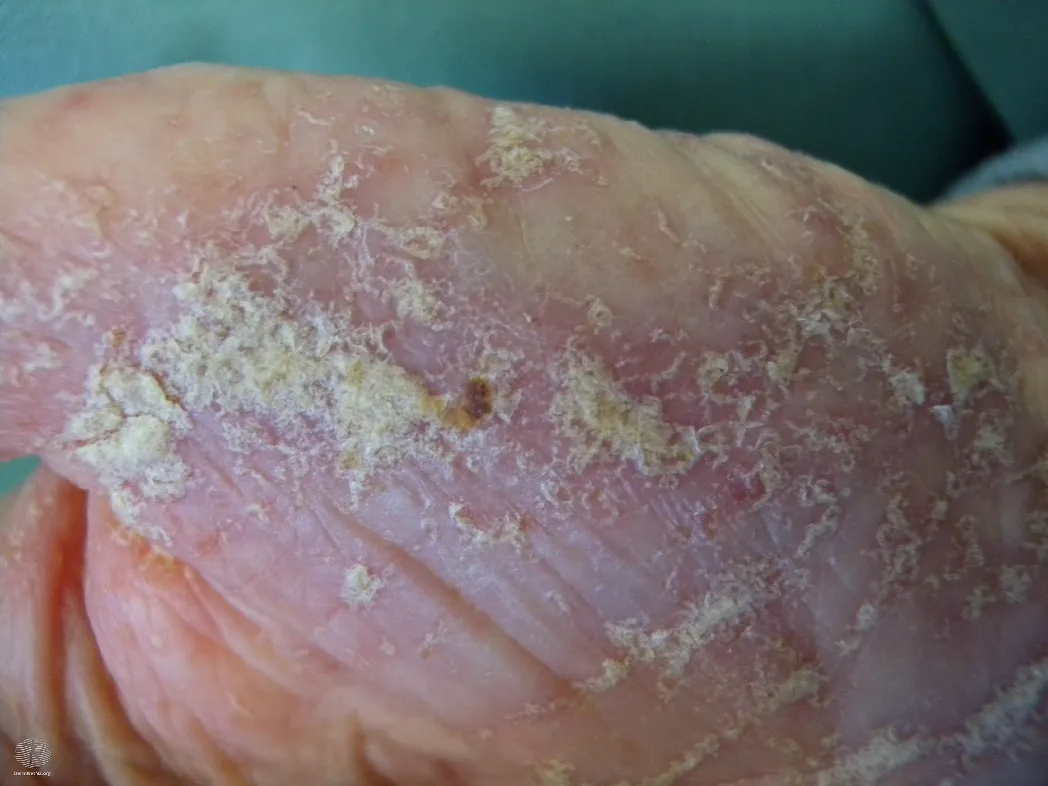
Scabies (incl. Crusted Scabies)
Written 5th March 2020 - Last Update 16th August 2026
Scabies (incl. Crusted Scabies)
Condition
A highly infectious skin infestation, spread through close or sexual contact, occasionally via bedding/furniture. More common in school-aged children, nursing homes, Indigenous communities, and crowded living conditions.
History and examination
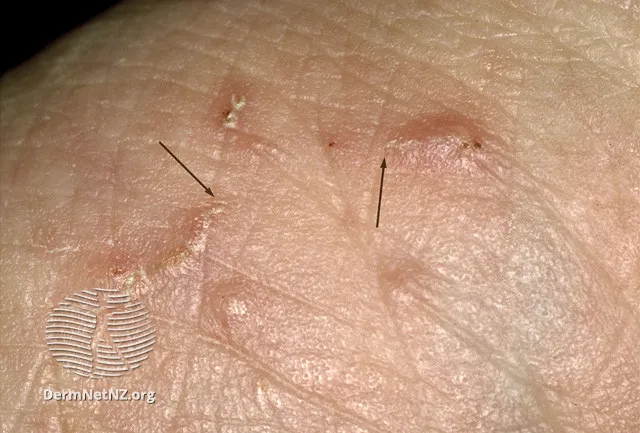
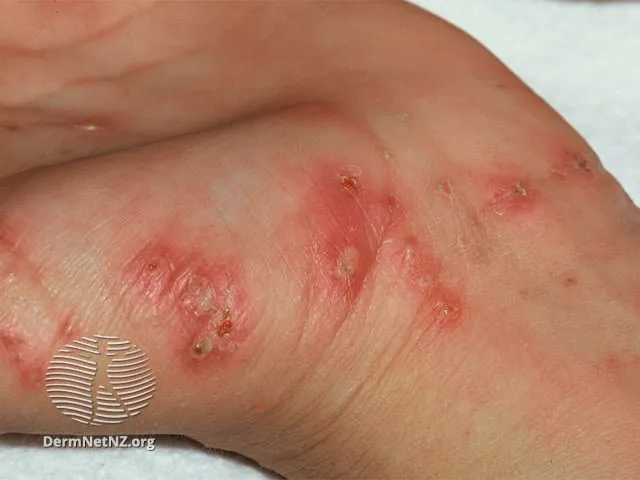
Intense itching, worse with warmth and at night; erythematous papular rash, characteristically on the hands and wrists.
Investigations
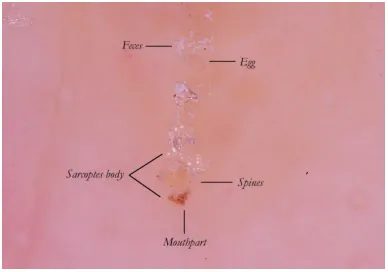
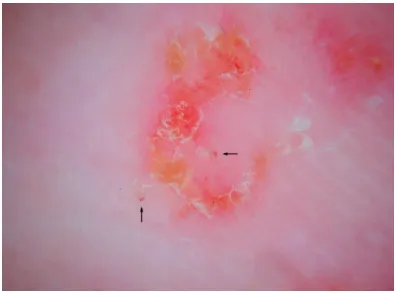
Microscopy of scrapings from a burrow confirms the diagnosis; if the mite isn’t found, a treatment trial is usually diagnostic.
Management
Adults and children >6 months: examine and treat the whole household if possible. Permethrin 5% cream applied to the whole body from the neck down (particularly hands and genitals), left overnight, washed off in the morning, repeated at 7 days. Wash sheets/clothes in hot water and sun-dry, or alternatively store for 72 hours (the expected survival limit of a mite off a host). Itch can take weeks to settle — a moderate-potency topical steroid (e.g. methylprednisolone aceponate 2–3 times daily) can help.
Crusted scabies
Occurs with a high mite load due to an inadequate immune response. Difficult to treat — seek specialist input; oral ivermectin is often needed.