Rubella
Written 1st March 2020 - Last Update 16th August 2026
Rubella
Condition
Caused by the rubella virus; rare in Australia due to immunisation. Major burden is in pregnant women, where infection commonly causes miscarriage, stillbirth, or major congenital abnormalities. Pregnancy should be avoided for 28 days after vaccination; unvaccinated women can be vaccinated immediately postpartum. ~25–50% of infections are mild enough to have few or no symptoms.
Clinical features
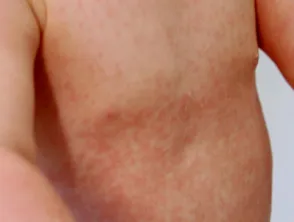
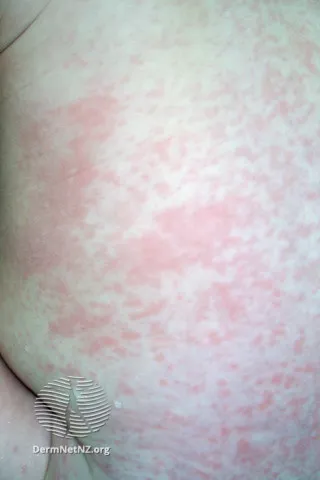
Classic triad: rash + swollen glands + fever. Prodrome (when present) is mild — low-grade fever, malaise, headache, sore throat, adenopathy — but is often absent or inapparent in children, where the rash is typically the first sign. Headache, myalgia, conjunctivitis, small-joint polyarthritis (more common in adult women). The Forcheimer sign — petechiae on the soft palate/uvula — may appear during the prodrome. Rash: discrete pink/light red macules and papules, 2–3 mm, starting on the face and spreading to trunk/extremities, sometimes pruritic, lasting up to 5 days (usually less widespread than measles).
A related but distinct entity, sometimes called “fourth disease” or viral exanthema, produces a similar but non-pruritic rash confined to the trunk that fades within 48 hours, with the child otherwise well.


Investigations
IgG/IgM rubella serology; PCR of blood/swab/urine/CSF; FBC (thrombocytopenia, leucopenia) and LFT (hepatitis) if indicated.
Management
Symptomatic — rest, fluids, paracetamol. Infectious from around 8 days before to 8 days after rash onset, with peak contagiousness just before the rash appears. If the patient is pregnant, discuss with obstetrics (part of the TORCH complex). Congenital rubella syndrome features: sensorineural hearing loss, eye abnormalities (cataract, glaucoma, pigmentary changes), congenital heart disease (patent ductus arteriosus), developmental delay, jaundice/hepatitis, diabetes, thyroid dysfunction. Other complications (rare): thrombocytopenic purpura, otitis media, encephalitis.