Psoriasis
Written 10th March 2020 - Last Update 27th August 2026
Psoriasis
Condition
Psoriasis is a hereditary, chronic inflammatory skin condition — there is no cure, so management aims for disease control. Australian lifetime prevalence is among the highest globally at an estimated 2.8%. Peak onset is between age 30 and 39 years and between age 50 and 69 years. It is more common in Caucasians, with a family history in about a third of cases (genetic link HLA-C*06:02).
Triggers/aggravating factors: streptococcal or viral infection, physical trauma (Koebner phenomenon), sunburn, stress, smoking, alcohol, poor diet, and certain medications — ACE inhibitors, beta-blockers, bupropion, GM-CSF, hydroxychloroquine, imiquimod, interferons, lithium, NSAIDs, terbinafine, TNF-alpha inhibitors, and sudden withdrawal of oral or strong topical corticosteroids.
Associations: cardiometabolic disease (diabetes, hypertension, dyslipidaemia, MAFLD), inflammatory bowel disease, uveitis, coeliac disease, certain malignancies, and mental health disorders.
Examination and assessment
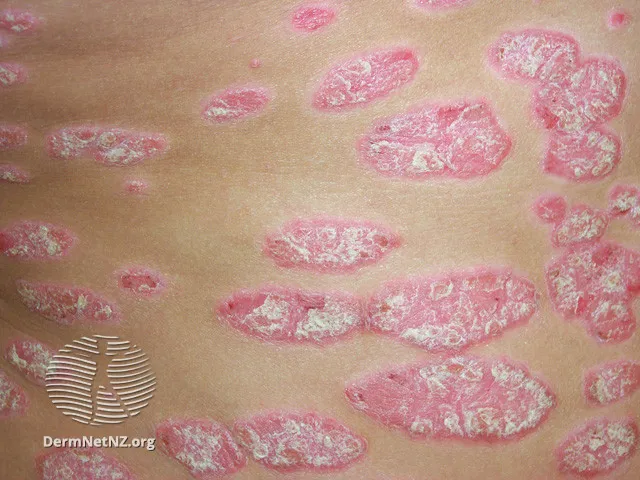
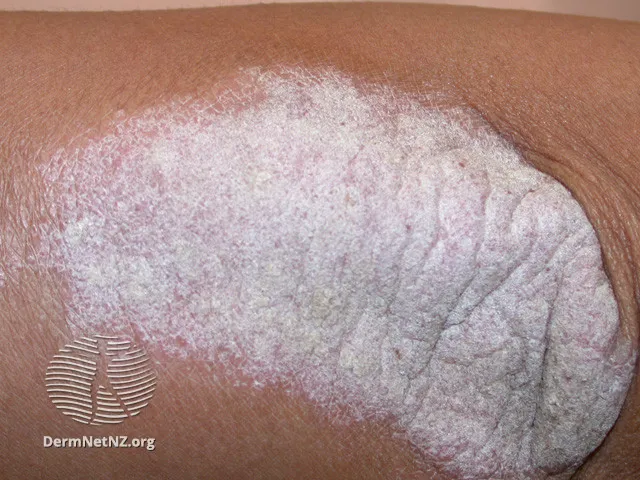
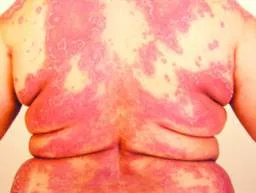
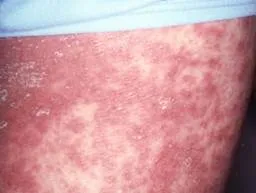
Symmetrically distributed red/salmon-pink plaques with well-defined edges and silvery-white scale (shiny/moist peeling surface in skin folds); easily bleeds when scale is removed. Check BP, height, weight, BMI, waist circumference. Examine nails, joints, and commonly missed sites — scalp, posterior ears, natal cleft, genitals.
Assess for psoriatic arthritis — an inflammatory spondyloarthropathy affecting up to 42% of patients with psoriasis and often underdiagnosed. Nail psoriasis is a strong marker: 50 to 80% of patients with nail psoriasis have concomitant arthritis. Features: peripheral arthropathy, spinal involvement, enthesopathy/dactylitis/tenosynovitis, distal interphalangeal joint and nail changes, and associated uveitis.
Severity (ideally with an objective tool, e.g. PASI):
- Mild — <5% body surface area (BSA), no high-impact-area involvement (face, nails, genitalia, scalp, palmoplantar, intertriginous skin), DLQI <6, responsive to topical therapy.
- Moderate–severe — >10% BSA, or PASI >10, or high-impact-area involvement, or DLQI ≥6, or failed topical therapy.
Differentials: dermatitis (atopic/discoid/contact/seborrhoeic), other inflammatory disorders (pityriasis rosea/lichenoides/rubra pilaris), fungal infection, secondary syphilis, cutaneous lupus/dermatomyositis, cutaneous T-cell lymphoma, and psoriasiform drug reactions.
Clinical subtypes
- Chronic plaque psoriasis — persistent, treatment-resistant, plaques >3 cm, typically elbows/knees/lower back, mild to extensive.
- Small plaque psoriasis — later onset, plaques <3 cm.
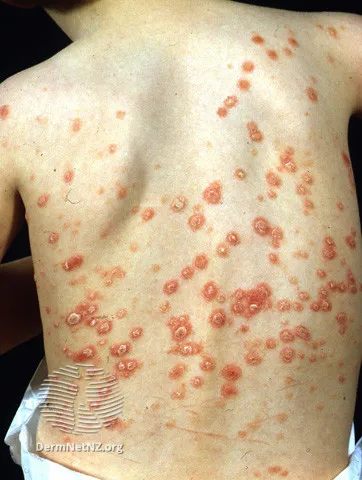
- Guttate psoriasis — most often young adults, 2–3 weeks after streptococcal pharyngotonsillitis or a viral illness; widespread small teardrop plaques on trunk/limbs; acute onset, often resolves over months even untreated, though ~25% go on to develop chronic plaque psoriasis.
- Unstable plaque psoriasis — rapid extension of existing/new plaques, Koebner phenomenon, triggered by stress/infection/drugs or drug withdrawal.
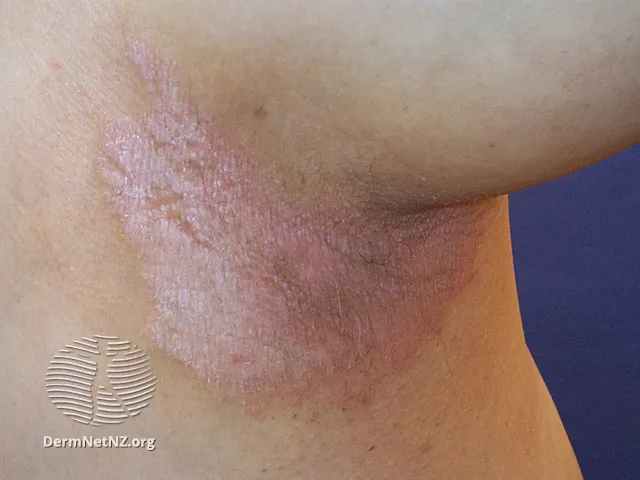
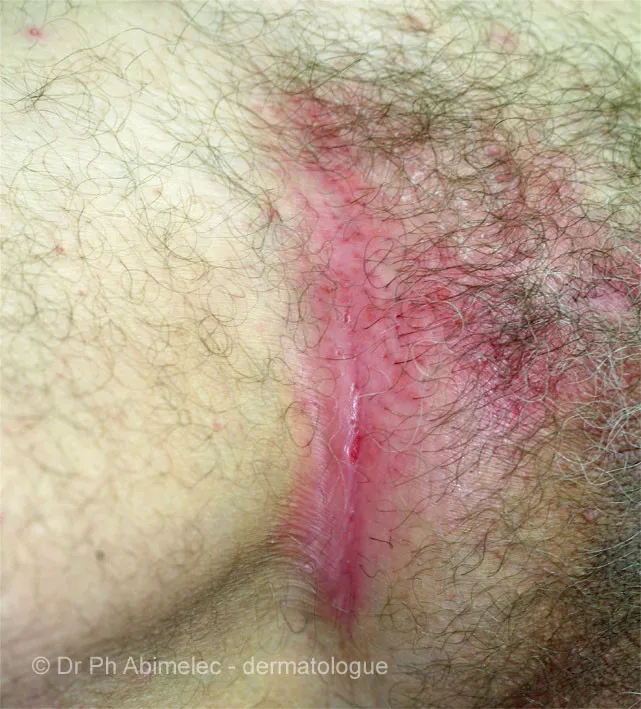
- Flexural/facial psoriasis — body folds and genital/seborrhoeic facial areas; minimal or absent scale but well-demarcated, beefy erythema; often colonised by candida.
- Scalp psoriasis — sometimes the only site involved.
- Sebopsoriasis — overlap of seborrhoeic dermatitis and psoriasis (scalp, face, ears, chest), associated with malassezia.
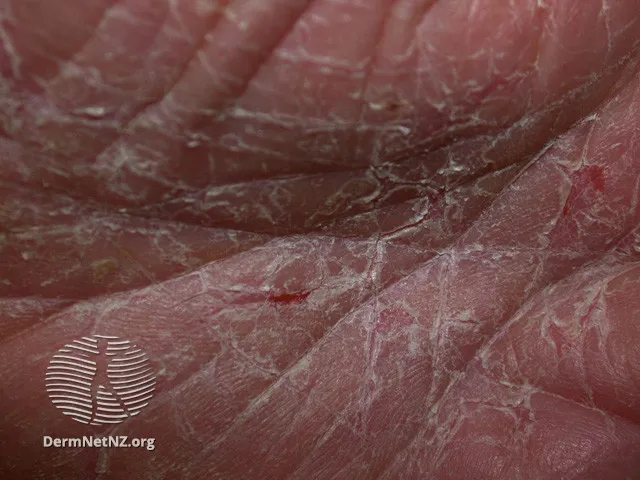
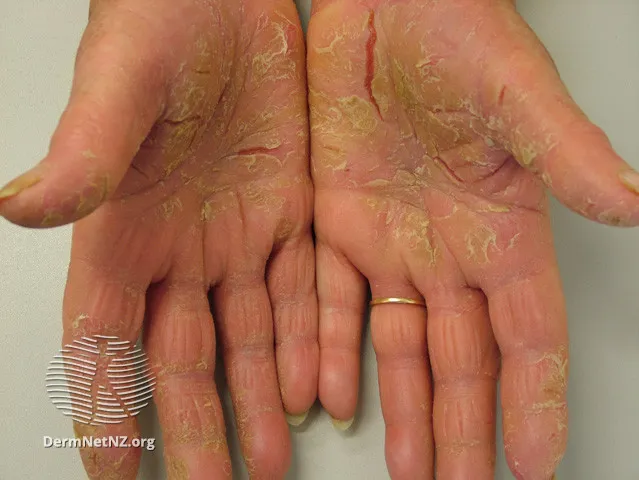
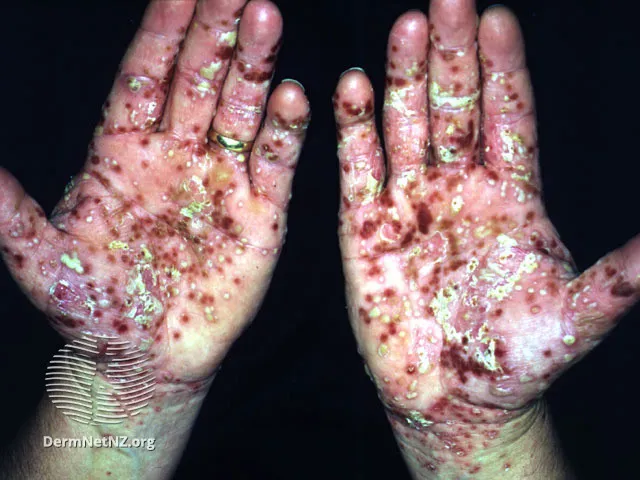
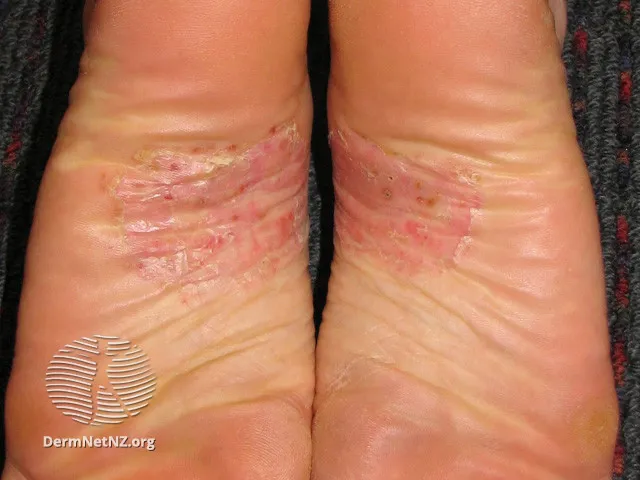
- Palmoplantar psoriasis/pustulosis — painful fissuring, keratoderma; palmoplantar pustulosis is more common in smokers and middle-aged women (sterile yellow deep-seated pustules and red macules).
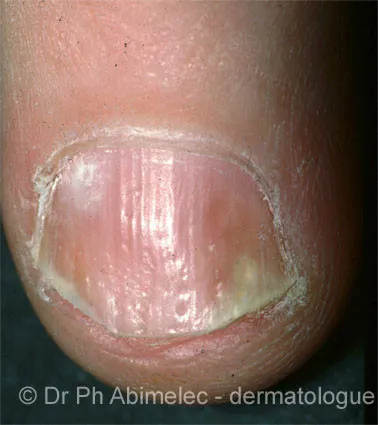
- Nail psoriasis — pitting, onycholysis, ridging, oil spots, subungual hyperkeratosis; often triggered/worsened by trauma or fungal infection.
Emergencies: generalised pustular and erythrodermic psoriasis
Both are red flags requiring urgent dermatology referral.
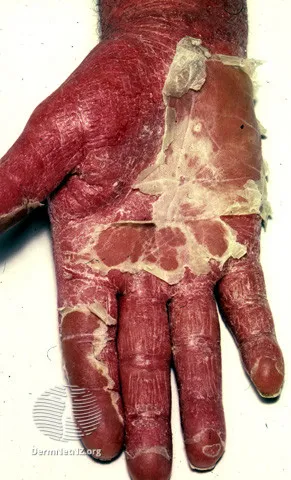
Generalised pustular psoriasis (GPP) is rare and serious: an acute flare of widespread sterile pustules on a background of red, tender skin — dangerous, especially in pregnancy (significant fetal risk). Around 10% of presentations have preceding ordinary psoriasis. Recurrent crops of 2–3 mm pustules coalesce into “lakes of pus,” then dry/peel, with systemic symptoms (fever or hypothermia, tachycardia, dehydration, muscle weakness).
- Triggers: sudden steroid withdrawal, drugs (lithium, aspirin, indomethacin, iodide, beta-blockers), infection, pregnancy.
- Complications: secondary bacterial infection/sepsis, high-output cardiac failure, peripheral neuropathy, protein-losing enteropathy, deranged electrolytes (low albumin/calcium/zinc), raised CRP.
- Management: hospital admission for supportive care (fluids, temperature/electrolyte correction), bland topical compresses/ low-potency steroid, and specialist systemic therapy (methotrexate, biologics, acitretin, ciclosporin, or corticosteroids with caution).
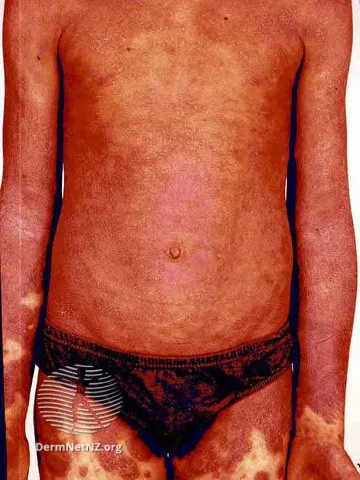
Erythrodermic psoriasis — generalised redness affecting >90% of body surface area. Can arise from worsening/unstable psoriasis or be the first presentation; onset may be rapid (days–weeks) or gradual. A severe variant that can be fatal — requires urgent treatment and referral.
Investigations
Usually a clinical diagnosis; skin biopsy is not required unless there is diagnostic doubt. Consider joint X-rays and comorbidity screening (lipids, glucose, further bloods) if systemic treatment is being considered. Assess psychological impact with the Dermatology Life Quality Index (DLQI).
Management
General: explain the relapsing-remitting, non-curative but controllable nature of the disease; it is not infectious, allergic, or malignant. Address modifiable triggers (treat active strep throat, review causative medications, smoking/alcohol/diet/weight/stress). General skin care: short warm showers (≤5 min), moisturise after bathing, soap-free/fragrance-free washes, cautious limited UV exposure (balanced against skin-damage risk; sunburn worsens psoriasis), soft combs on the scalp.
Topical therapy (site-specific):
- Scalp — methylprednisolone aceponate 0.1% or mometasone furoate 0.1% lotion once daily until clear (2–6 weeks); step up to betamethasone dipropionate 0.05% lotion twice daily or clobetasone propionate 0.05% shampoo if no response in 2 weeks. Coal tar shampoo for maintenance; calcipotriol+betamethasone gel if scaling recurs.
- Trunk/limbs/guttate — coal tar preparation or LPC 4–8%+salicylic acid 6% once–twice daily for a month; add a topical corticosteroid if tar alone is insufficient. Guttate psoriasis is treated the same way — treating the underlying strep throat does not itself improve the rash.
- Palms/soles — LPC 6%+salicylic acid 3% for a month; step up to calcipotriol+betamethasone if inadequate response.
- Pustular palmoplantar — LPC 6%+salicylic acid 3%, stepping up through betamethasone dipropionate ointment then calcipotriol+betamethasone if unresponsive.
- Nails — difficult to treat and often unrewarding; calcipotriol+ betamethasone under the nail/proximal nail fold nightly for up to 3 months; exclude fungal infection first; refer if unsuccessful.
- Flexural/genital — methylprednisolone aceponate ointment until clear (short courses, max 2 weeks in children); LPC 2% once initial flare settles (avoid on excoriated skin).
- Face — methylprednisolone aceponate (central face) or mometasone furoate (ears/hairline) once daily 2–6 weeks; never use calcipotriol on the face. If corticosteroids are needed beyond 4 weeks, consider switching to topical tacrolimus 0.1% to reduce atrophy risk.
Psoriasis usually responds better to ointments than creams. Use the lowest-potency, smallest-quantity steroid that controls the disease; monitor for atrophy, striae, telangiectasia, and tachyphylaxis.
Dermatology referral (non-urgent): severe/extensive psoriasis or significant psychological distress; psoriasis on face, hands, or feet; rapidly progressing disease; nail psoriasis. Urgent referral: erythrodermic psoriasis, generalised pustular psoriasis (or any pustular psoriasis in pregnancy), severe rash with unclear diagnosis, an acutely unwell or immunosuppressed patient. Rheumatology referral (non-urgent) for suspected psoriatic arthritis.
Specialist options: phototherapy (narrowband UVB most common; PUVA; broadband UVB; hand/foot units for acral disease) and systemic therapy — acitretin, methotrexate, ciclosporin, apremilast, and deucravacitinib (a newer oral JAK inhibitor), plus injectable biologics: anti-IL23 (guselkumab, tildrakizumab, risankizumab), anti-IL17 (ixekizumab, secukinumab, bimekizumab), anti-IL12/23 (ustekinumab), and anti-TNF-alpha (adalimumab, etanercept, infliximab, certolizumab).
Images