Poxvirus Skin Infections
Written 1st March 2020 - Last Update 28th August 2026
Poxvirus Skin Infections
Three Poxviridae-family skin infections — molluscum contagiosum (molluscum contagiosum virus) and the two zoonotic parapoxviruses, orf and milker’s nodules, which are clinically similar to each other.
Molluscum contagiosum
A poxvirus infection transmitted by direct skin contact, or by sharing sponges/bath towels/swimming pools; sexual transmission occurs in adults with genital lesions. Affects children and young adults. Resolves spontaneously without treatment, though papules may persist for up to two years or longer; in children, about half of cases have cleared by 12 months and two-thirds by 18 months.
Examination: 3–5 mm pearly white papules with central umbilication.
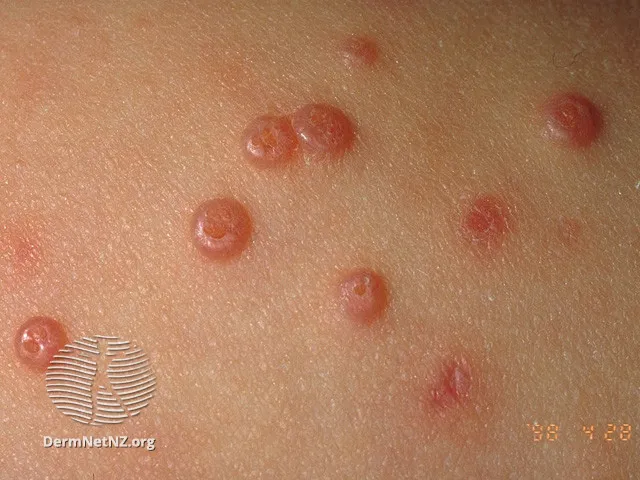
Management: cryotherapy and curettage, cantharidine, or salicylic acid; occlusive tape left on for 24 hours then rapidly pulled off. Cover lesions with clothing or watertight bandages to limit spread. Refer for expert advice if widespread and lasting longer than a year.
Orf
A zoonotic parapoxvirus skin infection contracted from sheep and goats (not transmitted human-to-human) — sheep farmers, shearers, and anyone bottle-feeding lambs are at risk, usually via direct contact through an existing scratch or cut.
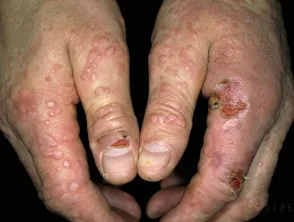
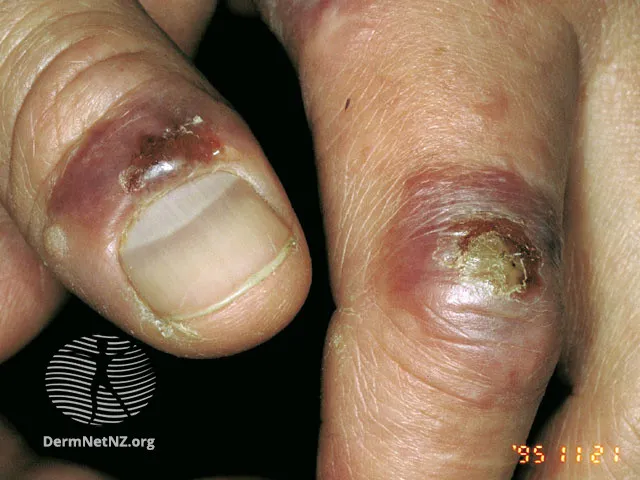
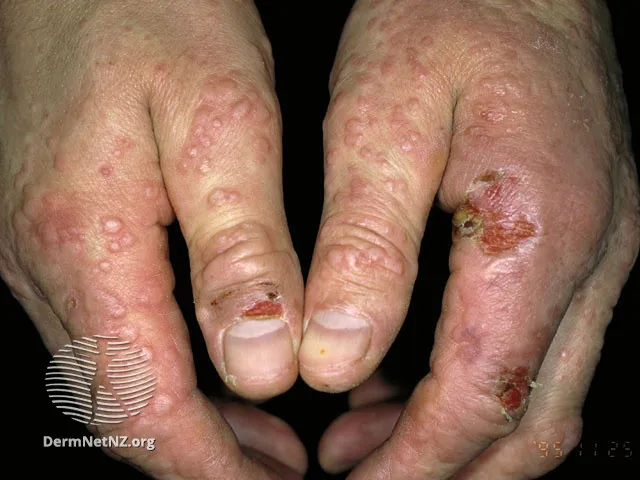
Clinical features: hand and digital involvement comprise the majority of affected sites (occasionally the face). Starts as a small, firm, red/reddish-blue lump enlarging into a flat-topped, blood-tinged pustule or blister; 2–3 cm fully developed (up to 5 cm). May have mild fever and lymphadenopathy.
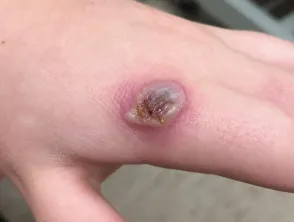
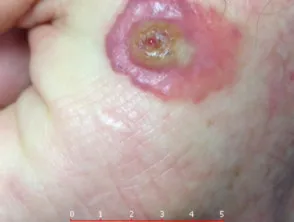
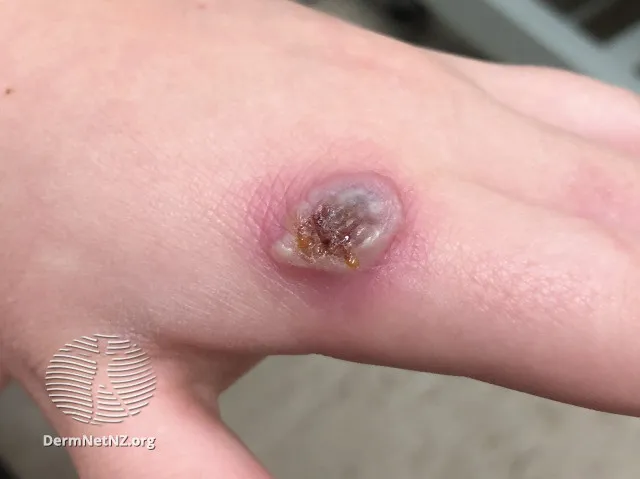
Investigations: a positive exposure history and a suggestive physical exam are often enough to diagnose orf virus infection in most affected individuals; can be confirmed by PCR of a viral swab, skin biopsy, or vesicular fluid.
Management: usually resolves spontaneously over ~6 weeks. Cover the lesion to prevent environmental/person-to-person contamination. Secondary bacterial infections are possible complications — treat if they occur — and monitor for erythema multiforme, which can develop 10–14 days after onset. Educating farmers, herders, and other at-risk occupations on proper glove-wearing and hand-washing techniques is essential, along with lower stocking rates, outdoor lambing, and herd vaccination.
Milker’s nodules
A parapoxvirus skin infection from contact with infected cow teats, similar to orf — affects farmers, milkers, and vets who examine cows.
Clinical features: after an incubation period of 5–14 days, small, red, raised, flat-topped spots develop, progressing to blisters. Usually on the hands, particularly the fingers, but occasionally the face.
Investigations: diagnosis is usually made by the typical appearance of the lesions in those at occupational risk; skin biopsy occasionally needed.
Management: spontaneously resolves over 4–6 weeks. Should be covered to prevent contamination of the environment and potential spread to other people; monitor for secondary bacterial infection and (as with orf) secondary erythema multiforme.