Parvovirus B19 (Fifth Disease / Slapped Cheek)
Written 1st March 2020 - Last Update 11th September 2020
Parvovirus B19 (Fifth Disease / Slapped Cheek)
Condition
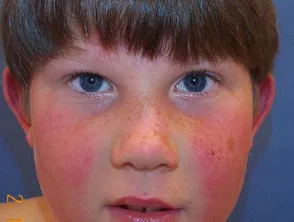
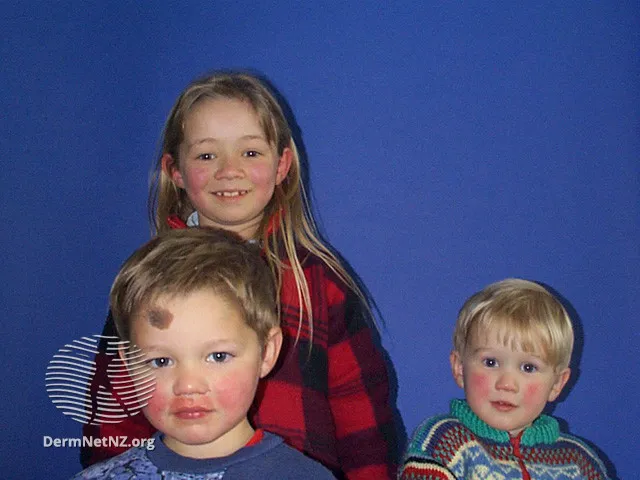
Also known as erythema infectiosum, fifth disease, or slapped-cheek syndrome. Mainly affects young children, often spreading through a family or school class — 50% of household and 20% of classroom contacts contract it. ~30% of infections are asymptomatic.
Clinical features
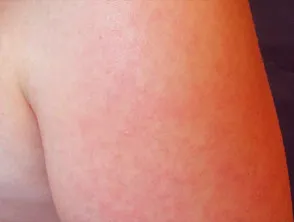
Usually otherwise well, with mild fever, rhinorrhoea, nausea, or headache. Characterised by burning red, swollen “slapped” cheeks, followed 1–4 days later by evanescent lacy-pattern erythema on the limbs and trunk; cervical lymphadenopathy may be present. The rash can wax and wane for up to 6 weeks. Adults may develop arthralgia and, rarely, aplastic crisis (Hb fall >3 g/dL with reticulocytopenia, no evidence of haemolysis). No longer infectious by the time the rash appears.
Investigations
Usually a clinical diagnosis in children; parvovirus PCR/serology (IgG, IgM) if confirmation needed. FBC if the child is unwell or has haemolytic anaemia. Ultrasound follow-up for high-risk pregnancies.
Management
Avoid contact with pregnant women — test pregnant contacts (IgG/IgM). Congenital infection in the first/second trimester can cause fetal hydrops (~3%) and intrauterine death (~9%), but does not cause congenital malformations. Otherwise self-limiting: a cold face washer to the cheeks helps symptomatically. RBC transfusion or immunoglobulin therapy may be needed during an aplastic crisis. Chronic parvovirus infection can occur in immunodeficient patients.