Paronychia
Written 1st March 2020 - Last Update 1st March 2020
Paronychia
For acute nail trauma — subungual haematoma, nail bed laceration, tuft fracture — see Fingertip & Nail Bed Injuries.
Acute paronychia
Mainly caused by Staphylococcus aureus. Can occur in anyone. Painful, erythematous nail fold with a pus collection at the edge of the nail bed; may be associated with trauma or an ingrown toenail.
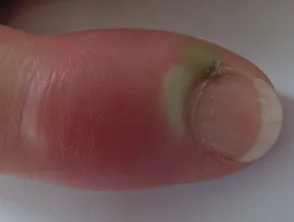
Investigations: consider a swab of pus for MCS on drainage; exclude diabetes.
Management: if uncomplicated with localised pus — drainage (usually from the nail fold) plus hand hygiene; antibiotics are not usually necessary. If not responding to drainage: dicloxacillin/flucloxacillin 500mg four times daily for 5 days, or cefalexin 1g twice daily for 5 days, or clindamycin 450mg three times daily for 5 days, or trimethoprim/sulfamethoxazole 160/800mg twice daily for 5 days.
If complicated with subungual extension: a small vertical incision alongside the nail, or removal of the nail in part or totally; exclude diabetes.
Chronic paronychia
More common in occupations with repeated hand exposure to water and corrosive substances (nurses, cleaners, fishmongers, chefs). Associated with cuticle picking or manipulation (e.g. by a manicurist). Absence of the cuticle at the nail fold lets debris into the side of the nail, causing inflammation — cuticle loss is essential to the diagnosis. Investigations are not usually required.
Management: stop cuticle manipulation; wear cotton-lined waterproof gloves for wet work; use mild soap-free hand washes; avoid inserting objects beneath the cuticle; continue hand care until the cuticle regenerates (~6 weeks). A potent topical steroid (methylprednisolone aceponate ointment daily for 2–3 weeks) can help settle inflammation.