Measles
Written 1st March 2020 - Last Update 11th September 2020
Measles
Condition
A highly contagious, airborne-transmitted virus. Rare in Australia due to immunisation — consider in unimmunised travellers or migrants. Incubation 7–14 days. Can be complicated by otitis media (~9%), pneumonia (~6%), diarrhoea (~8%), encephalitis (~0.1%); death rate ~0.1% in children; subacute sclerosing panencephalitis is a rare, fatal, late complication (~7 years after infection).
Clinical features
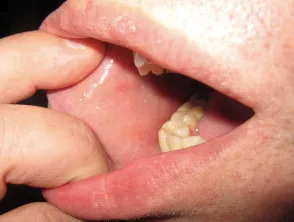
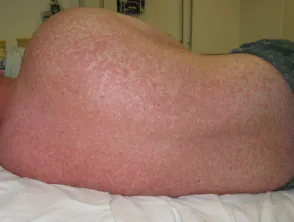
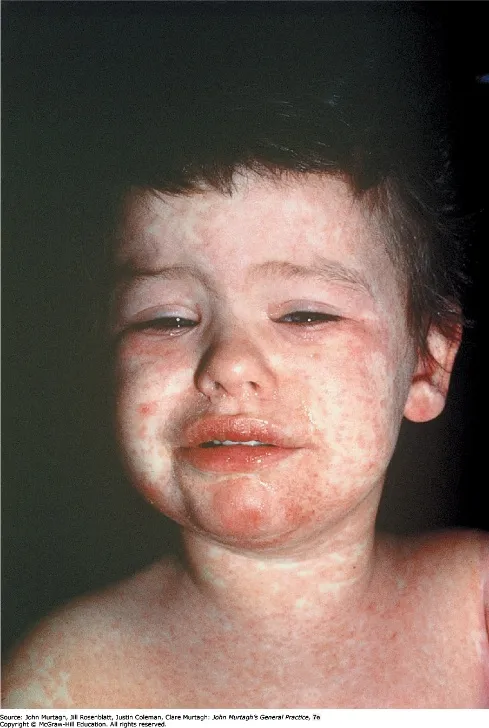
Classic triad: fever + conjunctivitis + rash. Prodrome (~10–12 days post-exposure): fever, malaise, loss of appetite, and the “3 Cs” — cough, coryza, conjunctivitis; Koplik spots (white spots near the molars) appear 2–3 days into the prodrome and disappear early. Exanthem: a blotchy, red maculopapular rash appears on day 4–5 of illness, starting on the face and behind the ears, spreading to the trunk/extremities within 24–36 hours, becoming confluent; coincides with peak fever. Recovery is 7–10 days after rash onset.

Investigations
Within 1 week to 3 weeks of rash onset: nasopharyngeal aspirate/throat swab and first-catch urine for PCR, plus serology. Beyond 3 weeks: serology only. Measles-specific IgM is sensitive/specific for recent infection (but can persist 1–2 months post-immunisation); IgG+/IgM− early in illness indicates prior immunity; IgM is positive in ~75% of cases by day 3 of rash, approaching 100% by day 7.
Management
Notify public health and isolate the patient (mask). Seek advice on contact tracing (same-room contacts, including up to 30 minutes after the patient has left). Offer vaccination to susceptible contacts within 72 hours of exposure, or normal human immunoglobulin within 3–6 days (up to 144 hours) if vaccination isn’t suitable. Infants <6 months and pregnant women cannot have MMR — public health arranges immunoglobulin instead. Supportive care and monitoring; urgent referral for suspected complications (e.g. pneumonia, encephalitis).