Folliculitis (Staph & Pseudomonas)
Written 2nd March 2020 - Last Update 28th August 2026
Folliculitis (Staph & Pseudomonas)
Condition
Inflamed hair follicles — can be superficial or deep. Acne and its variants are also types of folliculitis. Can be due to infection, occlusion, irritation, or various skin diseases.
Superficial folliculitis
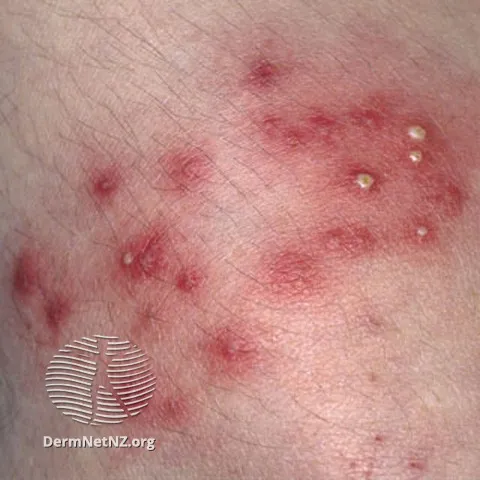
Usually presents as mild, itchy pustules on an erythematous base on any part of hair-bearing skin, particularly in hot weather, in a patient who is often a chronic S. aureus carrier. A swab supports diagnosis.
Management: remove the cause; apply an antiseptic wash (triclosan 1%, chlorhexidine, or povidone-iodine). If S. aureus is identified, consider mupirocin 2% ointment/cream twice daily for 5 days. Oral flucloxacillin is occasionally required.
Bacterial folliculitis
Commonly due to S. aureus. If the infection involves the deep part of the follicle, it results in a painful boil. Treatment: careful hygiene, antiseptic cleanser/cream, antibiotic ointment, or oral antibiotics.
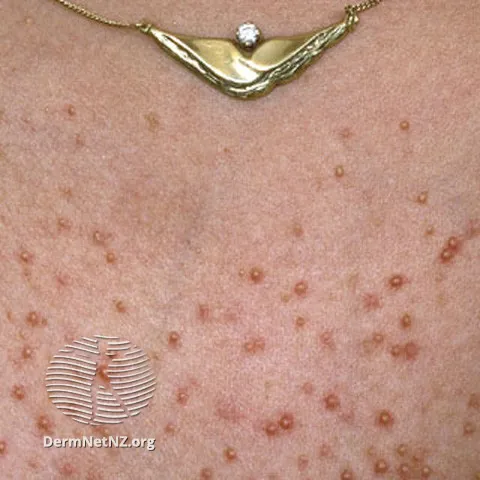
Spa pool (Pseudomonas) folliculitis: due to Pseudomonas aeruginosa, which thrives in inadequately chlorinated warm water. Follows immersion in a hot spa bath/tub. Typical features: rapidly spreading rash, mainly on the trunk, buttocks and thighs (especially axillae and groin), itchy, small pustules surrounded by a circular red-purple halo. Treatment is based on the sensitivity of the cultured organism (e.g. ciprofloxacin 500mg twice daily for 7 days) — many cases resolve spontaneously within 1–2 weeks.
Pseudofolliculitis
Folliculitis barbae is a chronic inflammatory disorder caused by a foreign-body reaction to the hair shaft — not an infection, but a complication of hair removal. Common in men with curly hair and in the groin area: short, freshly cut hairs retract into the follicle and penetrate the side wall. Women can develop it on the upper thighs and groin from bikini-line waxing or shaving.
Management: wash the skin with warm water and a soap-free cleanser before shaving. Change shaving habits — avoid close shaving; shave less often; shave in the direction of hair growth; shave on relaxed (not taut) skin; use a clean, sharp razor. For the bikini line and legs, shaving instead of waxing is effective. Consider laser hair removal (tailored to skin type — most effective with pigmented hair and fair skin; use with caution in Fitzpatrick types V/VI due to burn risk). Permanently stopping hair removal is the best treatment. If persistent: benzoyl peroxide 5% gel/solution twice daily; if no response after 6 weeks, add clindamycin (benzoyl peroxide + clindamycin 5%+1% gel once daily).
Deep folliculitis
Deep forms are usually very tender and painful — examples are styes, boils (furuncles), and carbuncles.
Boil (furuncle)
A deep form of bacterial folliculitis — an S. aureus infection of a hair follicle, occurring at any hair-bearing site. More common in staphylococcal carriers, in Indigenous communities, and with household overcrowding. The painful red nodule enlarges, becomes fluctuant, and develops a necrotic centre that discharges a core of thick yellow pus tinged with blood (with associated pain relief). Multiple heads = a carbuncle.
Treatment (adults): incision and drainage, plus (according to swabs) di(flu)cloxacillin 500mg or cephalexin 500mg four times daily for 5 days, or clindamycin 450mg three times daily for 5 days, or trimethoprim/sulfamethoxazole 160/800mg twice daily for 5 days.
Recurrent boils: obtain swabs; 3% hexachlorophene body wash daily; mupirocin to the lesions and nares; antibiotics as above, guided by swabs. Recurrent, deep-seated boils confined to the axillae, groin or other intertriginous folds raise the differential of Hidradenitis Suppurativa rather than simple recurrent folliculitis/furunculosis.
Carbuncle
A cluster of small abscesses involving a group of adjoining hair follicles, discharging pus from several points. Common sites: back of the neck, shoulders, buttocks, or over the hips. Treatment is as for a boil. A large or fluctuant carbuncle needs formal incision and drainage rather than antibiotics alone.
Stye (hordeolum) of the eye
Warm compresses are the mainstay of treatment for chalazion and hordeolum — topical antibiotics are not indicated. Oral antistaphylococcal antibiotic therapy is indicated if there is accompanying cellulitis. Incision and drainage may be necessary for persistent lesions.