Chilblains
Written 13th February 2020 - Last Update 19th July 2026
Chilblains (Pernio)
Localised cutaneous inflammatory lesions of the extremities precipitated by cold — tissue vasoconstriction causes anoxaemia and vascular damage. Classically on hands and feet. See also Raynaud phenomenon (a different vasospastic process, often coexisting).
- Demographics: young women, 15–30.
Presentation
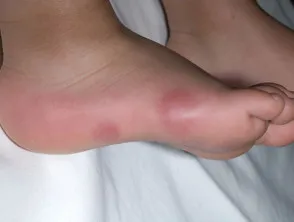
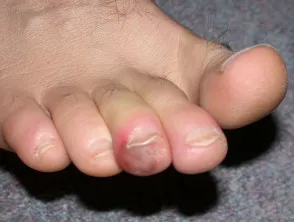
- Acute chilblains — start hours after cold exposure, resolve over days to 3 weeks. Pruritus, burning or pain, worsened by subsequent warmth. Severe cases form erythematous/purplish, oedematous lesions with vesicles.
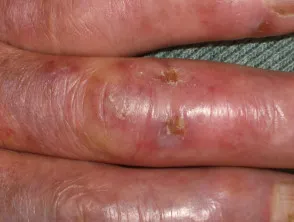
- Chronic chilblains — progress over several winters, with nodules, scarring and ulceration.
Management
- Prevention: avoid cold exposure.
- Reassurance — self-limiting.
- Nifedipine (controlled-release 20 mg PO daily) can prevent recurrence through winter.
- Topical corticosteroid to reduce acute swelling/itch (e.g. betamethasone dipropionate 0.05% in optimised vehicle BD, if extensive/painful).