Candidiasis
Written 2nd March 2020 - Last Update 16th August 2026
Candidiasis
See Vaginal Discharge & Vaginitis for the fuller, guideline-current vulvovaginal candidiasis work-up and treatment — trimmed here to avoid duplication.
Candida intertrigo
Candida albicans superinfects a simple intertrigo, tending to affect patients with predisposing factors (broad-spectrum antibiotic therapy, diabetes, general debility, immune incompetence, obesity, immobility).
Clinical features: erythematous, macerated rash in flexures, the submammary area, and other skin folds; a less well-defined margin than tinea; associated satellite lesions and a whitish discharge; yeast may be seen on microscopy.
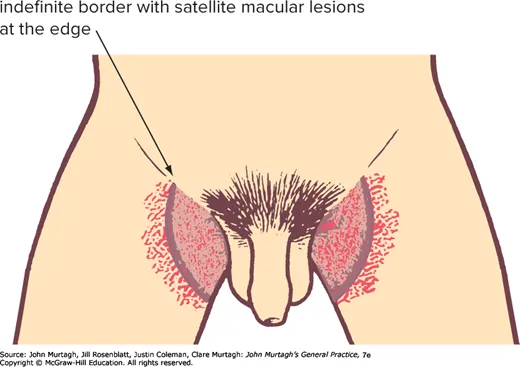
Treatment: treat predisposing factors where possible. Apply an imidazole preparation (miconazole 2% or clotrimazole 1%) twice daily for 2 weeks. Short-term hydrocortisone cream can help itch/inflammation (long-term use aggravates the problem).
Candidiasis (napkin/nappy rash)
Superinfection of intertrigo or napkin dermatitis produces a diffuse, red, raw, shiny rash involving the flexures and extending beyond the napkin area as “satellite lesions”. Candida tends to invade the skin folds and the foreskin of male babies.
Oral candidiasis (thrush)
Usually tender, presenting as white or yellowish curd-like patches overlying erythematous mucosa. Unlike lichen planus or leucoplakia, the patches are usually readily rubbed off, leaving only the underlying red patch visible. Patients may complain of a bad metallic taste, halitosis, dysphagia, or sensitivity to toothpaste/acidic substances.
Predisposing factors: immunodeficiency and cytotoxic therapy; medication (broad-spectrum antibiotics, corticosteroids including inhalers); debility and anaemia (iron, folate, vitamin B12 deficiency); diabetes mellitus and HIV infection.
The oral carriage rate of Candida albicans is 60–75%. Diagnosis is clinical; a wet preparation using potassium hydroxide will reveal spores and (occasionally) mycelia.
Treatment: address the underlying cause; consider dental hygiene and multivitamin preparations. Antifungal agents should not be used until the fungal infection is confirmed.
- Topical: nystatin 100,000 units/mL liquid 1mL, rinse and swallow four times daily after food and drink, for 7–14 days; or miconazole 2% gel 2.5mL, four times daily after food and drink, for 7–14 days; or amphotericin B 10mg lozenge, sucked then swallowed, four times daily after food and drink, for 7–14 days (may not suit patients with a dry mouth or difficulty sucking or swallowing).
- Oral (severe disease, or unresponsive to topical): fluconazole 200mg daily for 7 days.
- Dentures: decontaminate regularly, especially acrylic dentures — chlorhexidine denture scrub (care with bleaching), or dilute Milton’s denture scrub (¼ teaspoon White King in a cup of water). Keep dentures dry overnight when not worn. If oral thrush is present, brush the dentures nightly with a thin coat of nystatin cream or oral miconazole.
Breast and nipple candidiasis
Clinical features: painful breasts — often exquisite pain especially during and after feeding; nipple pain and sensitivity; usually (not always) bilateral; nipples can be pink and shiny, ± pink haloes around the base of the nipple; no fever; breasts otherwise normal (no heat, lumps, or tender points). May follow a course of antibiotics; swabs are of limited value.
Treatment: fluconazole 150mg every second day for 3 doses, then oral nystatin three times daily for 10 days, plus miconazole gel four times daily to the nipple after feeds. Treat the baby with oral nystatin drops or miconazole oral gel.