Bullous Pemphigoid
Written 15th March 2020 - Last Update 21st July 2026
Bullous Pemphigoid
Condition
Caused by IgA ± IgE antibodies and activated T lymphocytes directed against basement-membrane antigens, targeting the protein BP180 in the dermal collagen. Mainly affects older people (often >80 years), especially those with neurological disease (stroke, dementia, Parkinson’s disease); can occur in younger adults and, very rarely, in infants/children. Equal male/female incidence. Sometimes triggered by a drug — PD-1 inhibitors such as pembrolizumab/nivolumab used for melanoma, and DPP-4 inhibitors (“gliptins” — e.g. vildagliptin, sitagliptin, linagliptin), an increasingly recognised trigger in elderly diabetic patients — or by injury or skin infection.
Clinical features
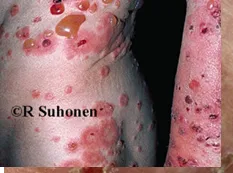
Itchy, usually large, tense bullae that rupture to form crusted erosions. A non-specific, urticaria-like prodromal rash may precede blisters by several weeks. May be localised or widespread (trunk and proximal limbs), frequently affecting skin folds; oral or genital blisters are uncommon. When widespread, can be serious due to the risk of secondary infection and septicaemia.

Investigations and diagnosis
Diagnosis is often clinical in later-stage disease; a skin biopsy can help in early stages. Blood testing for indirect immunofluorescence detects circulating anti-BP180 antibodies.
Management
Refer all suspected bullous pemphigoid to dermatology — urgency depends on severity/progression, with widespread blisters needing more urgent review. Swab on initial presentation to exclude bullous impetigo (secondary bacterial infection is otherwise uncommon). While awaiting specialist review, localised non-flexural lesions (e.g. shins) can be treated with betamethasone dipropionate 0.05% cream/ointment once daily. Large blisters can be aspirated (keep the blister roof intact) and dressed, with wet dressings combined with topical steroid; an antihistamine can be trialled for itch.
Widespread disease usually needs systemic therapy — topical steroids alone are insufficient. Oral corticosteroids are the mainstay; other steroid-sparing options used by dermatologists include low-dose doxycycline, niacinamide, dapsone, methotrexate, ciclosporin, mycophenolate, IVIG, and rituximab — the choice depends on comorbidities and severity.