Fatigue
Written 18th June 2020 - Last Update 24th August 2026
Fatigue
A common, often diagnostically elusive GP presentation — the most common cause is underlying depression/anxiety (women > men; peak age 34–39). For the specific chronic fatigue syndrome/ME picture, see Chronic Fatigue Syndrome. (Source: “A Rational Approach to Fatigue”, Simon Morgan.)
Fatigue is difficulty initiating and sustaining activity due to a lack of energy, with an accompanying desire to rest, and is normal after physical exertion, prolonged stress or sleep deprivation. Duration guides the differential: recent fatigue (under 1 month) is most often medication adverse effects, anaemia, or stress/depression; prolonged fatigue (1–6 months) is most often diabetes, hypothyroidism, a sleep disorder (e.g. sleep apnoea), or cancer; chronic fatigue (over 6 months) is most often myalgic encephalomyelitis/chronic fatigue syndrome, postviral fatigue syndrome, a mental health condition, or medication effect.
A careful history distinguishes true fatigue from symptoms patients may describe as “tired”: weakness (insufficient muscle force at maximum effort — suggests a nervous-system or muscle disorder such as myasthenia gravis), dyspnoea on exertion (an early cardiac/pulmonary symptom that reduces exercise tolerance), and somnolence (an unusually strong desire to sleep, from a sleep-deprivation disorder such as allergic rhinitis, reflux, painful musculoskeletal disease or sleep apnoea) — though disturbed sleep is itself common in fatigue, so the two can be hard to separate. The pattern of fatigue itself is a useful clue: fatigue that worsens with activity and lessens with rest points to a general medical cause, while fatigue that is constant and unrelieved by rest — sometimes with occasional bursts of energy — points more to a mental health cause.
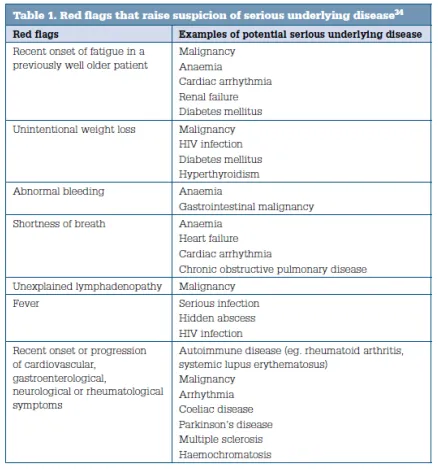
Red flags
New-onset fatigue in a previously well patient; unintentional weight loss; abnormal bleeding; shortness of breath; unexplained lymphadenopathy; fever; and new/progressive cardiovascular, rheumatological, neurological or GI symptoms. In an older adult, a new or different headache or vision loss with muscle pains raises polymyalgia rheumatica/giant cell arteritis; fatigue involving more than one organ system (e.g. rash plus arthritis) is itself a red flag.
Assessment
- Examination: vital signs, weight, body habitus; pallor/jaundice/ pigmentation; thyroid; hepatosplenomegaly/lymphadenopathy; cardiorespiratory exam; mental state. Office tests: urinalysis + BGL.
- Investigations — high rates of unnecessary testing (only ~4% of tests change the diagnosis). If no cause and no red flags on assessment: lifestyle advice and review in 4 weeks. If somatic disease is likely or red flags are present, first-line panel: FBC, UEC, LFTs, CRP, BGL, TSH, ferritin (UK guidance adds coeliac serology first-line).
Differential
- Probability: stress/anxiety, depression, viral/post-viral, sleep disorders.
- Serious: arrhythmia, cardiomyopathy, malignancy, anaemia, serious bacterial infection, haemochromatosis, HIV, hepatitis C.
- Pitfalls: coeliac disease, pregnancy, renal failure, metabolic disturbance (diabetes, thyroid disease), medication side effects.
- Chronic-disorder contributors: chronic kidney disease and systemic rheumatic disease (giant cell arteritis, rheumatoid arthritis, SLE) commonly drive a prolonged or chronic fatigue picture, alongside adrenal insufficiency and pituitary insufficiency among the endocrine causes.
- Drug causes to check specifically: antidepressants, first-generation antihistamines, antihypertensives, diuretics causing hypokalaemia, muscle relaxants, sedatives, and recent cessation of stimulant/recreational drugs.