Epistaxis
Written 29th June 2020 - Last Update 24th August 2026
Presentation: Epistaxis
Mostly a mild and benign condition, but may be a symptom of an underlying malignancy — investigation is warranted for recurrent episodes or severe bleeding.
Demographics: bimodal — children 2–10 years, adults 50–80 years. Anterior bleeds (mostly Little’s area) account for ~90%; posterior bleeds ~10%. Approximately 7–14% of the adult population will have experienced epistaxis at some point in their life. Bleeds are also classified as primary (idiopathic/spontaneous — around 85% of episodes) or secondary (a clear precipitant such as trauma, anticoagulant use, or a recent operation).
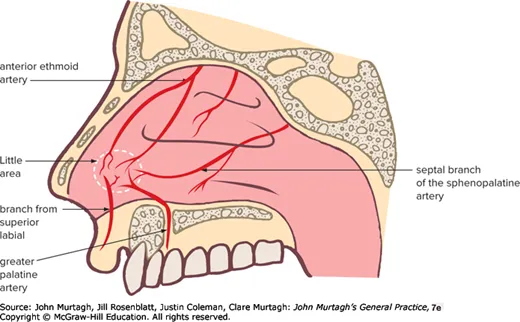
Diagnostic strategy
Probability: spontaneous, from Little’s area; URTI/rhinitis; trauma; drugs (anticoagulants/antiplatelets).
Serious: hypertension; HIV/AIDS; nasal/sinus/nasopharyngeal tumour; leukaemia; thrombocytopenia; coagulopathy.
Pitfalls: vitamin C/K deficiency; septal granuloma/perforation; foreign body; cocaine abuse; hereditary haemorrhagic telangiectasia.
Diagnostic tips: recent-onset persistent bleeding in the elderly → consider carcinoma; severe epistaxis → consider liver coagulopathy; posterior bleed → consider hypertension.
VINDICATE differential: vascular (HTN); infection (URTI/sinusitis, HIV); neoplastic (nasal SCC, leukaemia causing thrombocytopenia/coagulopathy); degenerative (vitamin C/K deficiency); iatrogenic/intoxication (anticoagulants/antiplatelets, NSAIDs, smoke/pollutant inhalation, cocaine); congenital (hereditary haemorrhagic telangiectasia); autoimmune (ITP); trauma (nose picking, nose punching, injury).
Red flags for neoplasia: unilateral nasal blockage; facial pain; headaches; facial swelling/deformity; South East Asian ethnicity (higher nasopharyngeal carcinoma risk); loose teeth; deep otalgia. In an adolescent presenting with epistaxis, also consider juvenile nasopharyngeal angiofibroma — a benign but potentially extensively bleeding tumour that can also cause nasal obstruction, headaches, rhinorrhoea and anosmia.
History
Questions should cover the duration, severity, frequency and laterality of the bleed, and how previous episodes were controlled — pinching over the bony nasal bridge rather than the soft cartilaginous tip remains a common and ineffective technique worth correcting. Ask specifically about haematemesis and malaena, since upper gastrointestinal bleeding can be overlooked in a patient presenting with epistaxis. Local causes to ask about include nose picking, foreign body, and current upper respiratory tract infection. Medical history should cover hepatic impairment, hypertension, easy bruising or bleeding, and a family history of coagulation disorders. Social history should cover alcohol (increases epistaxis risk via decreased platelet aggregation and prolonged bleeding time), smoking, and recreational drug use — specifically ask about cocaine. A thorough medication history is essential: NSAIDs, warfarin, clopidogrel and the oral factor Xa inhibitors (apixaban, rivaroxaban) all increase bleeding risk and can alter management.
Management
Clinical stabilisation always takes priority over history-taking if bleeding is significant — assess haemodynamic stability (pulse, respiratory rate, signs of shock) first, sit the patient upright and leaning forward (to minimise swallowed blood), and apply firm digital pressure over the cartilaginous (not bony) part of the nose.
Minor bleed (stepwise):
-
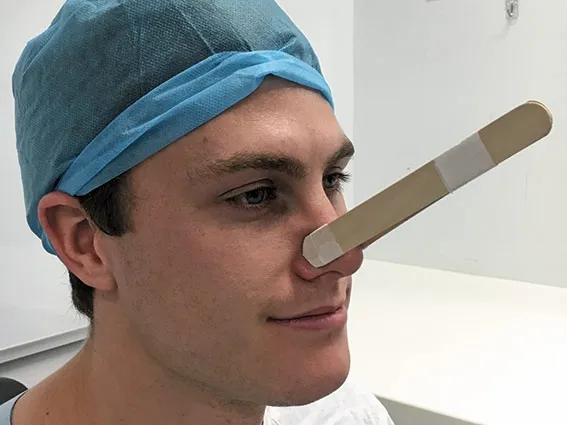
Pressure over the nasal septum for 5–20 minutes — evaluate effectiveness by checking for blood running down the throat. If difficult to maintain, tape two tongue depressors together as a nasal clip.
-
Packing with cotton buds soaked in a vasoconstrictor (e.g. oxymetazoline).
-
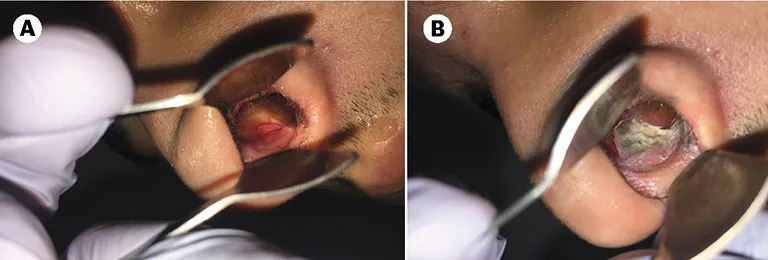
Chemical cautery — only useful once bleeding has stopped (otherwise poor mucosal contact); only if the bleeding source is clearly seen (don’t cauterise Little’s area speculatively); only on one side (bilateral cautery risks septal necrosis); use local anaesthetic spray first; cauterise circularly around the vessel, then the region overlying it.
Tranexamic acid (TXA) as an adjunct to usual first-aid measures is supported by moderate-quality evidence: a Cochrane review found that fewer patients who were given either oral or topical tranexamic acid had further episodes of re-bleeding following an initial nosebleed compared to those treated with usual care, and topical TXA controlled bleeding within 10 minutes more often than other topical agents. The review authors caution that there remains uncertainty about the role of tranexamic acid in the treatment of patients with epistaxis given how much nasal cautery/packing technique has advanced since most of the included trials — TXA is a reasonable adjunct to consider, not a replacement for first aid, cautery or packing.
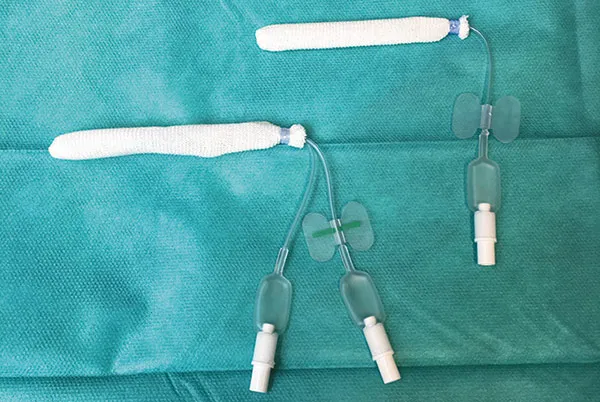
Severe/posterior bleeds: nasal packing with inflatable nasal tampons (e.g. Rapid Rhino) — these hurt, so give analgesia — then transfer to ED. Oral antibiotics are commonly prescribed prophylactically against toxic shock syndrome while a pack is in place, though the evidence for this is limited given how rare the complication is. Alternatively, a Foley catheter passed into the nose until the balloon is visible in the back of the throat, gently inflated with sterile water, then pulled back gently to tamponade the bleed — send to ED.
Follow-up: moisturising the nasal mucosa (e.g. Kenacomb, Nasalate, paraffin) for 7 days after a significant bleed helps prevent re-bleeding.