Cardiac Arrest
Written 27th February 2020 - Last Update 7th August 2026
Cardiac Arrest
75% of cardiac arrests are due to VF; 75% of patients have severe coronary artery disease.
Causes
- Arrhythmias — VF, VT, torsades, severe bradycardia, sick sinus syndrome.
- Pump failure — AMI, cardiomyopathy.
- Rupture — ventricular rupture, dissecting aneurysm, hypertrophic cardiomyopathy (ASH).
- Obstruction — PE, aortic stenosis, pulmonary hypertension, mitral valve prolapse.
- Electrolyte abnormalities (hyperkalaemia).
- Other: glue sniffing (volatile substance misuse).
Reversible causes — 4 H’s and 4 T’s
Hypoxia; hypovolaemia; hyper/hypokalaemia (metabolic); hypo/hyperthermia; tension pneumothorax; tamponade; toxins; thrombosis (PE, ACS).
Advanced life support algorithm
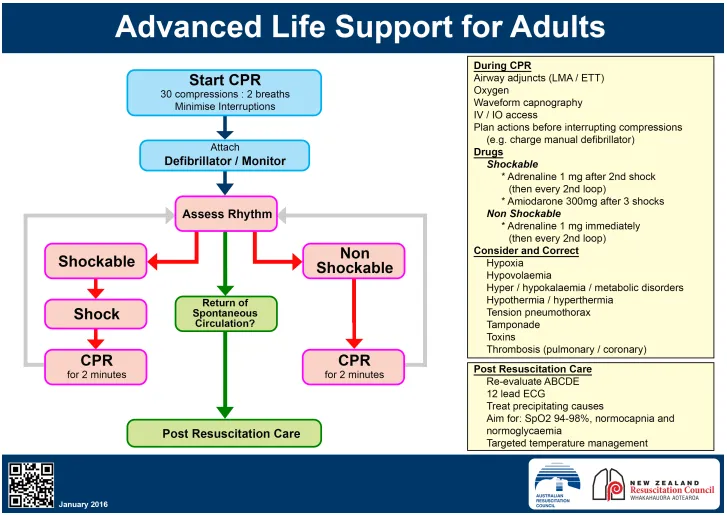
Shockable rhythm: adrenaline 1mg after the 2nd shock, then every 2nd loop; amiodarone 300mg IV after the 3rd shock.
Non-shockable rhythm: adrenaline 1mg immediately, then every 2nd loop.
During CPR: airway adjuncts (LMA/ETT), oxygen, waveform capnography, IV/IO access; plan actions before interrupting compressions (e.g. charging the manual defibrillator).
Post-resuscitation care: re-evaluate ABCDE; 12-lead ECG; treat precipitating causes; aim for SpO2 94–98%, normocapnia, and normoglycaemia; targeted temperature management.